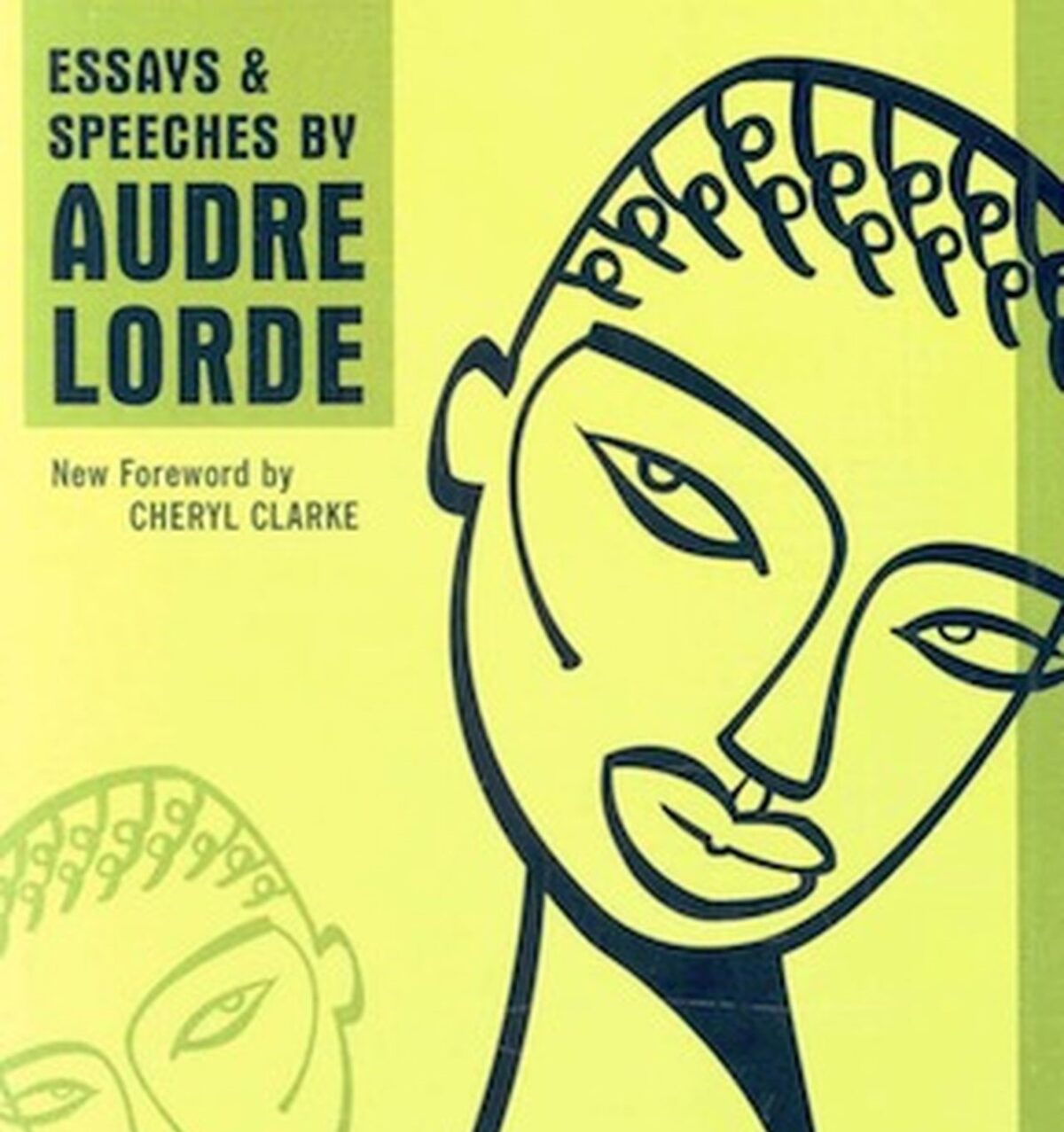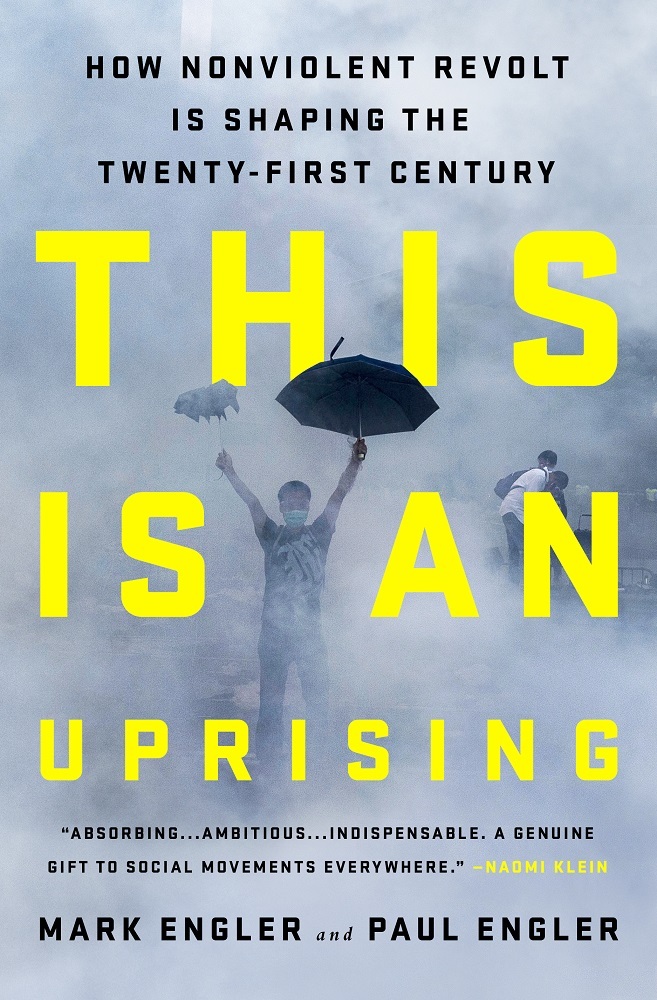
The Iliad, or the Poem of Force

Where to start with this one.

It’s barely a book, really just an essay. And I’m not smart enough to have any kind of insightful commentary on Simone Weil but fuck it, we ball.

I’d been meaning to read Weil for some time, so when my philosophy study group voted on “The Iliad, or the Poem of Force” as our November selection, I saw my chance and I took it. Is it her most beginner-friendly work? Who’s to say.

Weil is clearly enamored with The Iliad and heaps no end of praise on it, but she’s also using it to frame a political philosophy thesis: the true driver of history is force, defined as “that that turns anybody who is subjected to it into a thing. Exercised to the limit, it turns man into a thing in the most literal sense: it makes a corpse out of him.” That is the force she refers to in the title of the essay, and her accolades for The Iliad are based in part on her opinion that it is the best, most accomplished depiction of force in Western literature.

Why Weil names this “force” (“la force” in the original French) and not “violence” is a question I wish I had asked the study group because I find myself at a loss for an answer. Maybe because violence is too restrictive a concept to categorize Nazi Germany—it’s hard not to read Weil, a French woman of Jewish background* writing in 1939, and not think about Nazis. But this thing called force is also her response to Marxist and Hegelian dialectics in addition to Nazis, and it also includes violence (or force) deferred: “…the force that does not kill, i.e., that does not kill just yet. It will surely kill, it will possibly kill, or perhaps it merely hangs, poised and ready, over the head of the creature it can kill, at many moment, which is to say at every moment. In whatever aspect, its effect is the same: it turns a man into a stone.”

Pretty irrefutable argument. And through her reading of The Iliad, where for Weil its greatness stems from showing how every character on every side is subjected to force, how people find it in themselves to love in the face of force, and how force destroys and renders tragic the things we most value in life, we can understand that Weil is critical of force and believes that we can’t escape history except by somehow transcending force.

None of that has really stopped being relevant, has it?

*Weil’s conversion to Christianity shouldn’t be overlooked, especially considering its influential role in her philosophy, but that particular factor of her birth is important for establishing the precise nature of her relationship to the Nazis and vice versa.

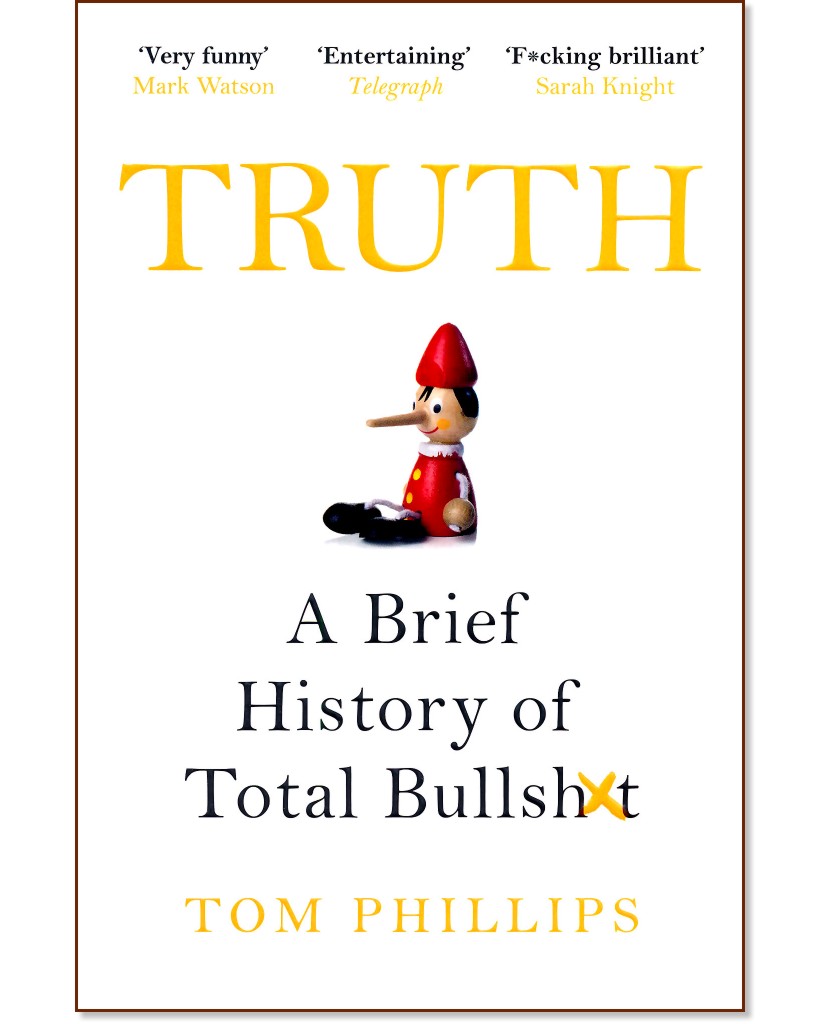
Truth: A Brief History of Total Bullshit

My frazzled brain has recently been unable to focus on the kinds of things I usually enjoy, so I took the opportunity to finally read a birthday gift I received earlier in the year: Truth: A Brief History of Total Bullshit. I like it and breezed through it in a couple of days, but my brain is perhaps still too frazzled to have a coherent thought about it. Let’s give it the old college try.

Author Tom Phillips (formerly of Buzzfeed UK) lays out a tasty little buffet of, well, “total bullshit.” Published in 2019, it’s very much a response to the burgeoning concern with fake news; to the extent any pop history book has a more serious agenda beyond mere entertainment, Truth serves as a reminder that people have been creating and spreading fake news forever, so let’s all take a deep breath and not panic over it.

First Phillips establishes the difference between bullshit and lies, as well as the myriad ways in which we can get things wrong or perpetuate untruths. A bit of theory, if you will. Then the rest of the book covers a wide variety of lies, grouped by topic: news and journalism, hoaxes, specious geography, con artists, politics, business, and finally mass delusions before rounding off with a conclusion about how we can get better at spotting all this.

I mentioned that Phillips was formerly of Buzzfeed UK because the kind of brisk, ironic writing (and occasional profanity) that characterizes popular Internet journalism permeates Truth from beginning to end. It had the nostalgic flavor of Cracked.com circa 2010 or so. Which is not necessarily a criticism! That was exactly the challenge level my brain was capable of at the time and I had a lovely time reading it.

Not that I would have pooh-poohed Phillips’ approach if I felt like my faculties were firing on all cylinders, either. There comes a point with non-fiction where an author has to decide what kind of book they’re going to write and why they’re interested in writing it. Who’s the target audience? What do they hope people will take from it? What’s the best way to potentially change people’s minds, or inspire them to action, or just help them learn something? My own inference is that the dizzying number of anecdotes Phillips presents is not out of a desire to trace the evolution of lying or to make a strong philosophical claim about the nature of bullshit (Harry G. Frankfurt has that covered). I think his motivation for the entire book comes through in the last chapter, with suggestions for how to become more discerning about truth and untruth.

In other words, couched though it may be in jokes and amusing anecdotes, Truth is a book-length appeal to the reader to stop and think for a minute before you share that inflammatory news story you just saw in your feed.

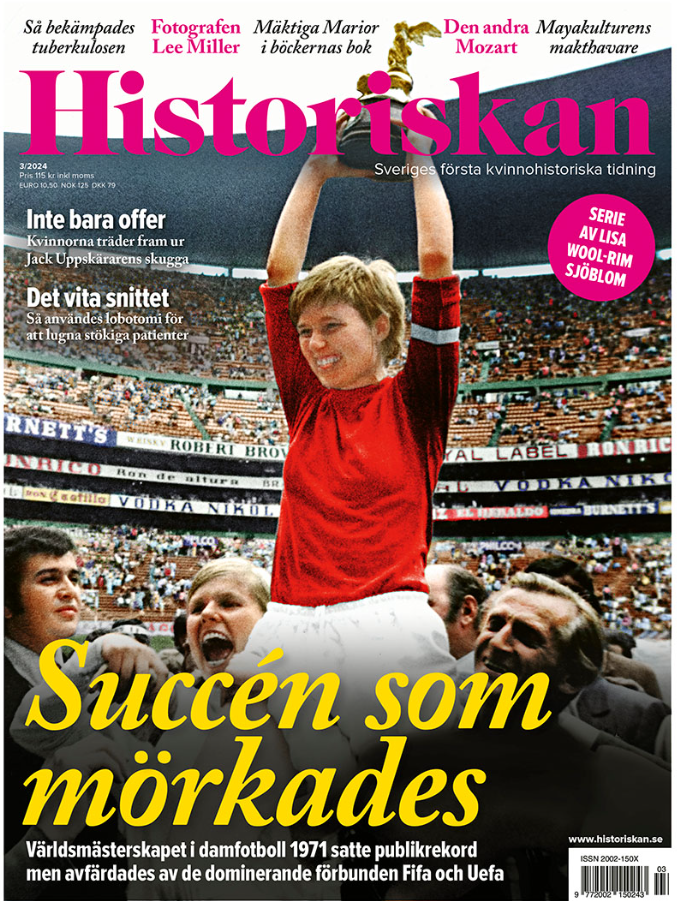
Historiskan 3/2024

Another international trip, another in-air read-through of Historiskan. Gems from this issue:

  • A brief interview with Sabrina Ebbersmeyer about the Women in the Nordic Enlightenment project (WHENCE). This was paired with little blurbs about three women philosophers in particular, but the only one I remember now is Birgitte Thott.
  • A longer article about the legacy of Jack the Ripper, which was also paired with longer blurbs about the lives of the canonical five.
  • The 1970 Women’s World Cup. I’m not an especially sporty person, but pigheaded resistance to women in sports always fascinates me. While the All-American Girls’ Baseball League eventually disbanded due to natural economic causes—declining public interest and, with it, declining profitability—the Football Gods (FIFA and UEFA) actively blocked and banned women’s games for years with a passion akin to Jock Semple trying to rip off Kathrine Switzer’s bib number. This despite a clear public interest in women’s soccer. The two women’s world tournaments organized in the 70s were therefore “unofficial” affairs hamstringed by interference from FIFA and UEFA, and even today don’t seem to enjoy official recognition.
  • Some blurbs about new or upcoming documentaries, including ones about Gunilla Bergström and Dagmar Lange.
  • A history of tuberculosis treatment in Sweden, and specifically the role of the traveling nurse who went around to educate families about care and hygiene practices. This was the work of Nationalföreningen mot tuberkulos, a non-profit organization established to fight the spread of tuberculosis in Sweden that that eventually became today’s Svensk Lungmedicinsk Förening. While a lot of the support these traveling nurses provided was about exercising power and control over the poor and working class, it also seemed to be motivated by genuine humanitarian concern. I can only assume that someone has already written a thesis comparing the work of Nationalföreningen mot tuberkulos to how the Swedish state handled Covid-19, since it seems like an obvious and juicy research topic. (Weirdly enough, the article didn’t make any such comparison at all.)
  • Revised looks at the role of women in Mayan culture and early Christianity.
  • Everything you didn’t want to know about lobotomies, which apparently remained a popular treatment option in the Nordics long after everyone else had declared them barbaric and moved on to other treatment options. Very cool! (Not actually very cool.)
  • The longer biographies in this issue included Carmen Miranda, Lee Miller, and Maria Anna Mozart.
  • A lovely illustration from Lisa Wool-Rim Sjöblom about haenyo, the women divers of Jeju.

Miljonsvennar

Maria Bäckman’s Miljonsvennar came at the recommendation from a friend, a British national who spent his formative years in Västerås and now drops in to visit Stockholm a few times a year. Considering that he also now works in fintech, he is in every way more qualified to do my job than I am. Ah well!

Several beers after a jazz improv concert, we returned to our perennial topic of discussion: what is it to be Swedish, who counts as Swedish, are we Swedish, will I ever be free of my American accent. On the topic of the förorts he mentioned Miljonsvennar, which I immediately put a hold on at the Stockholm library.

Bäckman spent a full academic year or so observing and interviewing a class of gymnasium students (so 17- to 19- year-olds) in a less-affluent, ethnically and racially mixed suburb south of Stockholm that she anonymized as “Bergby.” What was it like, she wondered, to live in these neighborhoods as a white Swede, or at least a white Scandinavian? Over eight chapters she explores gender, religion and values, sexuality, and The Other—the more affluent suburbs and inner city of Stockholm.

Speaking in particular of The Other in this case, Miljonsvennar makes a great companion piece to Handels: Maktelitens skola. Or even more specifically, to Mikael Holmqvist’s other work, Leader Communities: The Consecration of Elites in Djursholm. There’s even a chapter in Miljonsvennar devoted to reflecting on the exchange visits between the school in Bergby and one in Djursholm. A matched pair. Bookends. Yin and yang.

Bolag Föreningar Stiftelser: En introduktion

Another niche read that I picked from the syllabus of an introductory course into business law, the same as Rätt och rättfärdigande: en tematisk introduktion i allmän rättslära.

Mostly posting here to say that I read the thing (and just in time for my authorization test, even!). It’s a brief, clear survey of the different forms of associations in Sweden, and the different laws that apply to their organization. I probably learned something, but in all honesty I should probably read it again at some point and take notes.

Grannskapsrevolution

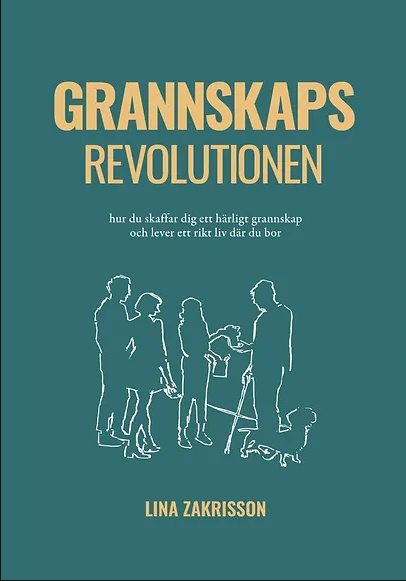
A vacation is never complete without a book purchase! At my WWOOF host’s recommendation, my roommate and I dropped in to shop at the varuhall in Orsa while he went to pick up the sailboat for winter storage. The artisanal and tourist goods on display included copies of Grannskapsrevolution; if memory serves there was a sign about how it was a book from a local author. The topic matter was also relevant to a lot I’ve been thinking about recently, including my personal projects outside of work, so it seemed like a natural choice for a souvenir.

Author Lina Zakrisson works as a social sustainability consultant focused on helping various stakeholders (residents, property owners, etc.) create stronger, more vibrant local communities. Grannskapsrevolution is thus a combination of manifesto, marketing, and DIY guide on just that topic—she makes an explicit point of highlighting her consulting work, though you still get plenty of tips and information for your money without any scummy “sign up for my course to learn more” sales pitches. But Grannskapsrevolution seems like a condensed version of Melody Warnick’s This is Where You Belong tailored to a Swedish (Stockholm?) target demographic, so reviewing it in English feels a bit pointless. I’ll just wrap up by saying that I expect my copy will be circulating among the board members of my local buy-nothing association and by highlighting what was the most memorable anecdote in the book for me:

One of Zakrisson’s neighbors ran into her while she was out walking her dog and that launched a fair bit of smalltalk, since her neighbor was also a dog owner. As they parted ways, the neighbor invited her over for a fika sometime and Zakrisson agreed enthusiastically. Yes, of course! That would be lovely! Then when she got home, she thought, Wait, it’s a bit weird to just invite a perfect stranger into your home like that. Or what if she’s some kind of psycho? The fika gets put off and delayed for a while because Zakrisson isn’t sure what to make of it. Of course the story ends with her eventually making good on the invitation, and of course she has a lovely time, and in the end that neighbor becomes an actual friend. As an afterthought, Zakrisson adds that once she got to know this neighbor better, she learned that her neighbor was American, and even though she’d lived in Sweden for years by now, she had still had grown up in the US.

Me, an American: of course she was an American, lol

Also me, an American: so that’s how all of my invitations land with Swedes

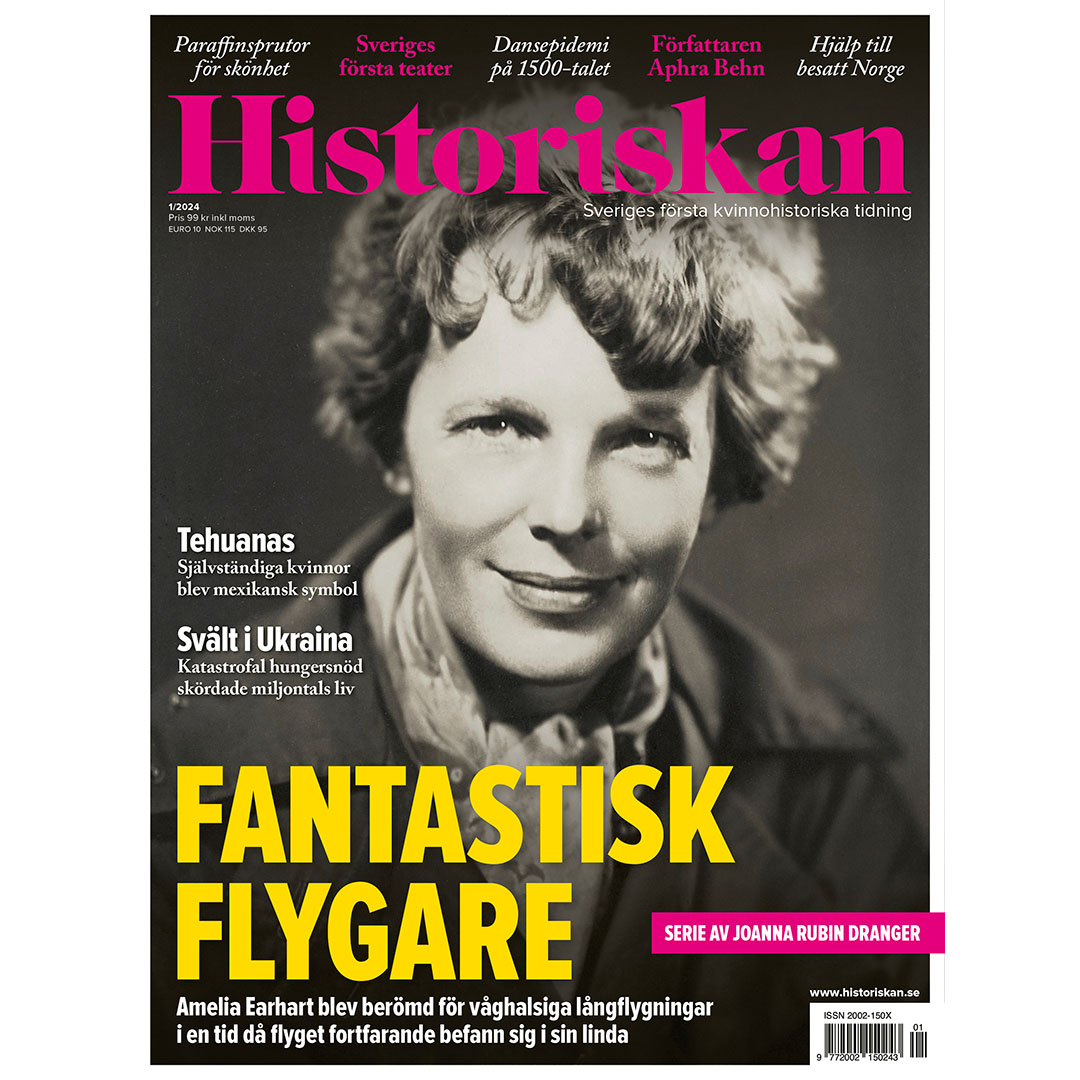
Historiskan 1/2024

My airport read ahead of my trip to the US in May. What did this issue cover?

      • An interview about a feminist history podcast, whose name now escapes me
      • A biography of Aphra Behn
      •  Svenska Norgehjälpen, Sweden’s aid project for Norway during Nazi occupation
      • Holomodor, which seems highly relevant these days
      • Tehuanas: Zapotec women from the Isthmus of Tehuantepec in Mexico who have long enjoyed a relative independence from, and equal standing with, men
      • And, on the flip side of history in the new world: a biography of Inés Suárez, conquistador
      • St. Vitus’ Dance
      • A fascinating biography of Maria Enquist, a notable “beauty expert” (and probable grifter) at the turn of the twentieth century who offered some of the first cosmetic surgery in Sweden (paraffin injections)
      • Queen Christina of Saxony, the reigning queen during the Siege of Tre Kronor
      • Sweden’s first theater, a project put together by two noblewomen but which no longer stands today because it was torn down soon after its construction
      • Brief little bios of women long-distance swimmers
      • And of course the cover story on Amelia Earhart

Chokepoint Capitalism: How Big Tech and Big Content Captured Creative Labor Markets and How We’ll Win Them Back

I picked up Chokepoint Capitalism from my host’s bookshelf in London because I was worried about finishing the emergency book in my purse too early and because I guess I love reading about economics now?

Cory Doctorow was a name already familiar to me, as someone who reads science fiction and is terminally online, and I was glad to see him reined in somewhat by Professor Rebecca Giblin. Not that any of his ideas are distasteful or extreme, or that I even fundamentally disagree with him, but Doctorow’s style when it comes to writing about politics or economics can be a bit over-the-top.

Chokepoint Capitalism is a detailed, academic-based look at how Amazon, Spotify, YouTube, ClearChannel/iHeartRadio, Apple, Live Nation and other behemoths have solidified a hold on their respective markets, what the authors term “chokepoints.” I say “academic-based” because it is clearly deeply researched (no doubt Giblin’s contribution), but the presentation and style is still more in the vein of popular science (popular economics?) than dry scholarly reading. Giblin and Doctorow bring the receipts, as the kids no longer say. These companies have actively removed any other mediator between artists and audiences, and as the only gatekeepers can dictate essentially whatever terms they like, in terms of selling but also in terms of buying.

Part of the reason I write these dorky little book reports is to help me remember what I read. For novels and fiction, it’s simply a matter of not wanting whole hours of my life to disappear down the memory hole. But for nonfiction it also becomes a matter of actually learning something from what I’ve read, which is to say I’ve started this particular dorky little book report when Chokepoint Capitalism was no longer fresh in my mind and almost all of the details and nuance have already vanished.

Fortunately Giblin and Doctorow gave an interview about the book to explain it so I don’t have to.

The Bright Ages: A New History of Medieval Europe

I think The Bright Ages ended up on my TBR because I saw a Swedish copy at my in-laws and thought the topic sounded interesting, especially since my knowledge of Medieval history begins and ends with the interdisciplinary unit we had in middle school. While people crack jokes all the time about the perceived uselessness of fields like Medieval studies, familiarity with the period seems like good starting point for understanding how our current economic system got to be the way it is—and I’m sure I’m not the only person with a growing interest in that particular piece of history. Plus, as authors Matthew Gabriele and David M. Perry point out in the introduction, a (historically inaccurate) popular understanding of the Middle Ages informs political ideology even today. Educating the public is therefore part of improving the health of our political dialogue.

They have their work cut out for them, no doubt. How well did they succeed?

This is another case where ebook reading no doubt hampered my comprehension, especially since I read it in bits and pieces over a relatively long period. I started it sometime before my trip to the US in May, and I finished it on a flight to London on July 30. Even though each chapter is more or less standalone, focusing on a particular event or development, such a long time in between reading sessions meant all the previous context had long since vanished into the memory hole.

But more than that, after I finished the book I struggled to articulate how The Bright Ages had shed new light on the topic (if you’ll forgive the pun). Gabriele and Perry do an excellent job of bringing in marginalized figures into the picture, and they also continually emphasize how interconnected the world was at the time: goods and therefore people traveled across incredible distances, like barefoot Christian monks traveling within the Mongol empire. At the same time, it’s hard to argue that an era was more enlightened or humane than we give it credit for when you’re simultaneously describing book burnings and religious violence. Other points it seems like the distinction was one of semantics more than anything else. Whether or not Rome actually “fell,” it still declined in political importance. Of course, it could be that I didn’t even know enough to be dangerous, as the expression goes, and therefore don’t have a deeply ingrained imagined history to be debunked.

Whatever else, the writing is also always engaging and easy to follow. Gabriele and Perry depart from the typically dry style of academic writing and take a warm, conversationalist tone. As a result, The Bright Engages is a fun and engaging read, and the fact that it took me so long to finish the book is not in any way a commentary on its quality. It’s me, I’m the problem.

Flame Wars: The Discourse of Cyberculture

If I wanted to depress myself, I would do a series called “In Search of Lost Bookstores” and feature books in my library that I purchased at stores that have since shuttered.

Just kidding, I’ve already depressed myself just by thinking about it!

One of those entries would be this thirty-year-old collection of academic writing on the nascent online culture of the early 90s. In high school, anything at all related to Cool Cyberpunk Hacker Shit was instantly my bag, so I picked up Flame Wars: The Discourse of Cyberculture on one of my many youthful browses of the Lion Around bookstore (RIP). It was already ten years out of date by that point, but no matter! I read a couple of the essays right off the bat; I gave most of the others a pass as uninteresting and highly technical. . Nonetheless I kept the volume through several purges, sensing that one day I would have enough of a brain to actually engage with the content. That day was today, the year of our Lord 2024, a full thirty years after its initial publication—an ice age ago in online time.

How does it hold up?

In some aspects not very well at all, or maybe more fairly: it’s clearly a book of its time. Lots of ink is spilled over Mondo 2000, reminding us that people once took it seriously as a cultural forum. (Though I guess its ghost still haunts the Internet in the form of BoingBoing.) When discussion focuses on the intersection of technology and sexuality, it’s as awkward and dated as you’d expect (did anyone ever actually call it “compu-sex”?) and HIV/AIDS as an existential threat is a very present issue. In much of the discussion, sexual and otherwise, the underlying assumption is that VR is going to be the thing pretty soon and that people will be using that to have safe, gratifying casual sex—but for now, typing will do. Thirty years later, it’s safe to say that VR didn’t pan out like any of these authors were expecting.

There are also selections that, even without the retro-futurism, kind of stumble. The performance art group Survival Research Laboratories is still running to this day (would you like to subscribe to their Patreon?), but the account Mark Pauline provides of a show in Austria fails to articulate anything interesting beyond the deathwish of one of their local assistants. (The numerous photos of the Austrian show/exhibition were black and white; maybe full color would have helped.) Another essay on virtual reality as a plot device in fiction feels like a puffed-up excuse for Marc Laidlaw to showcase his own writing. Halfway through the piece, Laidlaw confirms this suspicion and explains that he was originally asked to submit a selection of his fiction, but felt whatever he submitted would be out of context, so he wrote an essay about the topic of virtual reality and then included his own writing in the essay. The other piece of fiction, an excerpt from Pat Cadigan’s Synners, was simply presented on its own as a piece of fiction and functioned just fine without context. (And in fact, I promptly added the whole book to my TBR after I finished the chapter.)

The more abstract, theory-based, and otherwise philosophical essays, on the other hand, still feel highly relevant. Editor Mark Dery’s interviews with Samuel Delaney, Greg Tate, and Tricia Rose (collected in the chapter “Black to the Future“) are a goldmine of thought that I will definitely be revisiting, moreso because Dery chose to interview extremely intelligent people rather than because Dery provided much insight himself (sorry). Likewise with Claudia Springer’s “Sex, Memories, and Angry Women,” which touches on an interesting tension in the portrayal of women within cyberpunk but that also requires me to refresh my memory (hah) of the works in question before I can really have anything to say about it. I don’t know enough about the state of neural networks and AI research to know if Manuel De Landa’s “Virtual Environments and the Emergence of Synthetic Reason” is still fresh, but Gary Chapman’s* “Taming the Computer” still feels as relevant as it did in 1994. Perhaps—cliché be damned—even more so.

Cue the ominous music.

Overall, despite some dated, now-irrelevant concerns and speculations, a solid collection to have on hand in 2024.

*This is Gary Chapman the technologist and academic, who died in 2010. He’s not the Gary Chapman famous for the Five Love Languages, but sadly only the latter has a Wikipedia page.