Baby Driver

Finally, I’ve finished writing all my dorky little book reports for the books I read in 2025 and can move on to 2026! While this entry is backdated to January, I’m writing it in May. It’s just been that kind of year.

Jan Kerouac’s Baby Driver came into my life by way of a massive tome of Beat literature, Beat Down to Your Soul, that I’d lugged around with me totemically since I bought it in college. I didn’t actually read it until 2020 and it was one of those books that spiraled out of control in terms of additions to my TBR, full of names and titles that I’d never heard of before but that also sounded fascinating. In particular, all of the women who had been part of the Beat movement but who have been sidelined and forgotten, if not by academics then certainly by popular culture. Kerouac and Ginsberg are household names; not so Diane di Prima.

My TBR at this point is several hundred books, most of which I’ve outsourced to the Storygraph app instead of remembering myself, but I always had Baby Driver ready at hand. It’s a catchy title and an amazing promise of a novel: Kerouac’s own daughter! One essay in the Beat Down to Your Soul collection, maybe by the compiler herself, also painted a striking picture for me of Jack Kerouac as an absentee father and the overall tragic arc of Jan’s life, which probably helped further fix it in my memory. Imagine my surprise when, on the tail end of my Christmas visit to my family, I stumbled on Baby Driver at the local bookstore! Perfect. I’d already picked up The Extinction of Irena Rey as a gift from my mom, but this one was it: Baby Driver was THE book of the trip.

I don’t have much time for Jack Kerouac, to be perfectly honest. I read On the Road on a Greyhound trip to Chicago in my early 20s (points for pretention, I suppose) and even then I couldn’t match the literary idolization of Jack Kerouac the person to the Sal Paradise of the novel. While there are moments of exquisite, ecstatic prose,  beautiful wordsmithing alone isn’t enough to fully paint over or transform an uninspiring truth. Here’s a guy just constantly mooching off his aunt (read as: mother), and that’s supposed to be heroic and admirable and even a bit manly? As the kids probably no longer say, the math ain’t mathin’.

I also feel a bit bad framing this review of Baby Driver within the context of Jack Kerouac, perpetuating as it does a tendency to situate women writers in relation to the famous men in their lives instead of presenting them on their own terms. See also: Save Me the Waltz. But whatever! It’s clear that J. Kerouac fille very much engaged with, and was inspired by, J. Kerouac père in the best possible way. Baby Driver has a similar picaresque structure and literary style, except with a better narrator.

“Better” is certainly a loaded word here. What makes Jan superior to Sal? I suppose it’s a matter of taste, at least partially, but the word that keeps coming up when I try to describe it is awareness. Jan Kerouac, the author, has a distance and an awareness about Jan Kerouac the character, the Jan of several years ago, that her father seems to lack about Sal Paradise (and by extension, himself?). Kerouac fille can see, with the advantage of hindsight, how destructive and tragic some of her choices are and the ways that her situation, interpersonal relationships, and status shaped and limited her. Kerouac père, on the other hand, mostly seems nostalgic. No reflection over what enabled or supported those adventures, just the mad rush of a good time.

To point to that in the text, Baby Driver ends with Jan reuniting and reconciling with her mother. They sit in the kitchen and talk about restoring some antique furniture her mom has in storage, as well as the possibility of reuniting their broken-up family. Jan has come full circle and has, at least temporarily, restored one of the primary relationships in her life and acknowledged its importance for her. In fact, she’s grown and matured enough now to offer support of her own. On the Road ends with Sal sitting alone, daydreaming about Dean and Dean’s father. Not even his own family, but someone else’s. The hero ever apart from the crowd, never acknowledging his own past.

More than all that, though, Baby Driver is just a good book. It’s a wild ride full of characters and adventures and beautiful language and it’s just good. I’m not sure how it managed to get lost down the memory hole, but it doesn’t deserve to be forgotten.
Save Me the Waltz

A series of random events that began with my dad catching COVID on a cruise last year led to me standing in the English section of the library at Medborgarplatsen (can’t get used to calling it the Tranströmer library yet) on a Monday afternoon and noticing Zelda Fitzgerald’s name on one of the spines. Of course I knew who she was, but I didn’t really have any awareness of her as a writer—plus I happen to find her husband’s work more or less insufferable.

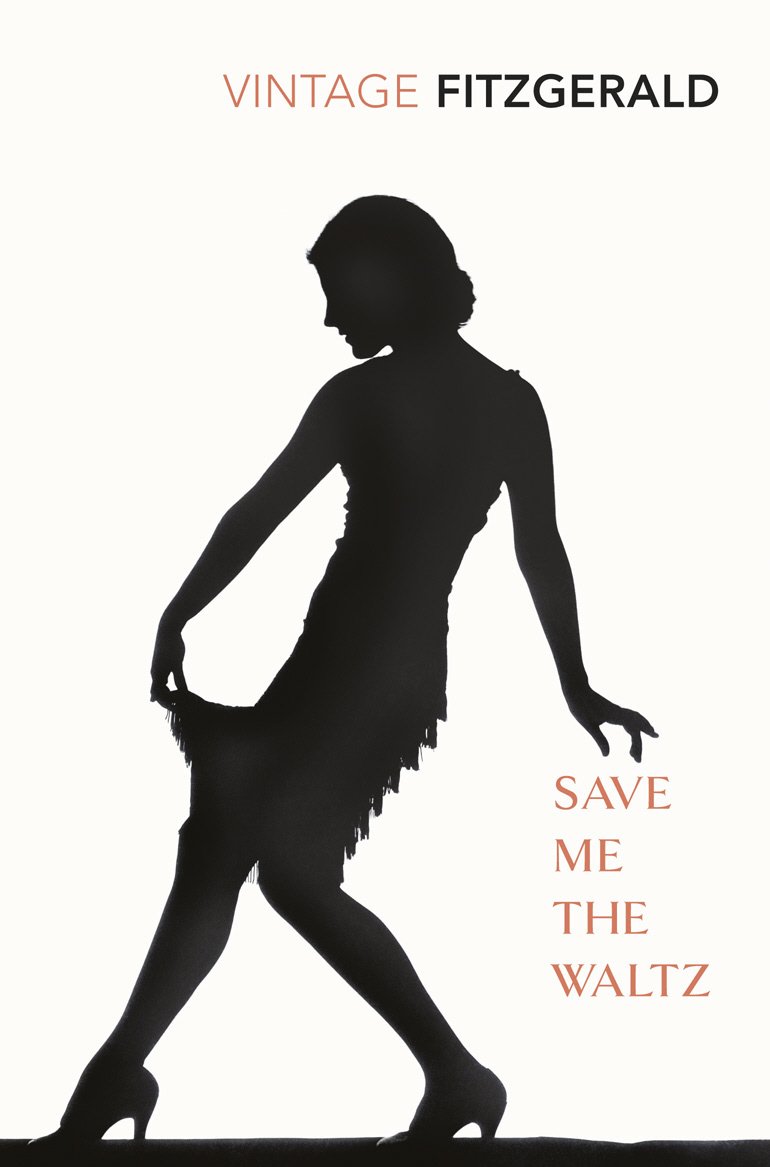
Plenty of interesting women have insufferable husbands, however, so I figured it would be only fair to give Zelda her due outside of Scott’s reputation. Unfortunately, even the relatively recent Vintage Classics edition from 2001 still puts Save Me the Waltz squarely under the shadow of Scott:

One of the great literary curios of the twentieth century Save Me the Waltz is the first and only novel by the wife of F. Scott Fitzgerald. During the years when Fitzgerald was working on Tender is the Night, Zelda Fitzgerald was preparing her own story, which strangely parallels the narrative of her husband, throwing a fascinating light on Scott Fitzgerald’s life and work. In its own right, it is a vivid and moving story: the confessional of a famous glamour girl of the affluent 1920s and an aspiring ballerina which captures the spirit of an era.

Is it even possible to talk about Save Me the Waltz without centering F. Scott Fitzgerald? Impossible to say.

Save Me the Waltz is deemed a largely autobiographical novel about Zelda Sayre’s childhood, marriage, and crushed ballerina aspirations. In that sense the book is pretty easy to summarize: the impulsive, carefree Alabama grows up, courts several different men but marries David, has a daughter, moves to Paris, takes up dance and moves to Naples, then loses first her dance career and then her father within a few months of each other.

Anyone who knows anything about the novel (and more than I did going into it) knows that it was a flop, critically and commercially. As someone who didn’t hate the book, and even liked it better than The Great Gatsby, it’s hard to know what to make of this response. It’s hard for me, nearly a hundred years later, to see what’s wrong with Save Me the Waltz that isn’t wrong with something like The Great Gatsby. Alabama isn’t a “likeable” protagonist (absentee mother numero uno), but that was hardly the same concern for novels in the 30s as it is now; besides, I’d argue that Gatsby is full of psychopaths. The entire second half captures in a taut, subtle way the frustrations that come when you have a wildly famous and successful artist for a spouse, and the obsession to prove yourself independently of their notoriety. The prose is flowery sometimes, but never so much that it’s not fun as well. I think the last sentence is an absolute banger, for example:

They sat in the pleasant gloom of late afternoon, staring at each other through the remains of the party; the silver glasses, the silver tray, the traces of many perfumes; they sat together watching the twilight flow through the calm living-room that they were leaving like the clear cold current of a trout stream.

Thus the temptation to lean hard in the other direction and hail it as an overlooked and unfairly dismissed classic; to name Zelda an artistic genius who never got a fair shake. Is that so? The truth is I can’t tell and that’s deeply unsettling. It’s the inverse reaction, in a way, to Tropic of Cancer or Ulysses: instead of the fear that I would be unable to recognize greatness in a manuscript, the fear that I would be unable to recognize mediocrity.

I Have Come on a Lonely Path

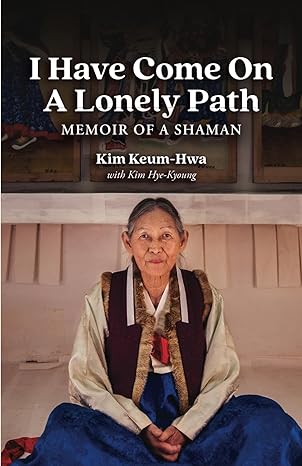
Seo Choi has put out multiple successful Kickstarter projects, including several books, that highlight various aspects of traditional Korean spiritual practices. The latest one that just went to print was Keum-Hwa Kim’s I Have Come on a Lonely Path: Memoir of a Shaman. (Original Korean: 비단꽃 넘세)

According to Choi’s initial Kickstarter description, the original edition of I Have Come on a Lonely Path published in 2007 was popular enough to be made into a movie, but fell into obscurity (or maybe just “hard to obtain” territory) when the publisher went out of business in 2011. An American friend of Choi’s happened to have a copy and gave it to Choi, who has made it available for the first time in English through her micropublishing company Alpha Sisters. I supported the Kickstarter at the ebook tier and received my copy back in April.

Seo Choi’s copy of the original Korean edition. Read more at the Kickstarter page.

The book isn’t especially long; I read the entire thing on commutes, lunch breaks, and waiting for friends at bars. The chapters are relatively short so you can dip in and out as you have time. Peace Pyunghwa Lee’s translation is excellent, with plenty of explanatory footnotes for historical context and specific cultural or technical terminology—the names of items of clothing, food, or particular rituals and so on.

Through Lee’s translation, Kim presents her story directly, without needless digressions or flowery ornamentation. The introduction to I Have Come on a Lonely Path includes a content warning for “domestic abuse, physical violence, war, mental illness, suicide, poverty, police brutality, and discrimination” but the depictions thereof were rather plain and brief. I’ve read much more unsettling accounts, in fiction as well as non-fiction. Through it all, Kim remains humble, compassionate and empathetic. We follow her from her birth in 1931 in what later became North Korea, through early poverty and her shamanic initiation as a teenager, to her middle years living on the fringes of society in South Korea, until the latter stage of her life as a recognized carrier of intangible cultural property (the Seohaean baeyeonsingut) with performances in the US and on live South Korean television, a feature-length biopic, and the founding of her shrine on Ganghwa-do. She speaks frankly of these accomplishments without any sense of self-aggrandizement, maybe because the struggles of her early years kept her humble. First and foremost for Kim is the preservation of a tradition and living a life of service; those honors seem to be more about that preservation and service than about herself. She also lived through interesting times, as the expression goes. We don’t get any commentary on the titans of twentieth century Korean  history here, however. Kim only mentions events directly impacting her or her clients. This is mostly in the form of ill-tempered Japanese officials or South Korean discrimination against North Koreans, but to my embarrassment her story was also the first I’d heard of the New Village Movement.

In light of the New Village Movement, particularly the less savory aspects that bring to mind Mao’s Cultural Revolution, translation projects like I Have Come on a Lonely Path are important for maintaining the traditions and integrity of a culture. The thought struck me sometime afterwards that in some ways it’s comparable to the translation movement in Arabic that preserved so many manuscripts in Greek and Latin for scholars in Medieval Europe to rediscover and to include in the early years of the European academic tradition. Sometimes knowledge, ideas, and stories need to drift from one language or culture to another to ensure their own longevity. Power consolidation, especially within the structure of colonialism, is often based on rendering these ideas forgotten.

Overall this was a quick and fascinating read, at least for any Koreaboo (such as myself) curious about Korean folklore and traditions. The English edition includes an afterword from Kim’s niece, who continues in the same shamanic tradition (she is Kim’s “spirit daughter”—mentee—in addition to being her brother’s daughter) and currently maintains the shrine Kim established on Ganghwa-do. If it’s not your bag, it’s not your bag, but in the informal itinerary I’m building for my next trip to Korea I just added Incheon and Ganghwa-do.

I Know Why the Caged Bird Sings

I mentioned elsewhere on the Internet that unless you make a concerted effort to review your to-read list, it really becomes just a graveyard of aspirations. On this particular blog I used the graveyard metaphor in my review of The Jakarta Method, but originally I used it in a post elsewhere about Farewell to Manzanar, which I read over two years ago now: September 4, 2021, if Storygraph has it right. Farewell had been on my to-read list since probably around 2010 or so.

And yet I don’t have a post here about Farewell to Manzanar. I might have been too overwhelmed or too lazy or too whatever at the time, but I think another part of it was easily: what is there to say about a book like this one? There’s nothing I could say about this book that wouldn’t just be superfluous and trite, so why bother, in the end it would just come across as glib.

The same feeling prevails for I Know Why the Caged Bird Sings but I want to at least push through that wall to say: here is a book I read. Not for the sake of getting anyone else to read the book, because it doesn’t exactly need more hype, but because I want as complete a record of my reading as possible. So, to that end: story time!

My sambo’s discovery of mid-century pulp magazines a couple of years ago led to him occasionally reading spooky poetry from publications like Weird Tales etc. on his Twitch stream. This, in turn, has led to occasional suggestions for other poems from viewers and regulars, which is how earlier this year he ended up asking me if I’d ever heard of Maya Angelou. I thought for a second that he was joking, since he’s usually extremely clued in to American (popular) culture, but no, the question was in earnest.

“Of course. She’s probably one of the premiere American poets of the twentieth century. National treasure.”

“Someone requested a poem by her today and it was almost impossible for me to get through it without crying.”

“Mm-hm. Like I said, national treasure.”

And yet I didn’t get around to I Know Why the Caged Bird Sings until now. I’m glad that I read it but embarrassed it took this long.