
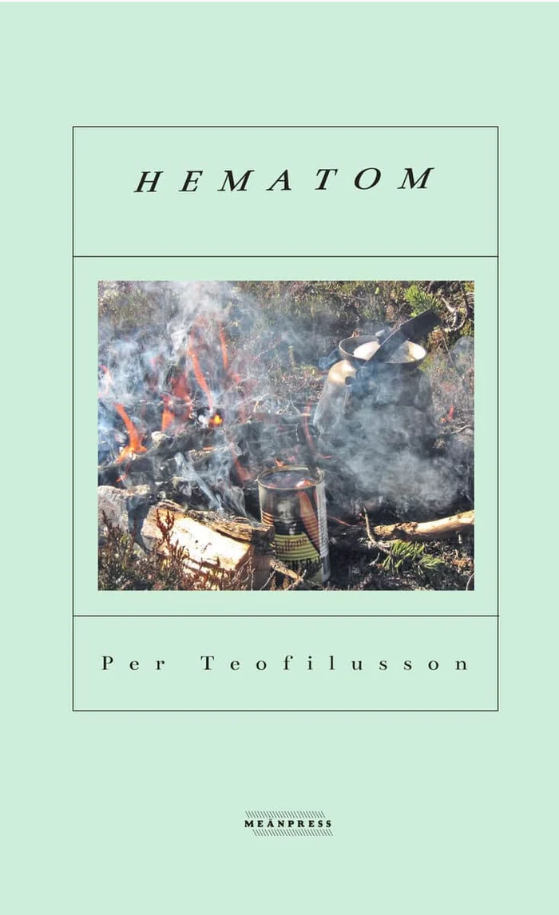
To absolutely no one’s surprise, on my first day in Kiruna I managed to find the local book store. Despite the pile of reading I had with me, I couldn’t resist picking up a couple of books from the local authors and topics shelf. One of them was Hematom by Per Teofilusson, native to Malmfälten but now living in Stockholm. It was small and short and the text on the back was intriguing so I figured, why not?
Wuthering Heights was required reading in school and we all hated it. Everyone was so miserable and bitter and cruel to each other. But now as an adult who’s tasted misery and bitterness and cruelty—and who’s had to endure Jane Austen, whose twee novels of manners are even more insufferable than unrelenting unhappiness—I have to say I get it now. I think. Wuthering Heights is on my list of high school reads to come back to with my adult perspective and experiences, to see if my opinion has changed.
I think I need to do the same with Hematom. Bokliv gives the following (AI-generated?) summary:
The book examines changes in the body as well as emotions through a personal, contemplative narrative.
A profound novel about life’s complexity.
Examines human emotions and the mysteries of the body.
(My translation from Swedish.)
I did not find profundity or mystery or complexity in these brief, autofictive-feeling texts. Here and there I glimpsed moments of genuine tenderness and pathos, when Teofilusson described aging, isolation, or fatherhood—but they were few and far between, greatly outnumbered by wistful fantasies about younger women’s bodies. Since I’m closer in gender and in age to the women on the sidewalk or subway he’s constantly sexualizing, it’s hard to ignore those moments. But maybe if I come back to Hematom in 26 years, they’ll hit differently.
