A Brief History of Seven Killings

There is a lot of discussion about A Brief History of Seven Killings in the translation world because the first and biggest decision to make when translating it is: how do you render Jamaican Patois in other languages? It isn’t used incidentally, like in other Caribbean literature I’ve read before, for snippets of dialogue or occasional idiomatic expressions; Marlon James employs the dialect for the overwhelming majority of this 600+ page book. Putting aside the question of sheer weighty wordcount majority, the shifts between Patois and standard English are important pieces of characterization. Each perspective character has their own voice, of course, but even a single character will slip from one to the other depending on who they’re talking to and how they’re feeling. An educated middle-class character sometimes switches to Patois for her inner monologue under extreme emotional duress; others play it up as a racial performance in order to appeal to powerful white Americans and get what they want. These are deliberate choices by the author to convey…something…that falls flat if you were to make it literal or textual.

I don’t know to do it! I won’t pretend to know! But that makes A Brief History one of the rare books published since 2000 that I’m actually vaguely aware of, and so I was excited to see this book proposed for my international WhatsApp book club. I fell behind, however, and only finished this sometime in mid-June even though it was May’s book—probably because I was still making a heroic effort to finish Jag heter inte Miriam.

A Brief History of Seven Killings is a fictionalized account of the assassination attempt on Bob Marley, or maybe to put it more precisely, Marlon uses the assassination attempt on Bob Marley as a framing device for a story about Jamaica, Jamaicans, and their relationship to the United States that spans the course of fifteen years. Getting into any more plot than that would miss the point, because it’s less what happens and more how characters develop and inadvertently shape their destinies over the course of the book. In a way, plot is only incidental and is an excuse to bring together a particular ensemble cast that would otherwise have nothing to do with each other.

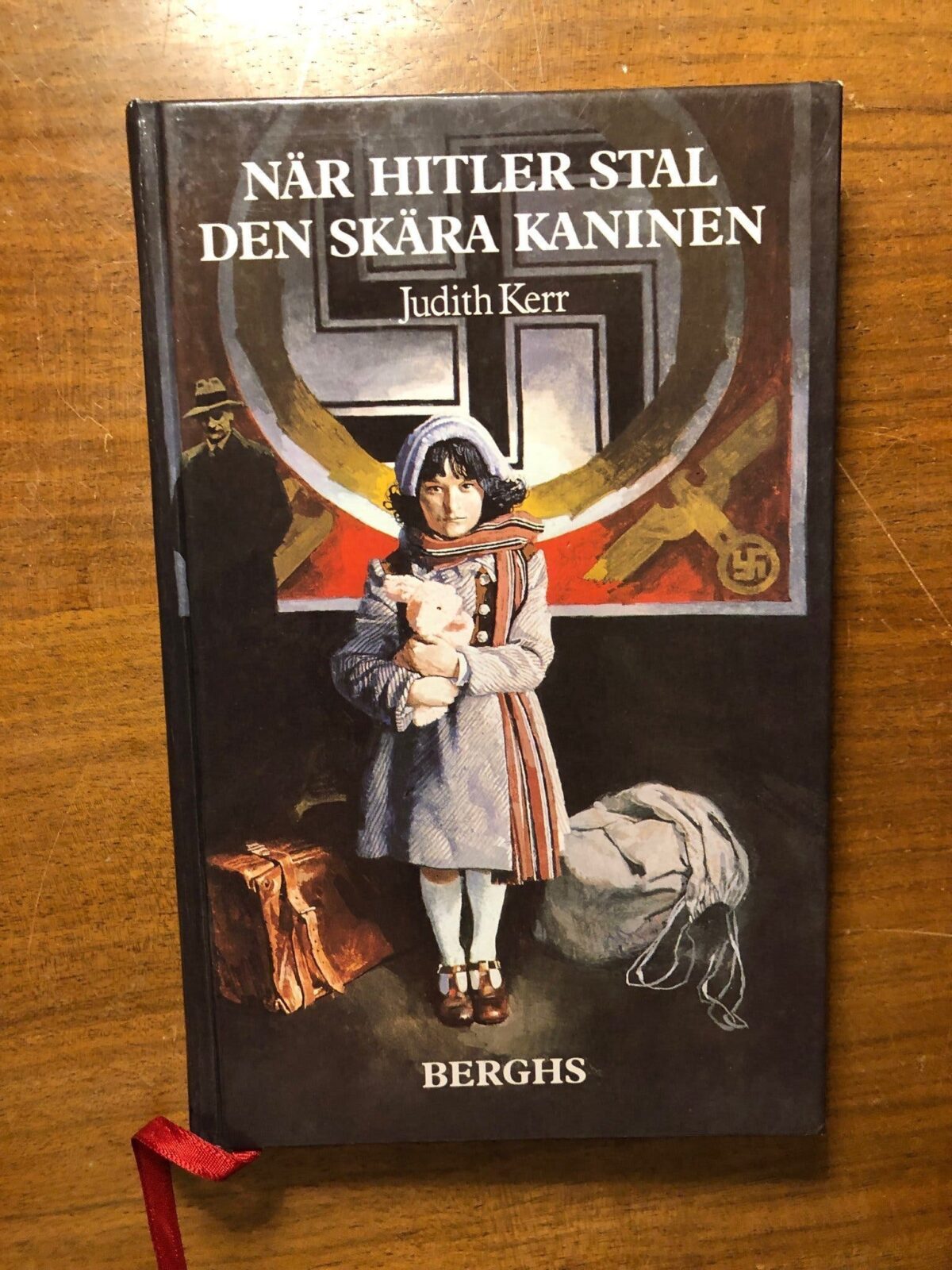
När Hitler stal den skära kaninen

In the wake of the Unite the Right rally in Charlottesville, I asked my Jewish friends which Holocaust novels and movies they would recommend. The topic has a tendency to get mined for sentimentality and melodrama by lazy hacks, after all. One of the books that came up was Judith Kerr’s When Hitler Stole Pink Rabbit, a title that I recognized from elementary school reading lists but that I had never read myself.

A few years later, I noticed a Swedish translation (När Hitler stal den skära kaninen) by Ingegerd Leczinsky on the book swap shelf at the local arts center and decided this was my moment. It took another year or so, and then in my year of reading history I decided I should finally make good on my previous inquiries.

When Hitler Stole Pink Rabbit is an award-winning classic of children’s literature so any review in 2026 is redundant. Given the state of things in the world—in the US, mainly—it’s probably worth revisiting these classics. It’s also worth understanding the ripple effects of the camps: what it was like for the families who left as refugees, people who would have otherwise never had a reason to leave the only country they’d ever known, people who had to get by with intermittent updates about the friends and family who had stayed behind, people who had to live with the uncertainty of whether it would ever be possible to return or if they would ever want to.

My only gripe is specific to this particular hardback edition from Berghs: Kerr also provided her own illustrations for the book, and her art often (though not always) appears on the covers. But my edition (pictured above) has an extremely grimdark and dramatic oil painting aesthetic that doesn’t at all match Kerr’s simpler, lighter pen-and-ink illustrations inside. Other publishers are also guilty of this choice, though, so it’s hardly controversial. But it’s certainly a choice to feature Anna, Judith’s stand-in, holding the pink rabbit that never left Germany with her.

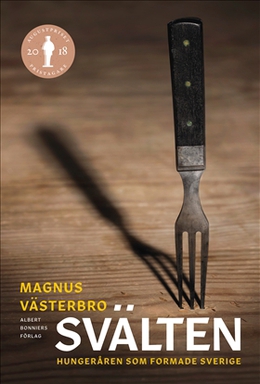
Svälten: Hungeråren som formade Sverige

Magnus Västerbro’s Svälten (Eng: The Famine) was another Swedish book club pick, but life conspired to keep me from actually attending the meeting so I don’t know what anyone else thought about it.

This was a rare foray into nonfiction for the club. Västerbro’s absolute brick of a tome dives into the three years of famine and food scarcity that plagued Sweden in the mid 1800s, bringing to bear not only a wealth of primary sources but deep research into famines and hunger as a whole and drawing connections to more recent events. It would be easy for this kind of book to become overwhelming, but Västerbo keeps the reader from getting lost by anchoring events to specific memorable characters. Each chapter also takes a very granular focus: one on the physiological effects of hunger, for example, or another on crime rates during famine.

For someone like me, who has at best only a fuzzy, broad-strokes understanding of Swedish history, this was a fantastic resource for filling in at least some of those gaps. As an American, it’s also interesting to read about the factors behind this or that wave of immigration from the inverse perspective, so to speak. Our textbooks never get too deep into this kind of national trauma, often distilling things into a few phrases or concepts: poverty, religious freedom, Irish potato famine, etc. In Svälten the historical tragedy takes center stage for its own sake instead of being the mere setup to the Great Experiment of American Democracy. My only complaint is that the concluding remarks feel tacked-on, with much less actual research and much more The Moral Concerns of the Zeitgeist—by which I mean some facile commentary that could be summarized as “oh ho ho, isn’t it ironic now that our biggest health problem is obesity instead of starvation???”. Granted, that’s always going to be a sore spot for me, but there is much less research here (measured in footnotes and bibliography references) than in the rest of the book. It doesn’t seem to serve any purpose except to be an obvious, if uninteresting, way to tie things up.

Even though Svälten originally came out in 2018, it doesn’t seem like there’s been an English translation yet. More’s the pity, because I think it would be of immense interest outside of Sweden.

Orbital

Still reading books, bad at posting here!

Samantha Harvey’s Orbital won the 2024 Booker Prize, which was a significant factor in its selection for my monthly Swedish book club. There is a Swedish translation, but we all read it in English.

We all hated it, too! Gratifying!

Orbital gives us 24 hours in the life of astronauts on the International Space Station. Cool concept, but since Harvey spends most of the book describing Earth from space instead of really getting into anyone’s heads, or dissecting any relationships or examining any characters, it’s just pretty blah. It feels like reading an Instagram account: each chapter its own post, with a meticulously described view over the Earth and then an accompanying “caption” in the form of a crew member’s thoughts, always too short to plumb any depths.

The orbital perspective—the fact that we are constantly presented with the image of the Earth as a whole, as a single planet out in space—suggests profundity, but in the end goes no farther than suggestion. Nothing is asked of the reader. If you find the constant descriptions of Earth repetitive and uninteresting, skimming over them does nothing to diminish your experience of the book. If you instead find the internal narrations and thoughts of the astronauts repetitive and uninteresting, skimming over those parts likewise changes nothing. The super typhoon that the astronauts track throughout the book, whose damage Harvey occasionally zooms in to describe, doesn’t actually have personal repercussions for any of the characters since we never find out if loved ones lived or died. The omniscient narrator informs us of a crack in the hull, but nothing comes of it.

The judges have their reasons, I suppose, but I wonder if one of the most important reasons was their sheer exhaustion with the world. If I were still in academia I might be tempted at this point to write a monograph on the concept of the “burnout novel,” with a nod to my boy Byung-chul Han. That’s the new genre to which I’d say Orbital belongs: the burnout novel. Every day we are inundated with crises and catastrophes that demand our attention and our empathy, and maybe it turns out those are not boundless resources. Likewise it seems our ability and our means to renew those resources are becoming increasingly stunted. In that context, Orbital is a book that can gently wash over a passive reader with no effort whatsoever. There is no urgency, no message. How easy to read a book that makes no emotional demands. How relaxing.

How pointless.

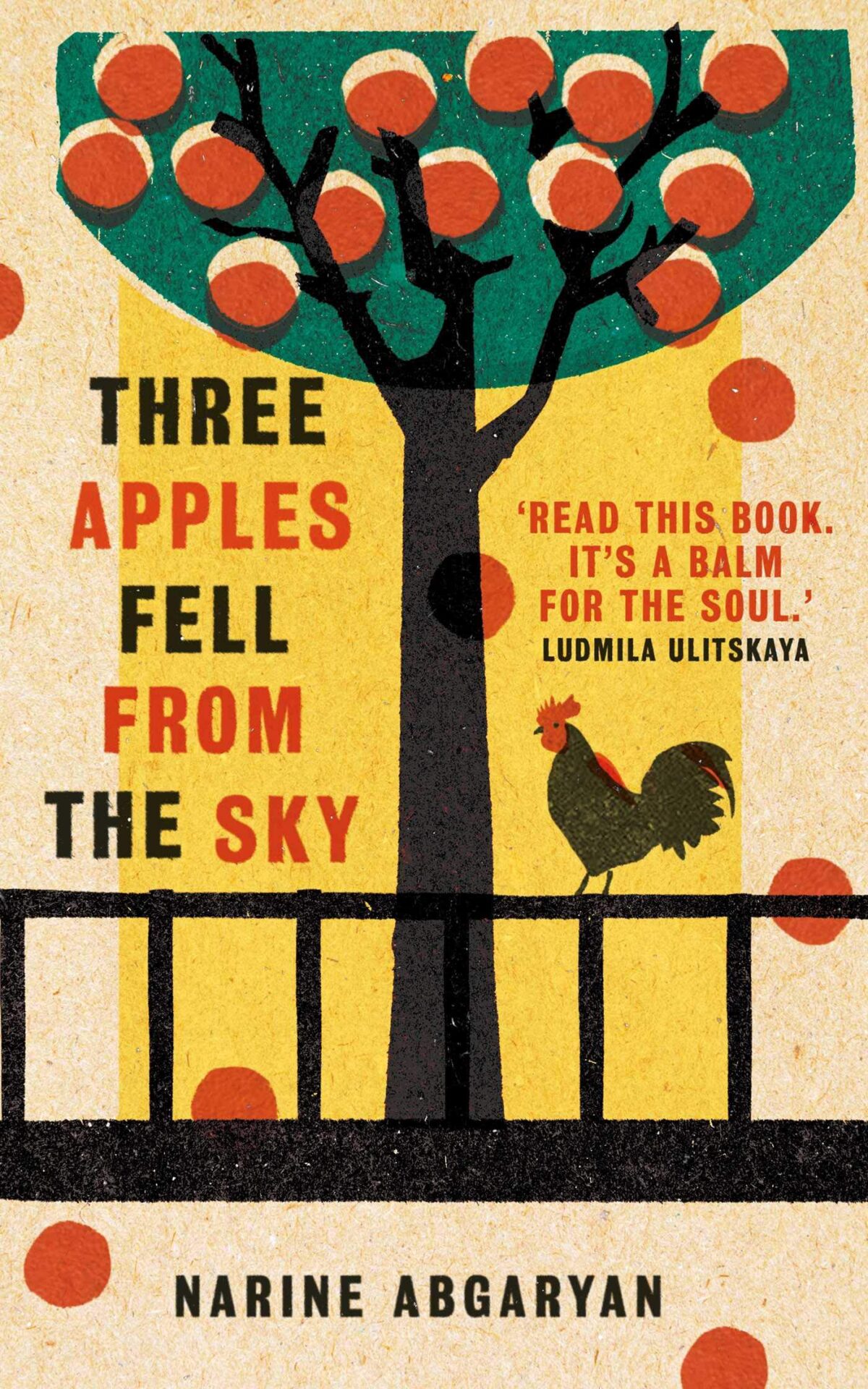
Three Apples Fell From the Sky

My original objective when I was at the library to pick up Save Me the Waltz was Narine Abgaryan’s Three Apples Fell From the Sky. It was on my TBR because a (long) past issue of Karavan featured a favorable review, and it was the first book from my TBR that was available at a nearby library while I was in between appointments.

The story centers on the Armenian village of Maran, ravaged by war and natural disaster. The youngest resident is the 58-year-old Anatolia, whose deathbed preparations are the opening action of the book. Naturally, of course, she doesn’t die. Instead she is at the center of a series of events that have the potential to revitalize Maran; our entrance point into a multifaceted history of the village.

Abgaryan is an accomplished novelist with several works out by now, but Three Apples is the one with the most accolades: the English PEN Translates award, the Yasnaya Polyana Award in Russia. Reviews call it “a balm for the soul,” “an enchanting fable,” “an absolute joy,” or “a tender and quirky tale.” Lord knows I could have used a bit of feel-good reading when I picked it up!

Alas, it wasn’t to be. Maybe I’m too cynical for “quirky,” I don’t know, but it’s hard to feel rejuvenated or inspired by anything in the magical realism genre. The last I checked, I don’t have a totemic white peacock shielding me from harm. Being unimpressed with this book feels a bit like kicking puppies—though unlike Long Way to a Small, Angry Planet, I didn’t actively dislike Three Apples. I just wasn’t especially charmed by it.

I should note, however, that the book did have one high point for me: food. The book doesn’t skimp on details about various regional foods and desserts, and everything sounds amazing. Perhaps some of this is an artifact of translation (and credit to translator Lisa C. Hayden, the language is beautiful), but given this is a novel about the Armenian countryside written in Russian for a largely not-Armenian audience, I’d be willing to bet that most of the flavor descriptions and explanations were in the original as well. Time to see if there are any Armenian restaurants in Stockholm!

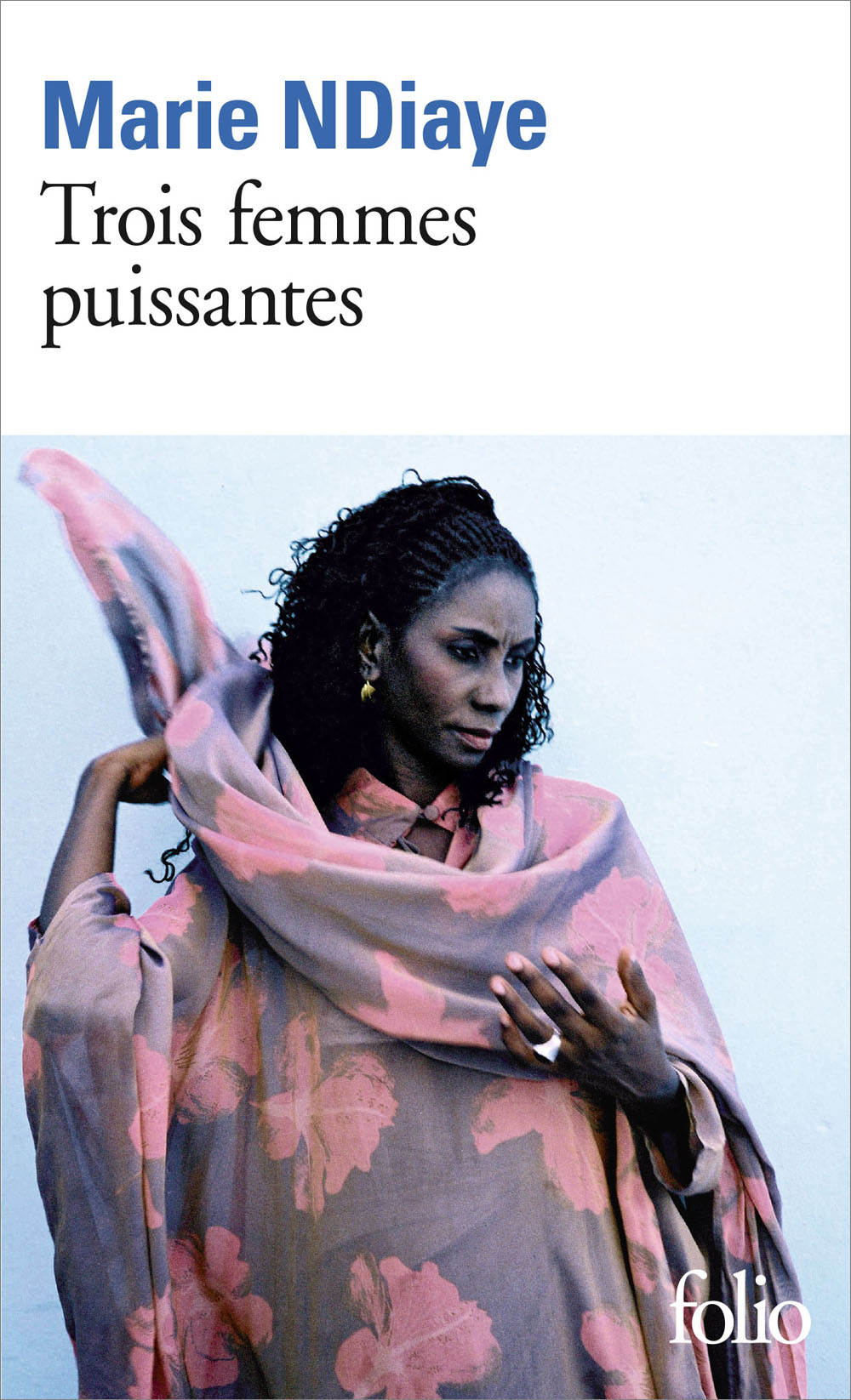
Trois femmes puissantes

After I fell in love with Marie NDiaye through La Vengeance m’appartient, I was thrilled to find out that the Stockholm library also had Trois femmes puissantes. In French, Swedish, and English to boot!

I racked up a late fee in excess of SEK 200 in order to really suck the marrow out of this one, though there were long periods where I just didn’t have the time or the mental capacity to engage with French. My insistence on reading sections in French, then Swedish (Ragna Essén, translator), then English (John Fletcher, translator), then French again means that the 230-odd pages ballooned into nearly 1,000 pages. I forgive myself! Even if this very nearly tanked my French reading goals for 2024!

Trois femmes puissantes is a collection of character sketches of three women whose lives are (possibly?) loosely intertwined. First we have Norah, a successful lawyer who has returned to her father in Senegal on an urgent matter—mounting the legal defense of her beloved brother, who stands accused of killing his stepmother with whom he’d been having an affair. Then we have Fanta, though her story is told through the perspective of Rudi, her French husband. We meet the couple destitute in France, several years after being forced to leave Senegal. Finally we have Khady Demba, a young Senegalese widow who finds herself forced to emigrate to Europe.

The thematic elements of parent-child relationships and the ripple effects of toxic masculinity connect all three stories, though there are hints or more explicit material links as well. We actually first meet Khady in Norah’s story, as a domestic worker in her father’s house. Norah’s father acquired and then lost a substantial amount of wealth through the ownership of a tourist village in Dakar—one that Rudi’s father may or may not have been engaged in constructing. (NDiaye doesn’t make it clear either way; I decided to read it that way because it gives a nice symmetry and mutuality to all the relationships among the women.) And finally, we learn that Fanta is a distant relation of Khady, and it’s the prospect of Fanta’s imagined wealth in France that sets Khady on the road to Europe.

Like in La Vengeance m’appartient, NDiaye leaves a lot of questions unanswered. Norah’s and Fanta’s stories end fairly inconclusively: we don’t know the outcome of Norah’s trial, we don’t know whether Rudi’s epiphany will materially change the quality of Fanta’s life. Only Khady’s story ends with a clear, decisive outcome. All three stories were fantastic; Norah’s was my favorite, because I found Norah’s ambiguous relationship with her father so compelling, but the way NDiaye builds tension and suspense in the other two is just superb.

However, once again I have to note that I was annoyed by the English translation. At this point, maybe I just have to admit defeat when it comes to French. I didn’t like the English translation of La Vengeance m’appartient, either, but that was a different translator (Jordan Stump). If two different translators both produce fairly similar translations of the same author, then I’m willing to admit that the problem is me. I’m by no means fluent in French; I don’t have an inner ear attuned enough to judge French prose for being clunky, or old-fashioned, or exceptionally beautiful. It’s back to the Pevear and Volokhonsky debate all over again: sometimes the original is just plain awkward.

That said, while Fletcher doesn’t seem to have much of his own commentary out in the world, the little I read in this article by Lily Meyer over on Public Books didn’t necessarily endear him to me. I didn’t care for Stump’s writing style in interviews, either, but he at least didn’t come across as ambiguous or even hostile to NDiaye’s writing as Fletcher does here. And I’ll keep throwing myself at the brick walls of NDiaye’s writing because whatever my level of competence in French may be, there is something in her writing that I find magnetic and spooky.

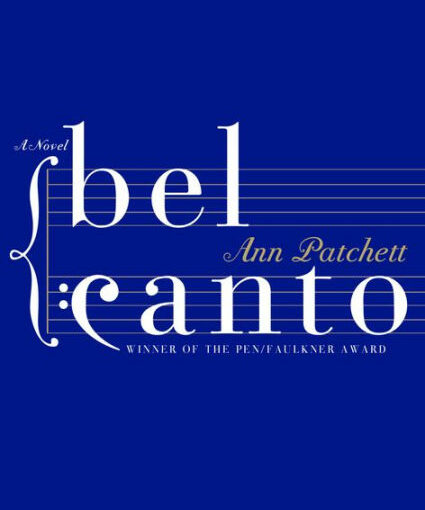
Bel Canto

Ann Patchett’s Bel Canto was a long-time TBR resident based on reviews I had read in book blogs, which means I added it sometime around 2014? 2015? and then finally read it in 2024. I would scroll past its cover now and again, debating if I was really still interested in reading it, but every time it made the cut.

Now I’m not sure if it was worth it.

An unnamed Latin American country invites a prominent Japanese businessman to celebrate his birthday and hopes, by feting him with a world-famous operatic soprano, to encourage his investment in the country. A guerilla paramilitary group breaks into the party, hoping to kidnap the president, and when they realize he’s not there, they take the entire birthday party hostage instead. The hostage situation drags on for something like four and half months, until it’s brought to an abrupt and tragic end. Minor spoilers undoubtedly follow, but I’m deliberately avoiding what I consider the real showstoppers.

Bel Canto was already going in at a disadvantage because I read it as an ebook. I’m not trying to be a print purist; in fact I’m grateful for the many advantages of ebooks! I can bring a near-infinite library with me in my pocket when I travel (or end up unexpectedly hospitalized), I can continue to patronize my US library from overseas, I can keep up with time-sensitive publications without running out of shelf space. However, I also know that my focus can suffer with ebooks, especially with Patchett’s style of writing: slow, reflective, internalized. Format was undoubtedly a contributing factor to my overall negative experience of the book. But even if I had read the book in print, there were several authorial decisions that would have still broken immersion for me.

The biggest unforced error out of all of these was conflating translators with interpreters for the entire book. (Translators work with the written word, interpreters work with the spoken word.) One of the main characters is Gen, an interpreter for the Japanese guest of honor who ends up interpreting for the entire collection of hostages and guerillas thanks to his facility with some half a dozen languages: Japanese, English, French, Spanish, Russian, German, maybe others. I realize that people often use the words “interpreter” and “translator” interchangeably (or rather, just use “translator” for everything), and from any of the other characters this usage wouldn’t have bothered me at all. But any interpreter I’ve ever known has always made a point of 1) thinking of themselves as an interpreter privately as a matter of vocational identity, 2) calling themselves an interpreter when discussing themselves and their career with others, and 3) correcting people who call them translators. Spending a whole novel with an interpreter who thinks of himself as a translator, and calls himself a translator, and sees absolutely nothing wrong with being referred to as a translator, broke immersion for me.

A couple of smaller, fuzzier details that rang weird for me had to do with the Swedish accompanist. His death from diabetic coma checks out (source: my Type 1 diabetic brother), but his name—Christopf—is well weird. Of course, since the hostage situation was based on the Japanese embassy hostage crisis in Peru and the soprano was based on Karol Bennett, for all I know Christopf is also based on someone else Patchett knew in real life and I will put my foot in my mouth by criticizing his name as unrealistic. I’ll just point out that there are zero hits for “Christopf” on either Hitta.se or Ratsit.se, which goes to show how widespread the name is in Sweden. There was also an offhand description of Swedish that initially struck me as odd, but upon rereading I’m willing to retract the criticism.*

That said!

It did make me more critically reflect on how Patchett describes the other languages in the book and there is a dodgy, hand-wavy ambiguity about how they’re described—even from the perspective of Gen, the gifted interpreter—that lacks the specificity of someone who feels comfortable speaking them. It’s unfortunate that this hand-waving is set up against the clear familiarity that Patchett has with opera. And if Patchett is comfortably fluent in any of those languages, then it’s even more unfortunate because she comes off as the exact opposite.

Speaking of the opera, it’s time to bring up one of my least favorite tropes: the healing power of music.

It’s maybe surprising that I would be annoyed by this trope since I’m a music person (see: the violin feels from Light From Uncommon Stars), but I would argue that it’s actually not at all surprising. It is the direct opposite of my lived experience that most people have the breathless, awestruck response to classical music that the characters in Bel Canto have. Of course there are opera lovers present at the party, and of course they love Coss’s voice, but Patchett imbues this soprano with an unearthly quality that entrances everyone present, including the guerillas holding them captive.

Or maybe I just have alto (contralto? tenor? my vocal range is sad) beef because sopranos already get all the love.

Anyway, I’d be willing to overlook those things but for one larger, underlying issue: MFA fiction.

A bookish friend and I have taken to using “MFA fiction” as a shorthand for a particular kind of overrated novel that I’m finding it difficult to describe now except: the purpose of MFA fiction is to show you, the reader, how enlightened the author is. Not just smart, necessarily. Not just educated. But also how emotionally transcendent they are. The narrative tone carries “a certain kind of false timidity” (to quote my friend), a self-conscious restraint and ironic distance. Outline is another great example of what we both consider MFA fiction. I think a lot of literary prizewinners are populated by this kind of writing because the judges like to think of themselves as equally enlightened beings.

Of course, I don’t have any specific illustrative quotes to present here, just “the vibe.” At this point I’ve totally failed at death of the author. Most of this review, most of my response to this book, is more or less based on what I assume Patchett’s motivations and background and intent to be, rather than the text on its own. The cool thing is that I’m just writing for this weirdo little blog and so it’s perfectly acceptable for me to fail at death of the author! Sorry Ann Patchett, you’re a more accomplished writer than I’ll ever be and I’m sure you’re a lovely person, but Bel Canto wasn’t doing it for me.

*Minus points for Gen learning Swedish from Bergman movies, though. It’s a cliche unworthy of what Patchett is attempting here.

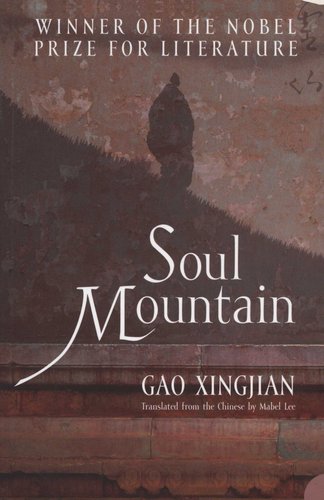
Soul Mountain

I picked up Gao Xingjiang’s doorstopper from the “leave a book, take a book” library at a hostel in Beijing in 2010. After a couple of half-hearted starts, I finally read it in 2024.

One more for the reading stats!

I liked the pointlessness of it all, how Soul Mountain is basically a collection of stuff without much of a structure and no plot to speak of. I liked the split of “I”/”you” perspectives, I liked a lot of the descriptions of the landscapes. It’s the kind of book I can easily return to again and again: there’s so much rich imagery, reflections, descriptions to get lost in, without having to keep all the threads of plot or character relationships straight because there are none!

I clearly tilt towards books that are thinky thoughts interspersed with nature and travel writing.

What I liked less was how Gao can’t seem to get beyond objectifying women any time they turn up. Either the male narrator (text makes it very clear that “I” and “you” are both men, so even with death of the author etc. I’m comfortable slotting this into “problems of the male gaze”) finds a woman attractive but childish or otherwise laughable, or he finds her unattractive and morally repugnant. Regardless, her sex appeal or lack thereof never goes unremarked. A recurring “she” who is part of the “you” chapters gets this the worst: she starts out as attractive and charming, but as things progress she turns more and more impulsive, childish, and petulant.

Who hurt you, Gao?

I would love to know how translator Mabel Lee felt about those moments in the text, how she thought about translating them, if she thought about them at all. I wonder if women in Gao’s other work fare any better than they do in Soul Mountain.

Frère d’âme

I added David Diop’s Frère d’âme to my TBR by way of a review in the Karavan literary magazine, and to be honest I was a bit leery of it going in. The review was positive, but it gave the impression that the book was a gritty, grim, hyper-realistic portrayal of war, which is not a thing I’m usually into. I approached the book the same way I might approach eating a strange new vegetable: accepting that it might not be an enjoyable experience, but that it would at least be good for my (reading) health.

Frère d’âme is a wartime bildungsroman centered on the young Alfa Ndiaye, a Senegalese soldier in the French trenches of WWI. The book opens with the gruesome death of his best friend, adoptive brother, and “plus que frère” Modemba Diop in the battlefield, and from there on we follow Ndiaye through grief, trauma and regret.

That’s an incredibly pretentious way to describe the story but it’s the best I can do, I suppose.

Let’s get the content warning stuff out of the way first: there is plenty of frank description of gruesome wartime (and otherwise) acts. People are disemboweled, heads are blown off, and as a narrator Ndiaye doesn’t hesitate to describe all of this in detail, often repeating or lingering on the images.

But somehow the book is more dreamlike (if sometimes nightmarish) than gritty realism. The first-person narration keeps the reader in Ndiaye’s head rather than out in the action, and Ndiaye himself is so apparently unbothered by it that his descriptions of violence and gore become more surreal than anything else. Ndiaye’s language is also highly repetitive, not in a way to suggest that he lacks ideas or words but rather in a way that creates rhythm, like all of those iterations of “rosy-fingered Dawn” in The Odyssey. That rhythm also made it easy for me and my mediocre French to immediately get lost in Diop’s writing. There’s a certain musicality to it that draws you in. I bet the audiobook is a work of art.

I say “apparently” unbothered because the subtext is of course that Ndiaye is deeply traumatized by the death of his friend and by the brutality of war in general. The conversant tone in his language, along with the repetition and verbal tics (“je sais, j’ai compris” and variations thereof; “par la vérité de Dieu”), create speech patterns you might expect from someone talking to themselves; the deliberate attempt to shift the mind’s focus away from something painful.

I won’t spoil the ending, except to say that I’m of two minds about it. I’m not thrilled with the choice Diop made for the actual events, but I deeply appreciate the ambiguity he allows the reader for interpreting them. Are we watching Ndiaye have a mental breakdown, or is he genuinely possessed by the spirit of his dead friend? Why can’t it be both?

As with most of the French books I read, once I finished Frère d’âme I immediately picked up the Swedish translation (Om natten är allt blod svart). So far I’ve been pretty well satisfied with them, but this time around less so. Om natten isn’t a hatchet job on par with Stick or anything, but the rhythm is still…different. Here are the first three sentences:

“…je sais, j’ai compris, je n’aurais pas dû. Moi, Alfa Ndiaye, fils du très vieil homme, j’ai compris, je n’aurais pas dû. Par la vérité de Dieu, maintenant je sais.”

“…jag vet, jag förstår att jag inte borde ha gjort det. Jag, Alfa Ndiaye, son till den gamle, gamle mannen, förstår att jag inte borde ha gjort det. Vid Guds sanning vet jag det nu.”

I have my own opinions about how I would translate the French into Swedish, but I’m not about to pop off here and potentially make a fool of myself. I couldn’t grab a hold of the English translation before sitting down to write this post, so I have no idea how that fared, either (except to note that it won the International Booker Prize). Hopefully at some point an ebook version will appear in one of my US library apps.

Overall, Frère d’âme is a great example of why I think the checklist approach of my reading goals is at least a good start. It’s not a book I would have encountered if I weren’t making a deliberate effort to seek out different things, and my bookish life is that much richer for having read it.

Ixelles

Another book club book, this time for the local book club whose April meeting I may or may not have the schedule and mental fortitude to attend. (Not because of the club. Everyone is lovely. Rather, because work is busy.) I don’t keep too much track of assorted literary prizes, but I knew enough to know that De kommer att drunkna i sina mödrars tårar won the August Prize a couple of years ago, so when Johannes Anyuru’s Ixelles was tapped as our next pick I decided to read it. The premise was interesting, and I always prioritize book club picks that are Swedish originals instead of the English best-sellers I already hear too much about.

I still can’t decide if the problem was with the book or with me.

The problem could have been with me because I already spend most of my waking life* reading, writing, dealing with language, processing Swedish; there comes a point where, when I’m reading Swedish fiction, my brain doesn’t know what to do with words anymore. At that point the language triggers a near-synesthetic experience where my nose detects the faintest whiff of brackish water and I feel a salty taste at the back of my tongue, and it’s not anything fun or embodied or anything like being immersed in the language. It’s rather that point in the meal where you’ve had too much and the food no longer tastes good because your body is smashing all kinds of physiological buttons to get you to stop eating.

*I say “waking life” because despite everything, I still dream exclusively in English.

I had those moments a lot during Ixelles. In the book’s defense (since this is a me problem), I don’t think I would have had them if I had been reading the book during the off season. I also don’t think I would have had them if I had slowed down, taken my time, instead of trying to bulldozer my way through the library copy to get it returned in a timely manner.

But maybe the problem was with the book. I skimmed or even skipped substantial portions without losing the thread of the story, which I consider a flaw rather than a strength in a novel. The summary alludes to a tight, dramatic thriller (maybe that’s how we have to market books here in the birthplace of Nordic noir?) but what you end up with is a lot of plodding around: waxing poetic (hah) about the reality of voices, of fictional characters, and a lot of dialogue that doesn’t sound like how people actually talk but like scrapped lines from mildly interesting poetry. Occasionally some plot happens.

Ruth is a single teen mom. Or she was originally a teen mom, but now she’s well into adulthood. Her son, Em, is huge into a tabletop roleplaying game that I assume is Dungeons & Dragons but hey, we could pretend it’s Pathfinder since Anyuru never actually names it. (Would Wizards of the Coast raise a stink all the way in the US? Actually, knowing Wizards of the Coast, I wouldn’t be surprised.) Em’s father, Mio, was murdered before Em was born.

Ruth has a mysterious and cynical PR style job that is essentially a troll and astroturf factory on steroids. The first assignment we see her take, for example, is from an understated luxury men’s fashion line that has unwittingly become associated with a Belgian gang. This is obviously not the branding they’re looking for and so Ruth manages to create an artificial online brouhaha accusing the brand of being racist, which neatly solves the gang association.

The story really gets started when Ruth takes a job on behalf of the local government: her old neighborhood, the projects where she grew up and met Em’s father, is slated to be demolished so a highway can be put in. Residents are obviously not happy about this decision and Ruth has been contracted to kneecap the burgeoning protest. The job brings her back to her old neighborhood and she gets tangled up in a minor bit of intrigue, as the rumor mill informs her that Mio isn’t really dead. Rummaging through the contents of an unconscious boy’s backpack she finds a CD with a recording of someone claiming to be Mio, talking about his life in “the nothing department.” The CDs (because there are several, dozens, hundreds maybe, turning up in backpacks and lockers everywhere) have become something of an underground hit here in the projects and all of the youths are talking about them.

Of course none of this has to play out straightforward and so we get a lot of flashbacks that don’t do anything; the characters are all pretty bland, like even Anyuru himself doesn’t care for them, so the departures from the main story seem pointless. Even Ruth has a distant, uninteresting quality to her that perhaps comes from Anyuru’s decision, as a man in his 40s, to make the protagonist a single mom in her 20s. He has no inner lived experience of that kind and so is unable to imbue her with anything concrete and grounding in that regard.

On the other hand, we get a lot about Ruth at work on her troll job, which seems like it could potentially be pretty interesting. The conceit is like something out of a William Gibson novel (a bit like the inverse of Cayce Pollard out of Pattern Recognition), but in execution it’s not nearly as snappy. She’s decided to create a writer “character” for this assignment and so (sometimes) writes, but mostly banters with her boss about what kind of person this character should be in dialogue that I think Anyuru finds very witty and on the nose but that I thought was just self-indulgent and insufferable. All in all, Ruth’s job is a bit of a snooze fest that keeps us away from the one point of intrigue in the story: the mysterious CDs.

The one notable overlap between author and protagonist is poetry. Ruth is a gifted poet, or supposed to be, and her poetry gets her noticed by the mysterious agency that now employs her. Yet somehow the whole thing feels like a combination of bizarre metaphor (artistry of some kind being a form of acceptance and success for marginalized people in mainstream society) and wishful thinking/self aggrandizing (poetry is such a gift, it points to something unbelievably special about a person, and here is a universe where it is given its proper due). A lot of hay is made about how Ruth’s gift for language and creating characters is what makes her good at her job, which is a funny thing to read in a novel where the characters are all dull and bland.

To get back to the story: the mystery of Mio’s death (and the proliferation of CDs purporting to be recorded by him) is solved for the reader, so to the extent that it’s a murder mystery or thriller, Ixelles delivers on that front. You find out whodunnit and why. I won’t spoil that part of the story here, since it’s a bit of a spoiler-y plot twist, but I will say that I found the resolution banal and deflating.

I think there’s just something with novels by poets that makes me lose my patience. An ear for language is important in a novel, yes, but so is understanding characterization, pacing, and plot, and you don’t get good at those just from writing poetry. The book progresses through weird pointless interludes of excerpts from the mysterious CDs, Em and Ruth playing Dungeons & Dragons (or Pathfinder!), flashbacks with Ruth that don’t establish anything we couldn’t already infer (she was in love with Mio? you don’t say!) or dream sequences from secondary characters. One thread of the flashbacks is with Mio, and that’s the only thread that actually contributes to the story itself.

I also don’t understand the appeal of setting novels in completely foreign countries, which wow when I phrase it like that sounds narrow and small-minded. To be more specific: characters traveling to places, or living as expats or outsiders in foreign places, is a literary well that will never run dry. That’s not what I mean by setting a story in a foreign country.

Anyuru is Swedish and is writing in Swedish; all of the characters in Ixelles are Belgian, whether immigrant or first generation or otherwise. I don’t know that there was anything in the story being better served by being set in Belgium than in Sweden, and a cursory Google search does not indicate that Anyuru has any particular history with or connection to Brussels specifically or Belgium generally. If he was trying to make a sly point about EU politics (Brussels as a stand-in for Europe as a whole, EU parliament, etc.), then it was lost on me. I have a tiny brain. A tiny brain that is overwhelmed by unfamiliar Flemish names.

The comparison that came up for me while I read was Samlade Verk, and on reflection it’s not surprising as both books kind of have a lot in common. The August Prize is perhaps the most obvious and banal of those commonalities, followed by their relative long length. But both books feature single parents with legendary disappeared partners; the authors even cross age and gender lines to write their complete opposite (Sandgren writing an older father and Anyuru writing a younger mother). There are plenty of offhand cultural references, and the stories both hinge on fictional writers (Sandgren creates one for her protagonist to be obsessed with; Ruth creates one as part of her astroturfing assignment in the projects). Both books cast sidelong glances at colonialism (the disappeared mother in Samlade Verk wrote her thesis on the topic; several of the African diaspora characters voice opinions on the topic in Ixelles). Both books jump around in chronology and rely heavily on flashback, or at least a jumbled timeline.

So why did I love Samlade Verk but turn up my nose at Ixelles?

Sandgren got a lot of guff from the neighborhood book club members for being young—or rather, trying too hard (in their opinion) to establish sections of the book as being The Eighties to compensate for not actually having experienced The Eighties. I can’t know how that part of the book hits for readers who remember the 80s, since I’m only a year older than Sandgren myself. But I absolutely recognized a lot of the characters she was putting on page because I’d either been them or I’d gone to school with them. Sandgren writes about the frustrations of studying philosophy in the way only a fellow philosophy student can really manage, which gave her characters depth and had me invested in the story, even when they were flawed and crappy people.

Not so in Ixelles, and here again the problem might be with me because I didn’t grow up in the projects of Brussels (or Araby in Växjö, for that matter). I didn’t have a wealth of experience I could use to project on to characters and fill in the blanks, which I’m sure I did with Samlade Verk. But I’d argue that in Ixelles there is still a lack of interiority based in lived experience; the best we get is other people telling us how we should feel about characters or what their primary traits are. Ruth’s boss explains to us that Ruth a gifted poet and that’s why he offered her a job. A stranger on the bus tells Em that Mio bought everyone on the block PlayStations for Christmas one year. Mio tells us—through Ruth’s recollections—that Ruth’s best friend Harsha is a busybody but also the beloved neighborhood big sister. But Ruth herself never agonizes over her writing, Mio’s generosity stays off the page even in flashbacks, and in all of her interactions with Ruth, Harsha is kind of cold and distant and awkward.

Despite its heft, Samlade Verk had a red thread running through it, a sharp focus and with clearly delineated branches: the mother who just left, and the husband and children she left behind. The fact that it runs for 600? 700? pages speaks more to the depth that Sandgren explores in her characters rather than the breadth of topics, and a lot of that is due to exactly that interiority. Ixelles, on the other hand, eschews character depth for a breadth of “I think this is an important topic” or “I think this is a cool idea.” Instead of being one cohesive book, Ixelles becomes two or three or five, all glued together into a clunky whole that is a disservice to all of the potential books it could have been.