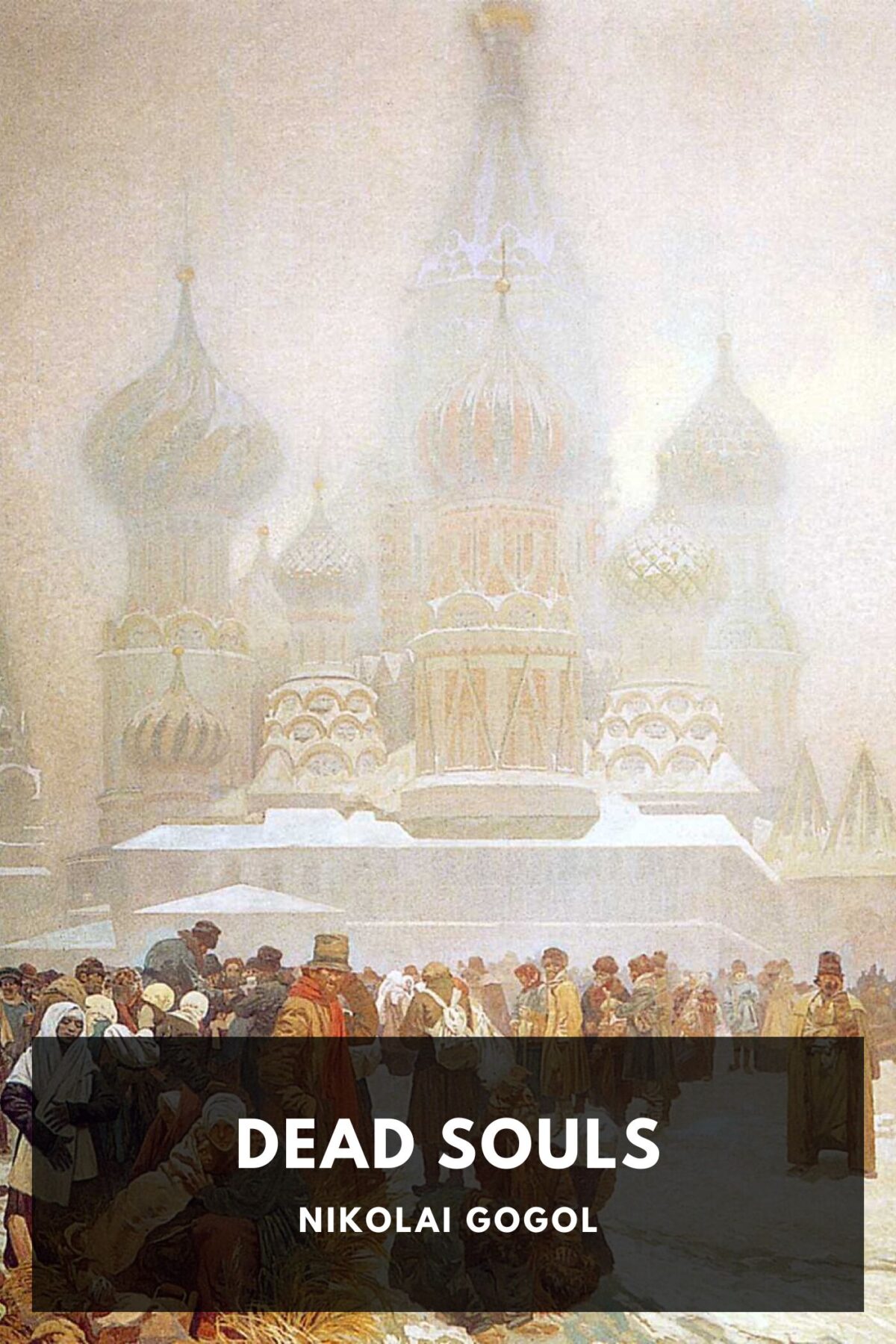
I first read Gogol’s Dead Souls in 2014, and I remember even then being mostly baffled by the story. Not only the ending, the legendary mid-sentence cliffhanger, but Chichikov’s entire plan. What was buying these dead souls doing for him, exactly? Then earlier this year it was floated as a suggestion for my Swedish language book club so I had the chance to revisit the story twelve years later to see if I was a better reader.
Short answer: no!
But this time around I went digging afterwards for reviews and commentary, which cleared up my biggest point of confusion—the dead souls, which he was presumably acquiring at a bargain, could function as collateral for a loan—even while Gogol’s satire didn’t entirely land. Individual moments of slapstick got a smile or a chuckle out of me, but I’m a reader who is too far removed in time and geography to appreciate the more subtle digs at Russian aristocracy. (Except all the jokes about them speaking French, I know enough history to understand that much about the Russian upper class of the time.) Russian drama and pathos? Fine, great, love it, lay it on me. Russian comedy? Absolute head-scratcher.
Mostly I want to take the time to complain about The Internet These Days. After I finished Dead Souls again, I did what I normally do these days after a real puzzler of a book: look for blog posts or podcasts that might fill in the gaps of my understanding. The vast majority of what I found for Dead Souls was AI-generated slop. Most of it was simple Cliff’s Notes study guides for the YouTube generation—artificial voiceovers explaining the story to you over janky (I’d go so far as to say Eurojanky) art, either still or animated depending budget. A similarly janky short turned out to be an ad for a series of self-published historical fiction prequels (for lack of a better word) to famous classics. A couple videos, notable for being slightly less janky, used Dead Souls to support, of all things, the Tartarian Empire conspiracy theory, and lo and behold the channels associated with both of them are dedicated to proving, or propagandizing for, the mythical lost civilization.
Dead souls commenting on Dead Souls, if you will.
We’re drowning in useless bullshit that no one asked for, and that makes it impossible to find the useful stuff that we actually want. Of course, this is hardly news anymore and I’m not breaking any new ground with this claim. I just needed to vent my spleen for a minute. And since it’s better to light a candle than to curse the darkness, here are the cool and useful tidbits I managed to find despite the tsunami of slop.
The Bowie Book Club podcast is a great idea for a podcast. Even if I’m not a David Bowie fan myself, I’m glad people are out there doing something fun and creative like this. They did an episode on Dead Souls back in 2024.
While I can’t comment on the rest of his content, Mike Tyulpakov is at least a human standing there talking to you about Gogol. I’m willing to overlook uncritical appreciation of Jordan Peterson elsewhere in his videos in exchange for an interesting alternative interpretation/model of Dead Souls as a Russian language Odyssey rather than Russian language Divine Comedy. Admittedly it’s not an entirely new reading, but it’s always nice to get a hot take on Russian literature from an actual Russian.
For all my complaining about AI slop, the top hit in YouTube for me was still a human podcast with human faces. Unfortunately, it seems like to get to the top the two hosts have to lean into Manic Internet Hype Machine Podcast Energy, which I hate.
I also found a podcast episode from Vollrath Publishing, a one-man (or possibly husband-and-wife) publishing and podcasting venture. So far the one book they’ve released is a new edition of Frankenstein with new original artwork for the cover and the host’s own footnotes to the text. Could possibly be a publisher to watch? I might pick up their Frankenstein to see what exactly they’re doing.
And finally, the crowning jewel of all of this human work is StandardEbooks.org. They take public domain texts from online sources like the Internet Archive or Project Gutenberg and clean them up into polished, attractive, and eminently readable ebooks. Nice fonts, comfortable margins and line spacing, properly linked footnotes, no OCR madness. This time around I read their HTML version in my phone’s browser window, but they offer a variety of formats, including for Kindle and Kobo. They don’t know me, I’m not getting any kickback or commission, I’m just hyping them up because I appreciate what they’re doing.

One thought on “Dead Souls”