Filterworld

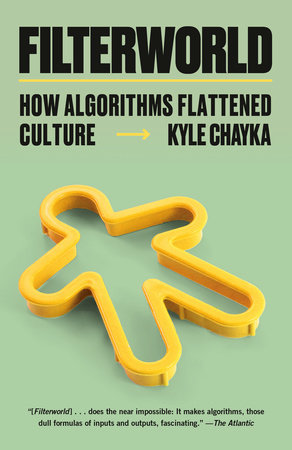
If I find myself somewhere bored and bereft of a book, I like to dig back through my TBR and find something I can get as an ebook from one of my libraries. This is how I came to be sitting in my favorite neighborhood haunt, drinking a beer and reading Kyle Chayka’s Filterworld. In brief, Filterworld is a snappy history of how recommender algorithms have come to shape our Internet, and our broader cultural, experience. It covers a lot of the same territory as Chokepoint Capitalism, though with less pissed-off creator-side rage in favor of a more anxious user-side perspective. “Do I actually like the things I like?” is Chayka’s recurring question.

Chayka’s proposed solution to The Algorithms, to the extent it is a workable solution (and to the extent he even calls it a solution), is to slow down our focus:

If there is a simple answer to breaking down Filterworld, then it might be something like a version of the slow food movement, as it was popularized in the 1990s, but for culture…We need to bring that same understanding of sustainability and specificity to the way that we consume and support culture online, too. Resistance to algorithmic frictionless requires an act of willpower, a choice to move through the world in a different way. It doesn’t have to be a dramatic one.

He then gives the example of visiting a local cafe that he’s always passed but never visited because he didn’t find it appealing; in his own words, it wasn’t “Instagrammable”:

I felt both bemused and sad that this was a rare experience, something like visiting a museum. Our phones and feeds absorb so much of our attention and dominate so many of our preferences that stepping out of their conveniently predetermined paths and choosing an experience not immediately engaging feels somewhat radical. This applies to fashion choices as well as food, which television shows we watch, which books we read, which furniture we buy, where we travel. If we shift our priorities away from the space of algorithmic digital platforms and once more to the physical world, in which everything is not instantly evaluated in terms of engagement, we might find ourselves building not only better culture but better communities, relationships, and politics as well.

I’m cutting to the chase partly because that’s what struck me most about the book. Chayka is describing an experience that I know a lot of people have, and yet that I don’t (not entirely). I only begrudgingly acquired a Twitter as a means of freelance self-promotion, but never became hooked on the platform and stopped Tweeting as soon as I no longer needed to promote myself. I’ve never used Spotify as my primary music library or my means of discovering new music. My partner periodically subscribes to Netflix, and we’ve been known to occasionally bingewatch particular series or short docuseries, but the last one was An American Conspiracy: The Octopus Murders back in 2024. I never rely on Yelp or similar to find cafes, or online travel agencies to plan my international vacations. I post to Instagram but am not really invested in comments or hearts or followers. Only posts, no reels, maybe the occasional story. Admittedly, I can get sucked into watching a comedy reel about Philly if the feed finds me in a moment of weakness, but I have no desire to follow those accounts. I do not, and will never, have TikTok. The only thing I will cop to is a YouTube history that is probably wildly schizophrenic, since I use it for background music while I’m working and my tastes run from symphonic to techno to “this song popped into my head when I woke up and now I need to listen to it on repeat all morning or I won’t get any work done.”* And while I never sign into my Google account on either of my work computers, I’m sure that nonetheless the algos have managed to connect my legal person to those dozens, possibly hundred or so plays of “Takin’ Care of Business” that one day last February.

Every time Chayka observed his algorithmic behavior or reactions in a state of what I’d call “vaguely befuddled despair,” I couldn’t help but think, “But you could just…not.” So in the end, when his solution is to, indeed, “just…not,” I didn’t find it much of a revelation.

Chayka has an art history background, so it’s no surprise that what I found most compelling (and what he spends the most time on) is how once again the medium has shaped the message: “BookTok” and the proliferation of autofiction in literary bestsellers, the lack of key changes in pop music, art exhibits so specifically designed for Instagram selfies that they become meaningless otherwise. Chokepoint Capitalism outlines the structural inequities of such recommender systems, but Filterworld also reminds us that they’re also having direct influence on the culture itself—one that exists for all of us, regardless of whether any given one of us subscribes to Spotify, Netflix, etc.

It with immense satisfaction, then, that I can wrap up this post by pointing out that the algorithms weren’t the ones to bring me to this book. A guest on a podcast recommended it; that podcast in turn had been recommended to me by a friend. It was human connections all the way through, made specifically and deliberately by people to make a point. The podcast guest was on to talk about social media generally, and felt it relevant to mention; my friend recommended the podcast because the show often touches on things that he knew we both were interested in. I think Chayka would be happy to hear that.

* Here I have to say that I’m grateful to Chayka for highlighting the streaming service Idagio as a better alternative than Spotify for classical music. The platform detects and counts plays differently, using calculations more appropriate for longer classical pieces than three-minute pop hits, and recommendations are picked by human experts with care and deliberation rather than statistically driven recommenders. I might go ahead and subscribe once I’m back from vacation, since this post is going live while I’m at a cabin in Kiruna.
Grupp Krilon

Eyvind Johnson’s Group Krilon went on my TBR after I stumbled onto a panel about him at last year’s Stockholms Litteraturmässan. An anti-Nazi allegory and condemnation of Sweden’s policy of neutrality during WWII? Writing allegorical fiction to circumvent censorship in the press? Sign me up!

And yet, Grupp Krilon would have languished on my TBR for a good while longer if the Storygraph TBR challenge I signed up for in  January didn’t include a prompt about reading the first book in a series. Given the other prompts, and what seems to be fair assumptions to make about the reading habits of most of the people using Storygraph or Goodreads, this prompt seemed to be an acknowledgement of more recent popular fiction, seemingly endless series of novels as constant content. The total opposite of what I usually read, in other words—especially with the break up of the Austin Feminist Sci-Fi Book Club, which had been one of the few tethers I had to new books. We read the first book in a few series that I either continued reading (A Memory Called Empire, Gideon the Ninth) or intend to continue reading (Ancillary Justice).

Did I have anything to fit the bill I had added to my TBR myself, though?

As I scrolled through, I saw in small text under the title that Grupp Krilon was labeled “Krilon #1”. Bingo! Not necessarily the kind of book the creator had in mind with the prompt, probably, but what did that matter for me?

On a plot level, Grupp Krilon circles around a group of friends in Stockholm during World War II. The original core of the group is the protagonist Krilon and Hovall, who meet on a streetcar and then strike up a friendship at the tobacco and newspaper stand. Other men are quickly drawn into their company: first Minning, a widowed carpenter who Hovall was on his way to meet when he crossed paths with Krilon; then the cousins Odenarp and Arpius, the builder Frid, and the surgeon Segel. They meet every Sunday to discuss heady and important topics, a rotating dinner club.

One Sunday evening, on the way home from such a meeting, Frid has a moment straight out of “Once in a Lifetime” (this is not my beautiful house! this is not my beautiful wife!) and decides to retreat to the summer cabin he’s been restoring to contemplate the anxieties of his ascendancy into the middle class. He sneaks out without telling his wife, she panics and calls Krilon. Not the police—she doesn’t want to involve them. Krilon calls the rest of the group and decides to organize a search effort.

The search effort is half-hearted at best. Things come up for some of the members: Arpius is out of town, Segel’s ex-wife Ann needs emergency surgery, Minning’s daughter has been kidnapped. Odenarp and Hovall make a search of different neighborhoods, while Krilon stays at home to call around, including (I assume) the private detective firm he’s hired. Frid, meanwhile, has two squatters living in his cabin. Even Odenarp and Hovall have such bizarre experiences on that first night of searching that their allegiance to Krilon is sorely tested.

Because Krilon, as it turns out, has enemies. And they’re not above trying to work through Krilon’s friends to get to him. (Remember the kidnapping?)

A few days go by, but Frid eventually sends a note to his wife explaining the situation, and the search is called off. Whether because of the rumors or personal crises, Krilon’s friends have just about decided they’re tired of this friendship, or at least his friendship. Even though Krilon can sense this, he tries to rally everyone again to intervene in the case of the wildly depressed Segel, who has just lost Ann. They refuse; Krilon tries on his own and is immediately rebuffed. A few days later Segel kills himself.

This news prompts Krilon to make a last ditch effort to get the gang back together. He writes Hovall, his first and oldest friend, to explain that the men should continue meeting, even if they vote Krilon out; but can’t they at least meet one last time to get this all straightened out? Hovall passes the message along to the other men, and they all agree for one more meeting at Krilon’s. One by one, the members of “grupp Krilon” turn up, telling Krilon not to expect anyone else. No one wants to admit to anyone else that they’re going to visit their old friend, it appears.

They hold a last meeting, where Hovall formally lays out their complaints and charges against Krilon. He’s been a busybody, he’s put them in uncomfortable or even dangerous situations, he’s refusing to change with the times, etc. Krilon responds to these charges and makes a plea for their friendship, and in the end the group resolves to meet without Krilon and take the matter of his membership to a vote. They promise to let him know by ten o’clock in the evening a following day (maybe the next day). In the very last scene of the book, Krilon is wandering around Stockholm in the early spring while he waits for the result of the vote, contemplating nature and noting topics for discussion “in case I am allowed back, otherwise I shall mention it to Hovall.”

What a cliffhanger!

Given that ending, and that the whole trilogy was published in a single volume in 1948, one wonders if there was a Lord of the Rings style publishing decision there. “No one’s going to read this huge tome in one sitting, Johnson. Let’s split it up.” Even Grupp Krilon, the first book, is 500 pages.

The above 600 word summary still only skates over the absolute surreal weirdness the story takes, the sheer paranoia. Krilon, it seems, has crossed paths with everyone in the book. Random strangers that Krilon’s friends meet during Frid’s disappearance have dramatic stories about this or that man they remember, who did this fantastic or horrible thing, and of course the big reveal is that this man’s name was…Krilon. In another book it might be too much to take, but because other things get so weird, it makes sense. Especially considering the extremely clearly allegorical nature of the book as well.

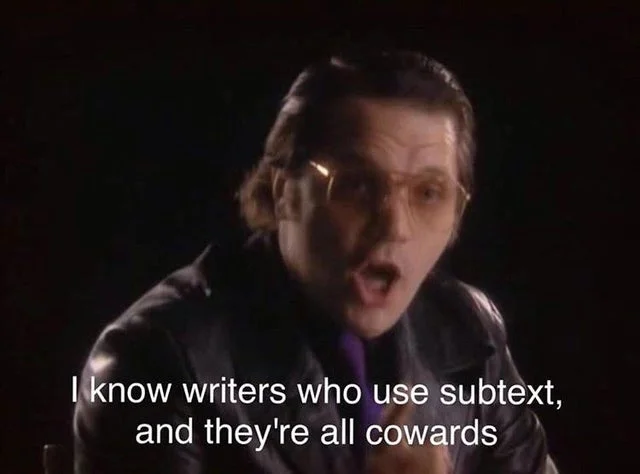
A screenshot from "Garth Marenghi's Dark Place," with Matthew Holness in yellow-tinted aviators and a leather jacket with slicked-back hair as his Garth Marenghi character. At the bottom is the closed caption text, "I know writers who use subtext, and they're all cowards"

The book definitely starts off slow, with a deliberate attention to details in Krilon’s appearance and landscape that I initially found to be a hard slog. Not because of the writing itself, since it has a rhythm and a lyricism to it; rather it was because books today (or at least books I’ve read recently) move at a snappy, breakneck pace. Where are the careful, lingering descriptions of yesteryear? But Krilon is the central figure, and it’s important for the reader to have clear idea of how moral, thoughtful, considered (even how lagom) Krilon is, so Johnson takes his time. While the urgency of the book picks up soon afterwards, I think my focus also reset early on and I was able to get lost in a slower, more thoughtful pace.

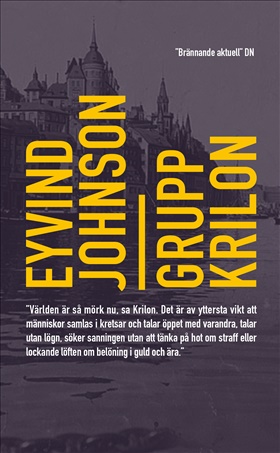
Grupp Krilon  was the “Stockholm Reads” pick in 2018 and came out in an appropriate paperback edition for the occasion, the cover you see in the image at the top with dark purple Stockholm landscape and the author and title in bright yellow. It also has this quote underneath that perfectly encapsulates what the book is driving at, what Johnson wants to say:

“The world is so dark now,” said Krilon. “It is of the utmost importance that people gather together in groups and speak openly with each other, without lying; that they seek the truth without giving any thought to the threat of punishment, or the tempting promise of rewards of gold and honor.”

It hits harder when you actually get to the quote. Krilon is begging Segel to see him, if not to talk about anything then at least attend a concert or otherwise spend some time together. But Segel can only think of Ann’s upcoming surgery, and Krilon’s plea goes unanswered:

“What’s everyone else doing, do you know? Do you know why they’re drifting away now, when the world needs them?”

“No,” Segel replied tersely, “I don’t know.”

Heartbreaking in 1941, heartbreaking in 2018, heartbreaking in 2026.

To my absolute astonishment, Grupp Krilon has yet to be translated into English. For that you’ll have to be content with Return to Ithaca (maybe timely now with Nolan’s version of The Odyssey in theaters?) and The Days of His Grace.

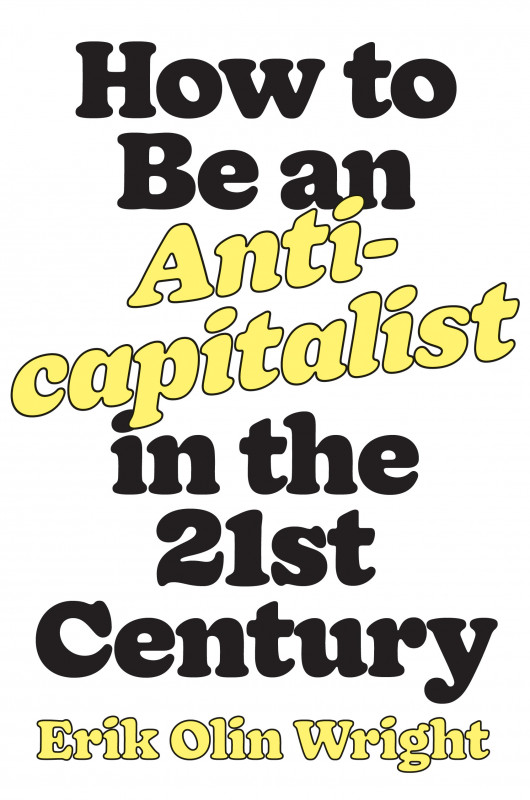
How to Be an Anti-Capitalist in the 21st Century

I read this one over the course of several months for a neighborhood book circle, even though it’s short and simple enough to finish in a couple of days. Erik Olin Wright intended this to be a quick introduction for laypeople, free of academic jargon and complicated arguments. Maybe stretching such a thin text over too long a time hampered my understanding of it, but by the end I felt like How to Be an Anti-Capitalist in the 21st Century didn’t deliver on the promise of its title.

I say this as someone who already fundamentally agrees with Wright’s larger project. But a how-to guide includes concrete steps and real-life examples to follow. Wright provides no instruction whatsoever, and for all of his theorizing about how different anti-capitalist (or simply not capitalist) groups and projects can be organized, the only specific example he mentions is Wikipedia. Contrast this with Chokepoint Capitalism, This is an Uprising or Rules for Radicals, which constantly refer back to real life protests and research, picking apart successes as well as failures. When hypothetical alternatives are floated to solve a current problem under capitalism, they are described in very precise terms. You come away from those books feeling prepared and capable of doing something.

A more appropriate title would probably be How to Think About Anti-Capitalism in the 21st Century, because what Wright does well in the volume is defining, categorizing, and organizing concepts. Instead of coming away from the book knowing what to do, I came away from it with better and more precise ways of articulating my ideas. This is by no means an unimportant part of the process of “eroding capitalism” (Wright’s own concept), but it’s not a fulfillment of the promise of the title.

How to Be an Anti-Capitalist… was intended to be accompanied by a denser, more scholarly text on the subject. Wright already had a heavy-hitting career as an academic and had been asked by various groups he’d organized with to write a more approachable popular text. He got that one out of the way first and then died from cancer before he could finish the bigger one. Perhaps that would have had the meat and potatoes I felt was lacking here.

My Favorite Nonfiction Books of 2017, According to GoodReads

I enjoy GoodReads’s little “Your Year in Books” widget they roll out at the end of every year, but my favorite thing to look back on at the close of a year (or more accurately, the beginning of every new one) is how many 5-star books I read. That was only four in 2015In 2016, I handed out only five. I was a little luckier (or maybe a little more generous?) in 2017 and handed out eight. Seven if you don’t count a re-read of one of my favorite childhood books.

This year I’m splitting the nonfiction and the novels into two different posts. Part of it is because I have slightly different criteria for 5-star reviews in fiction and nonfiction, and part of it is because I read enough 5-star books this year that a single post dedicated to all of them would border on unwieldy. This first installment covers the best nonfiction I read in 2017.

Politics and Social Justice

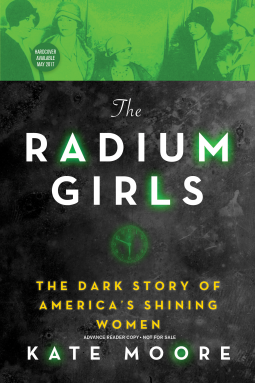
The cover of Kate Moore's "Radium Girls: The Dark History of America's Shining Women"

The Radium Girls: The Dark Story of America’s Shining Women, Kate Moore. I had already known about the radium dial-painting disaster as a footnote in the history of radium and nuclear science, so I was glad to see the topic get its own full treatment. The radium dial companies’ continuing priority of profits over worker health, and their subsequent refusal to accept blame for so much suffering and to make it right, remains relevant today, nearly 100 years later. Moore’s research is exhaustive, which can sometimes make for overwhelming reading, but it all deserves to be chronicled.*

The cover of Sarah Kendzior's "The View from Flyover Country," featuring a view of the St. Louis Arch through a window.

The View From Flyover Country: Essays by Sarah Kendzior, Sarah Kendzior. I enjoy her writing for De Correspondent, so I bought an ecopy of this essay collection (predating the 2016 election) to have  as subway reading.

Memoirs

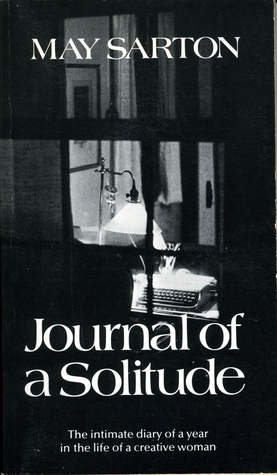
Black and white cover of May Sarton's "Journal of a Solitude," a shot of an empty desk light by a lamp from outside a window.
Image courtesy W. W. Norton & Company

Journal of a Solitude, May Sarton. Walden was one of my favorite books I read in high school, and one that deeply influenced me. With the account of Thoreau’s stay in the woods fresh in my mind, I picked up this up at a library sale years ago. But much as I wanted to read it, I somehow dropped off after a few pages every time I attempted until I read it during my trip to the US this summer. Maybe it was a question of needing enough time to get into it; maybe it was a question of age or life path. But I’m so glad I hung on to this book through countless library down sizes.


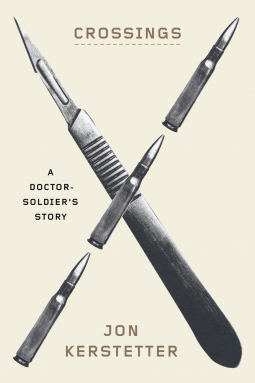
The cover of John Kerstetter's "Crossings," featuring bullets and scalpel in an "X" shape.
Image courtesy Crown Publishing, Inc.

Crossings: A Doctor-Solider’s Story, Jon Kerstetter. Kerstetter’s account of growing up on, then off, then on an Oneida reservation to become a doctor and then a medic in the US army until he suffered a stroke (an aspect of his life curiously absent from the subtitle or marketing text) is gripping and sometimes heart-rending reading.*

A cover of Ester Blenda Nrdström's "Amerikanskt," featuring a college of vintage photographs, including a young woman in denim overalls and a white bucket hat.
Image courtesy Bakhåll.

Amerikanskt, Ester Blenda Nordström. Much like America Day by Day, I found this account of Nordström’s travels throughout the United States in the 1920s fascinating, both as a snapshot of an America long gone by and also as the perspective of an outsider and first-time visitor.

Part 2, featuring the best novels I read last year, coming later this week!

*indicates ebook copies I received free of charge from NetGalley in exchange for a review; reviews were already posted elsewhere and I genuinely loved these books.