Vacation Reading

Happy spooky season, everyone! I kicked things off by renting a cabin in Falun for two weeks, where I did a lot of walking (in cemeteries, no less), a lot of reading, and a lot of sweating it out in my own private sauna. I don’t have all of my photos of the walking uploaded and cleaned up yet, and there’s not much to be said about the sauna, but I can go ahead and talk about the reading. Some of these books might be worth their own post, but for now I’ll just stick to bite-sized thoughts.

Parable of the Sower

I watched Sarah Zed’s underwhelming video on YA dystopias a week before I left, so the whole trend of YA dystopias was on my mind as I read this one. Parable of the Sower was published in 1993, several years before our current glut of YA, but by industry genre standards it would be slotted as a YA dystopia if it were published today. And yet, it’s clearly a very different (and much better) beast than The Hunger Games or Divergent or whatever else tried to ride that wave. Is it fair to put Parable of the Sower in the same category as them? From a quality and content standpoint, I would say of course not. But from a book-selling standpoint, there is no difference. Consumerism is a cancer.

The History of White People

Extremely illuminating reading. My father’s side of the family came to the US around the turn of the twentieth century from villages that are in the south of current-day Poland, but there is absolutely no family lore about what it was like moving here, or about life or family back in The Old Country, or anything like that. (Making sense of the immigration documents is also a trip, just because territory was a bit up in the air at that point in time.) Painter’s research obviously can’t fill in the gaps of my own  family’s history, but it gave me a broad sense of the historical context of their arrival in America, and a rough idea of what kind of prejudice and problems they might have run up against—something I’d never really reflected on before.

Beyond my own personal takeaways from the book, the examination of the construction of “white” as a middle class signifier and its gradual expansion over the years is a valuable piece of scholarship for understanding American society as a whole.  The only downside is that The History of White People is over a decade old now, and reading a discussion of race and whiteness in 2021 that ends in a discussion of Barack Obama’s presidency rather than Donald Trump’s feels a bit…unresolved. GoodReads indicates that Painter’s most recent book is from 2018, but it’s a memoir rather than any kind of scholarly work. Hopefully she’ll put out an updated edition of The History of White People at some point.

Shards of Honor

This was an Austin Feminist Sci-Fi Book Club pick. I don’t think anyone really enjoyed it all that much? For me, at least, there was too much romance and not enough sci-fi. Internet rumor mill pegs it as Star Trek fanfiction with the serial numbers filed off, and I believe it.

Becoming Beauvoir

An absolutely outstanding new biography of Simone de Beauvoir drawing on previously unavailable or untranslated material.

The Cyberiad

One of my philosophy professors taught a popular and engaging philosophy of the mind course, or maybe a couple variations on the idea, and one of the texts for it was The Mind’s I, an anthology that included a story from The Cyberiad. My particular iteration of the class didn’t use that book, but I browsed through a friend’s copy out of curiosity. Long story short, one of the selections I always thought was part of The Cyberiad wasn’t actually, so my introduction to Stanislaw Lem was actually Solaris.

So now I’ve finally read The Cyberiad for real. The English edition is an incredible feat of translation; it struck me as I read one of the first stories in it that one of the textbooks or more scholarly anthologies I’d read over the years had highlighted exactly this story so now I’ll have to try to do a little detective work to see what, exactly, they had to say about it.

Un hiver à Majorque

Still the same book as it was the other two times I read it this year. Unlike my previous attempt with the original French, this time I looked up every (or almost every) word I didn’t know and couldn’t figure out from context.
L’Étranger

I read L’Étranger because I want to keep my French from slipping. I figured it would be a good choice because I’ve already read it twice—when practicing reading in a foreign language, a book you’re already familiar with is the best possible choice.

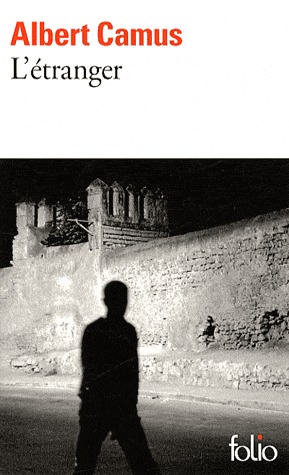
Cover of French edition of L'Étranger.
Image courtesy Gallimard.

Author: Albert Camus

My GoodReads rating: 4 stars

Average GoodReads rating: 3.97 stars

Language scaling: N/A (read the original French)

Summary: Meursault murders a man and finds his entire life put on trial.

Recommended audience: People who want to engage with “serious literature” (whatever that means) while they practice a foreign language.

In-depth thoughts: Something about mid-20th century French literature lends itself well to foreign language study. Okay, maybe not all of it. But this and Le Petit Prince are books I’ve read and enjoyed in a few different languages.

It’s L’Étranger. You’ve either read it or you haven’t and there’s not much need for me to weigh in on my opinion on the book, except that I’ll be balancing my (re)reading of this with a novel by an Algerian author. If you spend too long thinking about how the non-white characters in the book exist as plot devices to put Meursault on trial and then in prison it leaves an uncomfortable taste in your mouth, and the best remedy for that is to broaden your own horizons.

Otherwise I’m already falling behind on my Goodreads Challenge for the year. The falling behind doesn’t bother me as much as the not reading bothers me. Whenever I’m in a bad way, my reading drops off—or maybe a drop off in reading leads to grumpiness and depression. Impossible to tell; I’ve never paid close enough attention to notice which starts first. The two definitely feed into each other, regardless. But now I’m off the blocks and hopefully my momentum (and mood) will pick up a little bit going into February.

Beyond the Rice Fields

Beyond the Rice Fields was a Facebook book club selection for September; I finished it in the middle of October. Sometimes it takes me a while, but I get there!

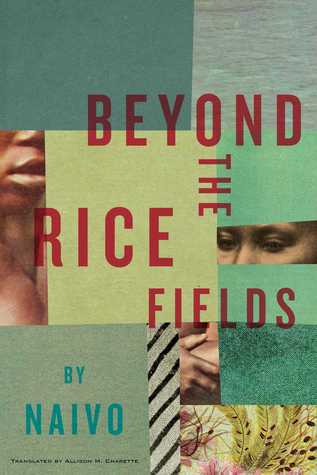
Beyond the Rice Fields cover
Image courtesy Restless Books

Author: Naivo

Translator: Allison M. Charrette (French)

My GoodReads rating: 3 stars

Average GoodReads rating: 3.76 stars

Language scaling: C1

Content warning: A fair amount of off- and on-screen violence and gore

Summary: The clash between Christian missionaries and the ruling elite of Madagascar as it plays out in the lives and loves of Fara and Tsito.

Recommended audience: Anyone curious about the pre-colonial history of Madagascar; anyone looking to read more African literature

In-depth thoughts: This is a completely petty point, but once I realized that Beyond the Rice Fields had been translated from French instead of Malagasy, I lost a lot of steam. Not because of anything wrong with the book, but rather because I always feel a little guilty and uninspired when I read an English translation of a work originally written in a language I can more or less read (Swedish, French).  But I didn’t realize that when the book turned up for book club, and so I didn’t even think to see if I could find the French edition anywhere.

My pettiness aside, the book is beautifully written. I savored the prose even when I knew tragedy was just around the corner. Naivo’s writing has a lyricism and a rhythm that’s utterly captivating, though that doesn’t stop the plot from feeling like it’s dragging at certain points. And it’s not even a dragging plot that I mind; it’s that it moves so relentlessly and so slowly towards tragedy. (Spoiler alert, I guess: the ending is a downer.) I’m willing to slog through hell and high water if I think the protagonists will get their reward in the end, but when things become a slow motion trainwreck it’s a little harder to bear. Especially when it feels like a deus ex machina trainwreck.

The most satisfying endings and character arcs are when someone gets what they deserve, for better or for worse. When bad luck and misfortune constantly befall a character, and when they’re undone by chance and circumstances rather than their own poor decisions or character flaws, their tragic end is so much less satisfying. That’s my one-sentence critique of Beyond the Rice Fields: the tragedy feels senseless and unearned. It’s just plain bad luck. Of course, tragedy in real life is often senseless and unearned. I just want something else from fiction, especially right now.

For EFL readers, Beyond the Rice Fields might be hard work in places;  among other things, Naivo has a tendency to stack lengthy modifiers on top of each other:

A scarlet curtain was visible in the back, concealing a secret door, behind which I heard voices.

But this complex construction also gives the prose its lullaby-like quality. If you can’t read the French original, Charrette’s English translation is beautiful and rewarding.

Rien où poser sa tête (Nowhere to Lay One’s Head)

If you’re not subscribed to Asymptote‘s newsletter or following their blog, you’re missing out. Their staff are like magical book sprites who leave little gifts of international literature in your RSS feed or email inbox. Rien où poser sa tête was one of those little gifts.


The Folio edition of Rien où poser sa tête
Image courtesy Gallimard

Of course, Nowhere to Lay One’s Head turned up in Asymptote  thanks to Brigitte Manion’s review of the English translation. But since I have a passing familiarity with French, and really should practice a little now and then to keep it up, I opted to read the French original rather than the English or Swedish translations.

Author: Françoise Frenkel

My GoodReads rating: 5 stars

Average GoodReads rating: 3.94

Language scaling: N/A (I read it in French)

Summary: Frenkel’s memoirs of Vichy France, and her flight from Berlin to France to Switzerland

Recommended audience: Literally everyone

Content warning: It’s Nazi Germany; there is witnessed and described brutality throughout. (If you, like me, are easily stressed and need to know certain things from the outset: Frenkel, a Polish Jew, managed to escape Nazi clutches and find asylum in Switzerland, despite a few close brushes with the authorities. It all works out okay.)

In-depth thoughts: As a student, I had a hard time connecting with the books we read about Nazi Germany and the Holocaust. Fortunately I’m not a psychopath and so I can understand, on an intellectual level, why these books are important. I could then, too. I just resented them for not being better, considering the topic matter. Now that we’re apparently willing to give Nazis the benefit of the doubt, I’ve been wondering lately: what do I think students should read instead of what I read in school?

I’d argue that Rien où poser sa tête is a good candidate. Trying to convey the horror of what happened through the concentration camps can be a bit much to take in. (Not that it should be forgotten, either.) It’s so horrible as to be unreal, unfathomable. But because Frenkel handles the slow agony of daily life under the Nazi regime, with rations and visa applications and constant upheaval, it becomes easier to understand how these things were able to come to pass, and how they could easily come to pass again.