Karavan: Minne

The theme for 2024’s first issue of Karavan was memory, and included a fair number of biographical essays from Julie Otsuka, Maaza Mengiste, Ann-Marie Tung Hermelin, and Nona Fernández. Otsuka’s The Swimmers and Mengiste’s The Shadow King went on my TBR as a result.

This issue also featured rising stars within Brazilian literature. In addition to Jeferson Tonório, who was the subject of a feature length précis by Balsam Karam in the previous issue, Isi de Paula highlighted several other names: Geovani Martins, Itamar Vicira Junior, Luciany Aparecida, Stênio Gardel (The Words that Remain), Micheliny Verunschk, Carla Madeira, Aline Bei, and Mariana Salomão Carrara. de Paula also sat down for an interview with Tatiana Salem Levy (The House in Smyrna).

“Kino Karavan,” the recurring movie column, highlighted the animated film adaptation of Sultana’s Dream, El sueño de la sultana.

The translator’s diary column focused on Meta Ottosson’s work on Yvonne Adhiambo Owuor‘s Dust. I always find this segment to be an interesting peek into the lives of others, since literary translation is such a different beast from what I do. Ottosson chronicles her attempts to find the right words for things like buses, pole dance terminology, and Kenyan state officials and legislation; meanwhile, I’ve never had to cold email Nordiska Afrikainstitutet to answer a terminology question for me. The diary was followed by Ottosson’s translation of Owuor’s story “These Fragments.”

And then the grand finale, the reviews. The author interviews are always interesting, but the downside is that authors can be a lot more interesting than their books. Reviews, on the other hand, are always about the experience of reading a particular personality rather than conveying the personality, making them better indicators of what I might like or not. From this issue I took note of:

  • Rien ne t’appartient, Nathacha Appanah
  • Hardly War, Don Mee Choi
  • The Naked Eye, Yoko Tawada

The pile grows higher faster than I can read through it!

La Vengeance m’appartient: Review

Marie NDiaye’s La Vengeance m’appartient came into my life following a positive review in Karavan (which I’m very var behind in my reading!). I had the good fortune to find it in my top three languages: the original French, and then translations in Swedish and English. I have enough thoughts there that I think they would detract from talking about the novel qua novel, so that’s a separate post.

While Maître Susane has risen from the working class to become a lawyer, she’s not quite the picture of unmitigated success that her friends and family assume her to be. After leaving a larger, much more prestigious firm to start her own practice, Maître Susane has struggled financially, taking on banal cases that only just barely cover her bills. All of this has the potential to change when Gilles Principaux walks into her office and asks her to represent his wife, Marlyne, who is currently awaiting trial for the murder of their three children. This would be an incredibly high profile case and the first major one since Maître Susane started her own practice.

There is a catch, of course. Maître Susane believes to recognize in Gilles a certain influential teenager from her youth. One fateful day, at the age of ten, she accompanied her mother in her work as a cleaning lady, and spent the afternoon in the bedroom of the family’s teenage son. Much of what happened that day is lost down the memory hole, including the name of the family, but Maître Susane firmly believes that whatever it was set her on the path to becoming a lawyer.

What happened that day? Was it Gilles that Maître Susane encountered, or someone else?

Alongside all of this, Maître Susane is also negotiating a complicated relationship with her own cleaning lady (a not insignificant expense that she can barely afford), an undocumented worker from Mauritius named Sharon. Maître Susane is desperate for Sharon’s approval, maybe even her friendship, to the point of growing resentful when her advances are rebuffed. The relationship is only further complicated when Maître Susane volunteers Sharon as a babysitter for her beloved goddaughter Lila.

As Maître Susane prepares Marlyne Principaux’s defense, the rest of her life spins out of control. Her parents, distressed at her renewed fixation on what happened that day in her childhood, eventually cut off contact with her; Sharon reveals that she has been taking Lila with her to other cleaning jobs during the day, including the elderly widow Principaux (perhaps the same Principaux?) and Maître Susane is convinced that the girl is suffering; even her own memory of recent events starts playing tricks on her (or are the people in her life trying to deceive her?).

There is a lot to unpack in this book and quite frankly I don’t think I’m capable of it (writing two weeks or so after I finished reading it). I loved this book and my review cannot do it justice, but I’ll try anyway.

In a way, La Vengeance m’appartient has a lot of the trappings of noir, even though I don’t think it could be strictly classified as such. Psychological thriller? Raymond Chandler once claimed that “the ideal mystery was one you would read if the end was missing” and that’s what you get here. None of those seemingly urgent questions in the above summary are answered conclusively; we are presented with a life in turmoil that is only partially resolved by the end of the story. The point is not the meticulously pieced together mystery but rather the externalization of the subtle dramas and tensions of interpersonal relationships. The chaos that Gilles introduces in Maître Susane’s life had really already taken root inside of her long ago. She seeks approval and understanding from everyone—from her parents, from the teenage maybe-Principaux, from her ex (and father of her goddaughter), from Sharon, from Lila—and fails to obtain it anywhere.

Maître Susane is, in the parlance of our times, “hashtag ‘relateable.'” Her ambivalent relationship with her parents—simultaneously yearning to unburden her heart to them while also sensing that they would only be equally ambivalent about such a confession—is a familiar one, likewise her demanding urges with Sharon. On one level Maître Susane is magnanimous and forward thinking with Sharon: she is handling Sharon’s visa case for free, she pays her fairly and on time, she doesn’t have excessive demands in terms of labor. But she also clearly expects to be repaid for these favors with a more personal relationship, thereby crowning her (and here I’m using my own phrasing, not NDiaye’s) a Good Ally TM.

Part of the reason La Vengeance m’appartient might have been such an experience for me was that I read much of it while I was visiting my own parents, so I was already swimming in all those kinds of feelings already. Now that I’m well into adulthood, am I living up to my parents’ expectations for me? Their hopes? Am I even living up to my own? Maître Susane and I are around the same age, after all. There are absolutely biographical reasons that I was so taken with this book. But regardless, NDiaye touches on a lot of contemporary suffering and struggles with a deft, elegant hand.

Frère d’âme

I added David Diop’s Frère d’âme to my TBR by way of a review in the Karavan literary magazine, and to be honest I was a bit leery of it going in. The review was positive, but it gave the impression that the book was a gritty, grim, hyper-realistic portrayal of war, which is not a thing I’m usually into. I approached the book the same way I might approach eating a strange new vegetable: accepting that it might not be an enjoyable experience, but that it would at least be good for my (reading) health.

Frère d’âme is a wartime bildungsroman centered on the young Alfa Ndiaye, a Senegalese soldier in the French trenches of WWI. The book opens with the gruesome death of his best friend, adoptive brother, and “plus que frère” Modemba Diop in the battlefield, and from there on we follow Ndiaye through grief, trauma and regret.

That’s an incredibly pretentious way to describe the story but it’s the best I can do, I suppose.

Let’s get the content warning stuff out of the way first: there is plenty of frank description of gruesome wartime (and otherwise) acts. People are disemboweled, heads are blown off, and as a narrator Ndiaye doesn’t hesitate to describe all of this in detail, often repeating or lingering on the images.

But somehow the book is more dreamlike (if sometimes nightmarish) than gritty realism. The first-person narration keeps the reader in Ndiaye’s head rather than out in the action, and Ndiaye himself is so apparently unbothered by it that his descriptions of violence and gore become more surreal than anything else. Ndiaye’s language is also highly repetitive, not in a way to suggest that he lacks ideas or words but rather in a way that creates rhythm, like all of those iterations of “rosy-fingered Dawn” in The Odyssey. That rhythm also made it easy for me and my mediocre French to immediately get lost in Diop’s writing. There’s a certain musicality to it that draws you in. I bet the audiobook is a work of art.

I say “apparently” unbothered because the subtext is of course that Ndiaye is deeply traumatized by the death of his friend and by the brutality of war in general. The conversant tone in his language, along with the repetition and verbal tics (“je sais, j’ai compris” and variations thereof; “par la vérité de Dieu”), create speech patterns you might expect from someone talking to themselves; the deliberate attempt to shift the mind’s focus away from something painful.

I won’t spoil the ending, except to say that I’m of two minds about it. I’m not thrilled with the choice Diop made for the actual events, but I deeply appreciate the ambiguity he allows the reader for interpreting them. Are we watching Ndiaye have a mental breakdown, or is he genuinely possessed by the spirit of his dead friend? Why can’t it be both?

As with most of the French books I read, once I finished Frère d’âme I immediately picked up the Swedish translation (Om natten är allt blod svart). So far I’ve been pretty well satisfied with them, but this time around less so. Om natten isn’t a hatchet job on par with Stick or anything, but the rhythm is still…different. Here are the first three sentences:

“…je sais, j’ai compris, je n’aurais pas dû. Moi, Alfa Ndiaye, fils du très vieil homme, j’ai compris, je n’aurais pas dû. Par la vérité de Dieu, maintenant je sais.”

“…jag vet, jag förstår att jag inte borde ha gjort det. Jag, Alfa Ndiaye, son till den gamle, gamle mannen, förstår att jag inte borde ha gjort det. Vid Guds sanning vet jag det nu.”

I have my own opinions about how I would translate the French into Swedish, but I’m not about to pop off here and potentially make a fool of myself. I couldn’t grab a hold of the English translation before sitting down to write this post, so I have no idea how that fared, either (except to note that it won the International Booker Prize). Hopefully at some point an ebook version will appear in one of my US library apps.

Overall, Frère d’âme is a great example of why I think the checklist approach of my reading goals is at least a good start. It’s not a book I would have encountered if I weren’t making a deliberate effort to seek out different things, and my bookish life is that much richer for having read it.


La maladie de la mort

In addition to an arbitrary percentage of Swedish reading, my annual reading goal also includes four books in French, lest those hours spent in French class go totally to waste. And just to drive home the point that I actually do have chill, this year was the first time since I introduced the goal that I actually met it.

By the skin of my teeth, with a Marguerite Duras novella at the buzzer, but nonetheless I met it! Merry Christmas to me.

La maladie de la mort (The Malady of Death, English translation available at the Internet Archive, also a worthy cause to donate to!) describes the brief relationship between an unnamed man (told in second person, so always just “vous”) and an unnamed woman he pays for sex-and-also-more. The man wants to experience love for once in his life, and the conditions of this transaction suggest what he thinks love is, or ought to be:

You say she mustn’t speak, like the women of her ancestors, must yield completely to you and your will, be entirely submissive like peasant women in the barns after the harvest when they’re exhausted and let the men come to them while they’re asleep. So that you may gradually get used to that shape moulding itself to yours, at your mercy as nuns are at God’s.

The woman denies being a prostitute, but still agrees to the deal, and over the course of their seaside hotel tryst she reads him for filth. Or, not filth exactly, but she’s able to name the character flaw within him that he’s never quite able to define. Whence the title of the work derives: she tells him that he is touched by the malady of death.

A lot about this situation is reminiscent of a chapter out of Jamie Bartlett’s The Dark Net, a book that is somehow nearly a decade old? Imagine a pre-Trump examination of 4chan. A simpler time. (As an aside, I was disappointed in The Dark Net because I thought it would be an examination of the actual Dark Net, meaning the stuff that happens online beyond the crawlable purview of search engines. It was actually about all of the antisocial but still highly Googlable behavior I was already aware of because I had a misspent, Terminally Online youth: pro-ana/pro-mia, suicide clubs, relentless online bullying campaigns, etc.)

One of the few things in The Dark Net that was actually of interest to me was the chapter on cam girls, maybe because I have limited (read as: zero) experience in that arena. The overwhelming consensus from the interviews that Bartlett conducted was that the best paying and most loyal customers for a cam girl often wanted, more than whatever explicit sexual experience, something that feminist theory would call “emotional labor” and that the cam girls called “the girlfriend experience.” This particular class of customer just wanted a space with another human being to give vent to their anxieties, blow off steam, maybe exhibit a level of vulnerability, and just overall to be seen—this on greater or equal footing than just sexual gratification.

The same dynamic seems to play out in La maladie de la mort. The man believes that what he’s missing is sex, he sets out terms and conditions that are built on that assumption, and as the relationship progresses (over a few days? weeks? the timeline is a bit muddy) the woman engages in a bit of psychological judo and by the end the man seems to realize…love wasn’t what he thought it was? He is inherently unloveable?

All you remember of the whole affair are certain words she said in her sleep, the ones that tell you what’s wrong with you: the malady of death.

Soon you give up, don’t look for her anymore, either in the town or at night or in the daytime.

Even so you have managed to live that love in the only way possible for you. Losing it before it happened.

Or he’s gay? (I missed the gay subtext in French and in English alike. Sometimes I’m not gifted at close reading.) Which then makes the extreme violence of the man’s initial terms for the relationship something on par with, say, Phil’s emotional abuse and psychological torture of Rose Gordon in The Power of the Dog. How aware either of these men are about their natural proclivities, or how they feel about them, is up for discussion.

Duras wrote in a variety of mediums, no stranger to film or stage, so it’s not surprising that her afterword on this very short piece is a reflection on how she would stage it as a play. Nor is it surprising that people have done exactly that!

Dix heures et demie du soir en été

This is the year of me obsessively reading Marguerite Duras (in French), for mostly circumstantial reasons.

  1. She has plenty of relatively short novels.
  2. They are available from the Stockholm library, along with Swedish translations.
  3. Did I mention they’re short?

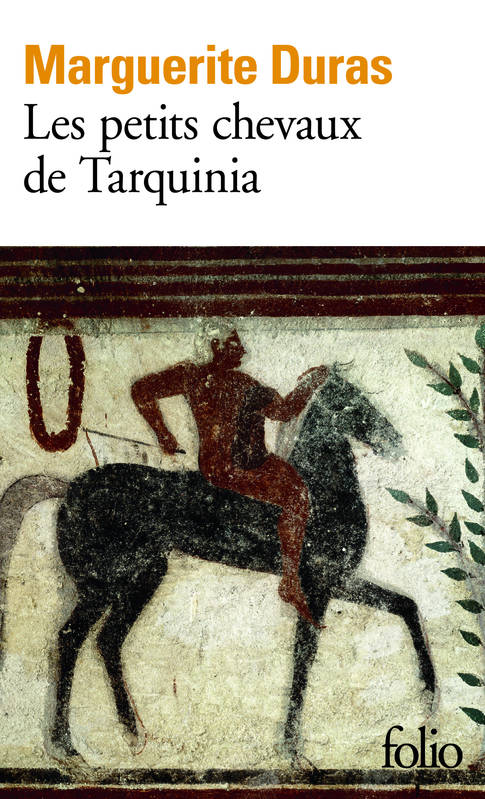
Compared to Moderato cantabile or Les petits chevaux de Tarquinia, there’s a lot that actually happens in Dix heures et demie.

Maria and her husband Pierre, along with their (mutual?) friend Claire and their daughter Judith, are a French couple on vacation in Spain. Inclement weather forces them to stay at a small village, where their lives quickly become entwined with that of a man who has just murdered his nineteen-year-old wife and her lover. At the same time, the sexual tension between Pierre and Claire ratchets up to eleven—all while Maria seems just as drawn to Claire as her husband is.

Like Les petits chevaux, I read the French original in parallel with the Swedish translation (one section in French, then in Swedish, then in French again). There appears to be only one Swedish translation, the one from Ingmar Forsström. (A different translator than Les petits chevaux, Suzanne Palme, but equally skilled.) There’s not much to find online about him except that Wikipedia entry, not even a paywalled obituary. Dead at 40 years old, a stone’s throw from where I currently live. Memento mori, etc.

Do I even like Duras? She has an eye for landscape and weather, and weaves them deftly into the plot to lend tension to what is otherwise just brooding, unhappy people who drink like fish. The fact that she can instill such a sense of foreboding in the reader when so little actually happens in any given story is remarkable. I respect that. But her brooding, unhappy characters are also seen at such a distance that they’re hard to really distinguish. These aren’t books I viscerally enjoy, in the sense that I find the characters interesting or relatable or very complexly sketched. But for mood and for technical skill (and for language practice) you could do a lot, lot worse.

Les petits chevaux de Tarquinia

One of the pitfalls of my English education is that I ended up with a huge blind spot when it comes to contemporary authors. It’s not anyone’s fault in particular; it’s just how my course load worked out. Though, I don’t know if Marguerite Duras would have ended up on my English curriculum. Maybe French, if I’d taken more than two semesters.

Duras didn’t even become a familiar name to me until a couple of features over on LitHub. Then, browsing a small (and predominantly Farsi?) international bookstore in Stockholm, back in the before times, I noticed a Duras title in the French section: Moderato Cantabile. It also looked mercifully short, something that I could probably manage with my limited French. Manage I did, and so I began scouring Stockholm library for other books by Duras. Les petits chevaux de Tarquinia was the first to meet my requirements of being available in Swedish as well as French.

Not a lot happens in Les petits chevaux. We have five Parisians on vacation together in a sleepy Mediterranean village, two couples (Sara and Jacques, Ludi and Gina) and the freewheeling Diana, stuck in their rut of swimming, bocce, and endless Camparis until they’re knocked out of their  orbits when a new vacationer shows up with a boat. Sara is immediately attracted to him, their flirting eventually leads to a tryst, but then in the end Sara decides to go on a trip to Tarquinia with Jacques and Diana rather than to stay behind and have an extended affair. At the same time, they’ve all become involved in looking after an elderly couple in the village who have arrived to claim the remains of their son. He was killed in the course of his work to decommission leftover landmines and now everyone is waiting for the mother to change her mind and sign the death certificate. There’s also a forest fire at some point?

It sounds like a literary Seinfeld episode (“She wouldn’t sign the death certificate, Jerry, would you believe it?”), which is also how I’d describe Moderato Cantabile, but somehow it works. Maybe because of the undercurrent of “will they, won’t they” sexual tension that appears in the first conversation between Sara and Boat Guy and persists throughout the entire book. Maybe it’s because Duras lets her characters have pretentious philosophical conversations that are usually the purview of stoner insights. Maybe it’s because even though on one level, nothing happens, there’s also a lot of nothing that happens: people go on boat rides, go swimming, have dinner, hike up and down the mountain to visit the mourning couple. If everyone just sat around in the bar drinking, it might come off entirely differently.

At any rate, this kind of slow, ponderous, talk-y book is exactly my jam. Which is good since I essentially read it three times (French first, then Swedish to fill in the gaps, then French one last time). I don’t know that I have any quibble with Suzanne Palme’s translation, either. Palme also seems to have passed away, but since her obituary is paywalled at DN I don’t know more than what journalisten.se has to say:

Suzanne Palme
26 OKTOBER, 2000 | Oslo, har avlidit vid 73 års ålder. Hon arbetade en tid som vikarie på Göteborgs Handels- och Sjöfartstidning innan hon övergick till förlagsbranschen.

I assume that’s the right Suzanne Palme, at any rate. According to boksampo, she has just half a dozen or so translations to her name. They’re a rather scattershot collection; De små hästarna is the only Duras novel there.

Axplock ur idéhistorien II

I guess the theme so far in 2023 is “reading other people’s books.” I closed out 2022 with The Power of the Dog and then ended up reading Stick (twice! for translation’s sake!) straightaway in 2023, both at the recommendation of a friend. In between those, Axplock ur idéhistorien II arrived on my doorstep—a book I’d promised to babysit for a digital nomad friend who wanted to order it off Adlibris but had no Swedish address to ship to.

And one does not ask me to babysit a book without expecting me to read it.

It’s a tidy little collection spanning just about two hundred years of Western thought, with a focus on the major social ideas that continue to leave their mark on politics today. (This is a polite way to say that a few of the selections are nothing less than noxious.) The selections are abridged when necessary, with context for each selection as well as a short biography of each author:

  • Kant, “Answer to the Question: What is Enlightenment?”
  • Hegel, “Reason in History”
  • Feuerbach, The Essence of Christianity
  • Kierkegaard, The Concept of Anxiety
  • Marx & Engels, “The Communist Manifesto”
  • Gobineau, “An Essay on the Inequality of Human Races”
  • Bremer, Hertha
  • Darwin, On the Origin of Species
  • Mill, “The Subjection of Women”
  • Spencer, The Man Versus the State
  • Nietzsche, On the Geneaology of Morality
  • Freud, Introduction to Psychoanalysis
  • “Program of the NSDAP”
  • Mussolini, “The Doctrine of Fascism”
  • Beauvoir, The Second Sex
  • Fanon, The Wretched of the Earth
  • Lyotard, The Postmodern Condition

If you took the above table of contents as a reading list it would probably keep you busy for a year, so collections like these with just The Hits and the central theses are great to have on hand and are much cheaper than, say, a first-year philosophy survey course textbook. (Did I keep mine because I knew I would want to revisit it later? Yes. Have I done so? Actually, also yes.)  I might buy my own copies of both volumes just to have around for reference, who knows.

Do I have a similar English recommendation? Not really. Passion of the Western Mind has a similar, if broader scope, but it’s entirely a secondary source. I had Ten Great Works of Philosophy in my library for years and kind of wish I still had it.

L’Élégance du hérisson

The downside of reading in French is that it takes me so much longer than in either English or Swedish.

(It’s only a downside if a manic obsession with productivity drives you to stick to a particular reading schedule, I suppose, but that’s maybe a topic to take up another time, or in another context.)

An acquaintance recommended this (alongside Pappan och havet, actually) and I opted to read the French original because why not? The library had it, and I was behind on my French reading quota anyway.

(A manic obsession with self-improvement might drive me to set particular language quotas in my reading, I suppose, but that’s maybe a topic to take up another time, or in another context.)

It’s interesting to notice similarities in the books people enjoy and resonate with. Both Pappan och havet and L’Élégance du hérisson focus on how outcasts find genuine emotional and social connection with the people around them—though of course the personalities in Moomin Dalen are very different from those in Rive Gauche Paris. In Pappan och havet, our outsiders are Mårran and the fisherman; in L’Élégance du hérisson, they are Paloma, the precocious 12-year-old daughter of a respectable center-left politician, and Renée, the well-read and cultured concierge of Paloma’s posh apartment building. In Pappan och havet we have the Moomins bringing warmth and connection to both Mårran and the fisherman after they move in to the lighthouse; in L’Élégance du hérisson we have the genteel and kindly Kakuro Ozu who moves into an apartment after the death of its snobbish food critic owner.

With each passing year, it seems that the greatest benefit of my philosophy studies in college is being able to appreciate novels written by authors who also studied philosophy: David Foster Wallace, Lydia Sandgren, and now I suppose Muriel Barbery.

(This glib joke is actually unfair to the many excellent philosophy professors I had in my college career. In all seriousness, philosophy is a worthwhile course of study and it’s only because our minds have been poisoned by an excess of capitalism that the humanities seem like a waste of time.)

Did I only enjoy L’Élégance du hérisson because it made me feel like an elite smartypants? No, I don’t think so—I liked it on its own merits, or additional ones, maybe. There is always room in my heart for snarky, keenly observant children who hold nearly everyone around them in disdain, for example. But my French is still quite rusty, so I don’t know that I can quite comment on much more than that for now. The next thing is to read it again in Swedish (or English), then a third time in French, and see how much more I pick up.

(Does this sound like a laborious and joyless task? Possibly. But here, at least for a moment, I can put aside the capitalist obsession with numbers and figures and progress-at-all costs and take the time to linger over something just for the sake of enjoying it.)

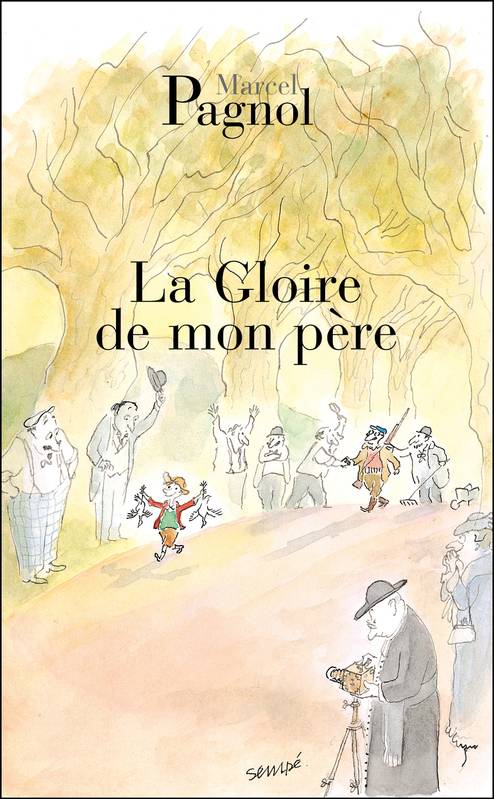
La Gloire de mon père & Le château de ma mère

Marcel Pagnol’s Souvenirs d’enfance were burned into my memory at some point during my French studies—I watched Le Gloire de mon père for class, and I had an abridged or otherwise simplified edition of the book for course literature (that I don’t think I ever actually read, and that I definitely didn’t hold on to). Trying to track them down at the library or at the handful of international bookstores I knew of in Stockholm never got me anywhere. Nor did I think to check at Språkbokhandeln, the absolute treasure trove nestled in Lund, when I was there in 2020. It all worked out, though, because I can’t think of a better souvenir (hah) from Paris: one book from each bookstore we visited!

I packed both books for vacation and assumed that would keep me well occupied, but to my surprise I absolutely tore through each book in little over a day. Usually my reading experiences in French require frequent dictionary breaks just to follow what’s going on (George Sand, Simone de Beauvoir), but Pagnol did me favor and kept it relatively simple—even with all of the terminology for wildlife and hunting, I could keep up with the story. Dictionary breaks could wait until a re-read.

La Gloire de mon père was also a welcome counterbalance to the despair in Världen av i går. Pagnol was Zweig’s junior by fourteen years or so; reading the two alongside each other meant I was getting a bit of a Cubist portrait of turn-of-the-century Europe, two different perspectives presented simultaneously.  The years in Berlin and Paris that Zweig writes about with the nerves of a young man were merely the warm and happy days of Pagnol’s childhood in Marseilles.

I got too cocky, though, and rushed ahead through Le Château de ma mère, which is just as drenched in sunshine and nostalgia as its predecessor…until the very last chapter, which is when it collides with the grim realities Zweig depicts in Världen av i går. A lot of crying, this vacation! Turns out I didn’t really pack as much light reading as I thought I had.

According to English Wikipedia, Pagnol is considered a bit old-fashioned and passé these days, but since I’m not French that context was completely lost on me. To an extent it’s also pretty on brand for me, anyway, considering I’ve been well behind the times for basically my entire life.

The two are collected in a single volume, both translations from Rita Barisse that were more or less contemporary with the original publication in French. Have there been more recent ones? Is it any good? Who knows!

Reading List: Östersund

By the time you read this, I’ll have been in Östersund for several days. With any luck, I’ll have already finished one of the books on this list. Nothing like a long vacation to really dig into some tricky reading.

  • Rules for Radicals
  • Världen av i går
  • Dvärgen
  • La Gloire de mon père
  • Le Château de ma mère

I also have an issue of Karavan with me for train reading. Even though I randomly stumbled on the magazine several years ago, I only got around to subscribing last week. Goes to show where my head’s been, I suppose.