Review: The Castle of Crossed Destinies

I always get more reading done during vacations than any other time of the year. American English, Italian Chocolate was the first book I knocked off my TBR pile. The next one was The Castle of Crossed Destinies, which I started on the plane to Copenhagen and finished in the Hideout Cafe in Austin while I waited to meet my host and his girlfriend.
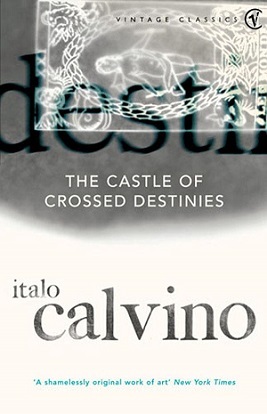
Image courtesy Vintage Classics

Author: Italo Calvino

My GoodReads rating: 2 stars

Average GoodReads rating: 3.54 stars

Language scaling: C1+

Plot summary: Weary travelers at a castle and a tavern are rendered unable to speak, and so use a Tarot deck to share their stories.

Recommended audience: Those interested in modernist literature; those interested in Tarot cards; fans of Italo Calvino.

In-depth thoughts: I picked The Castle of Crossed Destinies up for two reasons. First, the Tarot deck conceit seemed like it would be relevant for a current writing project of mine and I wanted to see how Calvino handled it. The second reason was my troubled relationship with Calvino. I hated Invisible Cities but loved If on a Winter’s Night a Traveler, so I wondered where on the spectrum this third book would fall. The answer is “somewhere in the middle,” so now I don’t know if Calvino is an author I hate, love, or am just apathetic about.

The Castle of Crossed Destinies is a contemporary version of something like The Decameron. There is no overarching plot or action; instead, it is a collection of fables and short stories. Some of them are original; some of them (if I understand Calvino’s epilogue properly) are myths and legends that he “retold” through a given sequence of Tarot cards. This isn’t what I was expecting or hoping for; I went in expecting something like Philip K. Dick’s Man in the High Castle, only with Tarot instead of I Ching and without the alternate history elements.

Putting that disappointment aside, I have to admit I didn’t really enjoy The Castle of Crossed Destinies. I didn’t hate it the way I hated Invisible Cities, but I didn’t like it nearly as much as If on a Winter’s Night a Traveler. I’m not glad that I’m read it, but I’m not annoyed, either.
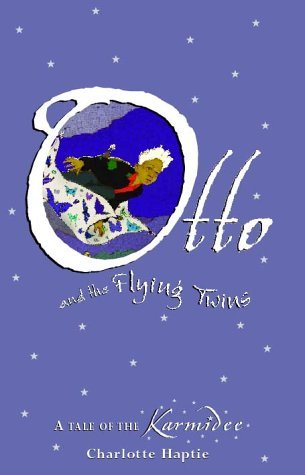
Book Review: Otto and the Flying Twins

I picked up Otto and the Flying Twins at a library sale some months ago, and in an odd coincidence (given the book’s subject matter) I had it in my bag while I was stranded in town on Friday.

Author: Charlotte Haptie

My GoodReads rating: 4 stars

Average GoodReads rating: 3.62 stars

Language scaling: B2+

Recommended audience: Fantasy aficionados

In-depth thoughts: Teachers wishing to address prejudice and The Holocaust could do worse than to include Otto and the Flying Twins in the curriculum.

On the surface, it’s a whimsical fantasy story about an evil queen (though in an updated form of an evil councilwoman) trying to eradicate magic from the city, and the young boy and his magical friends who stop her. But dig a little deeper and it’s hard to deny the parallels with pre-World War II Germany: the “magicos” are declared inferior and a threat to the city’s well-being, relegated to ghettos or sent to work in moonstone mines.

It’s hard to strike a balance between light whimsy and serious hardship, and my only complaint with the book is that Haptie never finds a good balance; despite some serious moments, the mood tilts very heavily towards “fun fantasy.” Rather than address the very real problem that hatred and prejudice is built up over lifetimes and generations, Haptie compresses what was probably two or three centuries of anti-Semitic sentiment that contributed to the Holocaust into just a couple of years and the flimsiest of pretenses—essentially, one individual’s personal grudge. (And greed, but arguably it’s something like greed that drives people to blame The Other for economic woes, so that’s not so unrealistic after all.)

But it’s a fantasy book for middle grade readers, not Holocaust scholarship. I realize this is a very high-level nitpick, and I’m willing to overlook it because everything else about the book was delightful.

Anyone familiar with YA and middle grade tropes will see some of them refreshingly subverted or avoided. The titular Otto isn’t The Chosen One; that’s actually his dad, Albert who does much of the heroics (if off-screen). Otto is, of course, gifted with what everyone considers The Best Power Ever, but it’s well-balanced: neither over-powerful enough to render his friends useless, nor so under-powered that we wonder why anyone values such a power in the first place.

When his mom finds out that Albert hid his Karmidee heritage from her, she lashes out at him and spends most of the rest of the book angry at him, for ugly reasons (internalized prejudice) as well as respectable ones (building a life with someone only to find out they’ve lied about a very important part of themselves is bound to be a shocker). It’s a response that feels very human, especially because she balances it with protecting her family. There’s nothing worse than conflict driven by one or more parties being willfully stupid. Instead, Dolores does what she can to protect her undeniably magical family and keeps her frustration with Albert separate.

Otto’s obligatory female sidekick, Mab, isn’t presented as a love interest, which is refreshing—but this might be due to the target audience (the story feels and reads much more middle grade than YA). She’s not entirely useful, it feels like, except to explain things to Otto (and by extension, the reader).

The language in this book is something to behold. There is an air of genuine whimsy in this that I found lacking in Harry Potter. (Well, either lacking or totally oppressive.) Normal Police, widges, dammerung, an Impossible List . . . Haptie takes well-worn fantasy tropes and adds her own unique spin to them.

Otto and the Flying Twins is the first in a trilogy of books. I get the impression that they were meant to be a longer series, but seeing as the last one was published in 2006, I think it’s safe to say that the series stops at three books. If you can find it, get it. Otto and the Flying Twins is a great example of middle grade fantasy at its finest. More than that, it’s a great jumping-off point to discuss prejudice and resistance—topics that are going to be quite relevant for the next few years.