
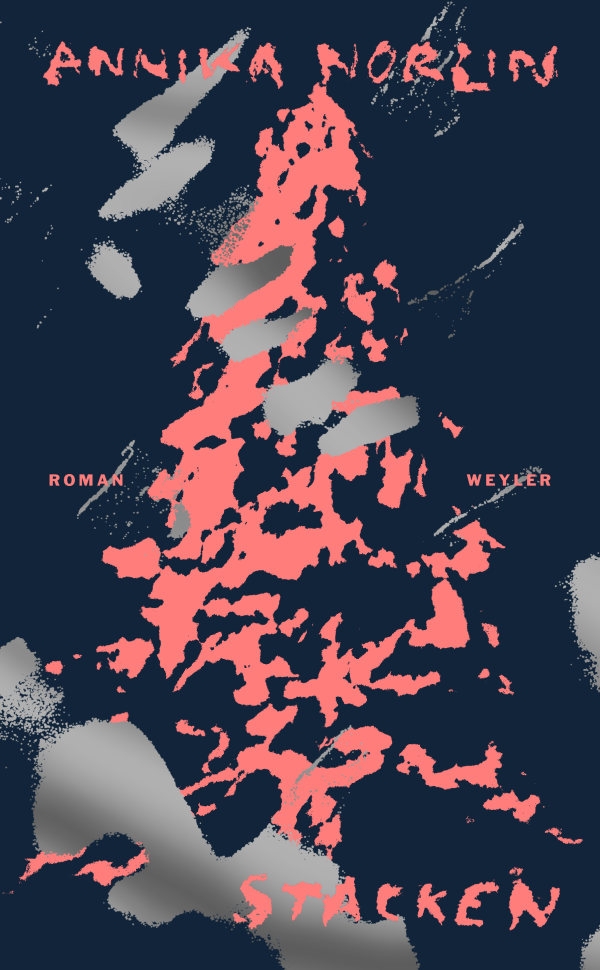
Stacken (Eng: The Colony) was a Swedish book club pick and it generated a range of responses, which is exactly what you want in a book club pick I suppose. Unlike the previous meeting I attended, where everyone agreed that Orbital was pretty underwhelming.
What made Annika Norlin’s debut novel a non-starter for me was that it ultimately seemed to lack cohesion. Norlin’s previous fiction release was a collection of short stories, and Stacken feels like an unsuccessful attempt to glue seven or eight short stories together in a single narrative. We have an ensemble cast consisting of Emelie, a young Stockholmer who has fled to the countryside up north after serious case of burnout, and the cult-adjacent group she stumbles on out there: Ersmos, Aagny, Sara, József, Sagne, Låke, and Zakaria.
If I were to summarize Stacken in a single sentence, it would be “Midsummer for scaredy cats.” It has the kinda culty one-with-nature commune, but without any murders. (There are a couple of murders in the backstory, but that’s a separate matter.) Wikipedia tells me it’s “being adapted for television,” but I can’t find any unpaywalled source for more details, so who knows. I can see how it would work as an anthology series of character studies, like LOST, but that is in no way a compliment. For lack of anything else to say about the book, here is the cult character gallery in brief:
Ersmos is around Emelie’s age. He grew up with a tyrannical single mother in the house that would eventually become cult headquarters. Not very brainy, much more mechanically oriented.
Aagny is well into middle age. After doing a stint in prison, the only job she can find is caregiver for Ersmos’s horrendous mother. She’s the first to move in to the house.
Sara is also around Emelie’s age, gifted with incredible charisma. She served a prison sentence following an animal rights stunt (unsuccessfully trying to liberate some chickens), spent a few years at an ashram in India, and eventually moves in together with József.
József is ten or fifteen years older than Sara, the son of two Hungarian Holocaust survivors. Intergenerational trauma has made him something of a people pleaser, and when he meets Sara he’s working as a church choir director.
Sara and József run into Aagny up north visiting some of Sara’s extended family, and they’re the next to move in.
Sagne is a a huge bug nerd, distantly related to Sara by marriage? a cousin? marriage to a cousin? and relatively local to the area. She goes off to get a PhD studying ants, but then A TRAGIC BACKSTORY happens to her and Aagny finds an extremely pregnant Sagne out in the woods. Sagne doesn’t move in so much as she’s brought in.
Låke is Sagne’s son, born and brought up on the property. Despite József’s protestations, Låke is kept out of school and so gets a very singular and uneven education on their off-grid little homestead. By the time Emelie shows up he’s a teenager, maybe sixteen or seventeen? Sagne spends most of the book avoiding him, and the rest of the commune can’t quite seem to decide what to make of him.
Zakaria is the last to arrive, again brought in by Aagny when she meets him in a drunken stupor, on the run from the law. He is young and Greek and gorgeous and naive, and everyone’s a little bit horny for him. Aagny especially is desperately in love with him.
By the time Emelie runs into them, they have amassed several idiosyncracies. They talk about Out There and Outsiders in hushed tones. They sleep outside as much as possible. They thank nature for every gift of berries, vegetable, animal. Sara has morphed into a cult leader and dictates, with charisma and soft power and suggestion, their goals and activities.
I often joke that I would read about absolutely nothing at all happening so long as the writing was good, but Stacken really put that assertion to the test. Norlin can write lovely prose, but that still wasn’t enough to get me interested in the story. Maybe because she never gets beyond the surface of things: of events, of feelings, of character psychology. Really grim, serious things happen to the characters and Norlin just skims over it. Not to mention how she handwaves things things like how this bunch of amateurs learned to build proper shelter, and garden, and tend chickens, to the point where they became almost completely self sufficient. I get that you didn’t want to do the research, Norlin, but then maybe you could have told a different story.
