Fat-Talk Nation: The Human Costs of America’s War on Fat

Out of something of a fluke, I ended up reading three very different books with very similar themes and topics (in this case, fat) in very quick succession while I was visiting my family for Christmas. I suspect this was the byproduct of working through my TBR backlog and hitting the vein of fat acceptance/health at every size/body positivity books that I had added to the list in 2017 or so, but still a bit weird for the cookie to crumble in just that way! But since they were anthropological nonfiction, a YA novel, and a dishwater attempt at satire aimed at adults, I decided there wasn’t much to be gained by combining them. At least for review purposes.

The first in this Fat Triptych is Susan Greenhalgh’s Fat-Talk Nation: The Human Costs of America’s War on Fat. It isn’t impenetrable by any means, but it’s definitely an academic and scholarly approach that’s a cut or two above more popular science fare. Greenhalgh is an anthropologist (specializing in China, apparently, which was not at all apparent to me reading Fat-Talk Nation!) and admits in the introduction to the book that she fell into writing about this topic basically by accident. Class discussions in a course on feminism she was teaching brought diet culture and fat shaming into her awareness when before it had largely been absent for her; being a person of average weight, she explains, meant she hadn’t personally been subject to body scrutiny. Stories from students prompted her to conduct an entire research project that eventually became Fat-Talk Nation.

The bulk of Greenhalgh’s material here consists of student essays, the majority of which from her own students (writing such an essay was an optional piece of extra credit for a class she was teaching). She may have followed them up with personal interviews as well? I’m writing this three months after the fact and some (many) things have since slipped my mind. But all the participants included in the book give informed consent, names and so on are changed, and Greenhalgh situates their stories in the context of diet culture (local to Southern California but also nationally), biology, and so on.

(Expertise in China might have surprised me, reading her biography now several months later, but “the entanglements of state, corporation, science, and society, and their consequences for human health and social justice writ large” are very much part of Fat-Talk Nation.)

Much of the book centers around BMI, both itself as a concept and also a wedge or vanguard for larger discussions about what Greenhalgh calls “biocitizens” in arenas like doctor’s visits or public schools. Reading these initial chapters brought back memories of countless gym and health classes where we dutifully learned to crunch our own numbers to see if we were fit or not; embarrassing visits to the school nurse for check ups. My second grade teacher posted our photos, heights, and weights on the bulletin board for a month or two. It was dressed up in the cutesy way elementary school teachers do bulletin boards (I think maybe we were all, like, apples hanging on a tree?) but I still wanted to melt into the floor. The second-fattest kid in the entire class.

And all that misery without BMI!

In retrospect it seems so pointless. Everyone can see who the fat kids are, including the fat kids themselves. What good does it do to also tell them that, according to this metric, you are going to keel over dead?

Greenhalgh also uses the BMI categories to structure the book, looking at the experiences of students according to whether they were underweight, average, overweight, or obese. This is the bulk of the book and, for me, is a compelling case for empathy. (Granted, I went into this book biased.) There are plenty of absolutely brutal stories about how parental anxieties and concerns about (bodily) perfection in their children strained or even ruined family relationships. Greenhalgh makes the point that the appearance of scientific legitimacy given to BMI makes it easy to stoke concern in parents who might say or do horrible things out of genuine concern for their child’s health. At least one of the respondents in the underweight and overweight categories talked about how their parents had never been worried about their weight, or were even aware of the metric, until the school nurse sent home some kind of note or comment about the child’s undesirable weight.

Upon reflection I would say that the focus on BMI is maybe the book’s only flaw. It’s not that I think Greenhalgh is on a hobby horse or anything, far from it. When you’re looking at “the entanglements of state, corporation, science, and society,” then BMI becomes the most obvious marker for that in a discussion about obesity. It looks quantifiable and objective, it’s easy to calculate, it’s used everywhere under the guise of being “scientific.” It’s more that our pop-science understanding of obesity, and the terms we use to discuss it, have evolved. It’s only in the last section that I think Greenhalgh has overstated the case, waxing overly optimistic about the potential good of taking BMI out of public discussions—and, indeed, about the overall potential of the body positivity movement.

This is also an Obama-era book, so Michelle Obama’s various First Lady initiatives to reduce childhood obesity get mentioned a lot—relic of a bygone era. It would certainly be interesting to see an updated version or even a sequel, a full ten years later. I can’t help but think that Ozempic and other GLP-1 drugs would replace BMI as the locus of state, science and biocitizen discussion.

Even though Fat-Talk Nation feels a little, or very, out of date in places when it comes to discussions of policy, overall it holds up because of the survey responses. People’s lived experiences will never feel dated in the same way that reading about First Lady Michelle Obama does. I’d also like to think that those are the most persuasive sections of the book, but I’ll be the first to admit I’m a big ol’ softie.

On the off chance you’re curious about this one, be aware that there are several books with “Fat Talk” in the title that come up when Googling. Double check the full title.
The Dawn of Everything

What a doorstopper!

The reason I meticulously note (almost)* everything I read here is so that I remember reading it. I don’t know enough about the brain to know if writing about things really helps it transfer over to long-term memory, but I’ve already had the experience of completely forgetting something I said or did until I re-read a journal entry about it, so I assume the same holds true for books.

All of that to say, I don’t think I’m capable of doing The Dawn of Everything justice here. In a nutshell, David Graeber and David Wengrow look at archeological and anthropological evidence to (in their own words) “ask better questions.” The paradigm that they’re trying to upend is actually quite similar to the one that Stephen Jay Gould also sought to demolish in Full House:

The argument Gould makes in Full House is basically one against the teleological framework of evolution: that things evolve for some higher purpose, or more specifically deliberately towards complexity; that complexity is somehow the best, most special, or most desirable form of life.

(quoting my own summary there)

But instead of deconstructing a teleology with complexity as the end goal, here Graeber and Wengrow are deconstructing a teleology with agriculture and the state as an end goal; that agricultural was an instant revolution that inevitably led to an apparatus we currently call “the state,” and that the world we are living in now is more or less the inevitable end state of things. They also occasionally take the time to dunk on Yuval Noah Harari’s Sapiens and Jared Diamond’s Guns, Germs and Steel.

The whole book is something like 400, 500 pages to argue against this conclusion, and frankly I don’t have the recall or the comprehension to reconstruct it here. Like David Graeber’s Debt, I’ll have to read this one multiple times to really be able to confidently explain its premise. What I can say after one read-through is that they believe the archeological evidence points towards a history of mankind that experimented with flexible and novel arrangements of power that, even on a large scale, preserved what they call the three basic freedoms: the freedom to make promises, the freedom to disobey orders, and freedom of movement (the freedom to leave a place if the situation becomes too onerous).

There’s a lot of non-fiction that I read because I have weird niche interests, or because I ran across it at the library and it seemed interesting. There’s also non-fiction that I tackle because I want to better understand the world I live in, and The Dawn of Everything falls squarely in that category. More than that, there’s a category of non-fiction that I wish were required reading so we could start building consensus reality again and so we could maybe learn something from history. The Dawn of Everything is one of those books.

*Some are so niche and special interest that I don’t really see the point in including them here in my public record of reading. My commonplace book, as it were.

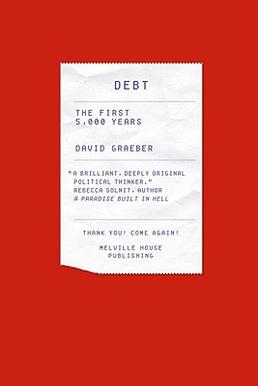
Debt: The First 5,000 Years

Here’s the rare “book off the TBR” win! Of course, Debt: The First 5,000 Years was a relevantly recent TBR addition that has not undergone the shameful, years-long limbo that other titles have, but any progress is progress.

If you look back at the non-fiction I read in 2022 (especially the non-fiction I read and enjoyed in 2022), you can see something of a common denominator:

A small collage of book covers that I rated 5/5 stars during the year.

Caliban and the WitchJakartametoden and Handels: Maktelitens Skola all go a very long way towards explaining how capitalism as we know it came to be and how its current norms and structure are maintained. Project Censored’s State of the Free Press 2022 is reportage often aimed at critiquing those norms and structure and, if you want to stretch the conceit, ancient Rome is where we like to start the story of Europe, and it is Europe from which springs everything else the other selections touch on. (Temples of the Sky is the odd one out, a niche hobby read.)

Whether this trend is due to the natural progression of my interests, the years I’ve now spent absorbed in financial reports, the turbulent times we live in, or some other constellation of factors, who can say. Regardless, it continued straight away into 2022 with Debt.

I’m not lucid enough a thinker to provide a pat nutshell summary of my own, so I’ll lift the one on the book’s Archive.org page:

[Debt] explores the historical relationship of debt with social institutions such as barter, marriage, friendship, slavery, law, religion, war and government; in short, much of the fabric of human life in society. It draws on the history and anthropology of a number of civilizations, large and small, from the first known records of debt from Sumer, in 3500 BC until the present.

And then the one from the back of the book itself:

Before there was money, there was debt. For more than 5,000 years, since the beginnings of the first agrarian empires, humans have used elaborate credit systems to buy and sell goods—that is, long before the invention of coins or cash. It is in this era that we also first encounter a society divided into debtors and creditors—which lives on in full force to this day.

So says anthropologist David Graeber in a stunning reversal of conventional wisdom. He shows that arguments about debt and debt forgiveness have been at the center of political debates from Renaissance Italy to Imperial China, as well as sparking innumerable insurrections. He also brilliantly demonstrates that the language of the ancient works of law and religion (words like “guilt,” “sin,” and “redemption”) derive in large part from ancient debates about debt, and shape even our most basic ideas of right and wrong.

We are still fighting these battles today.

This is the best kind of nonfiction: written by a knowledgeable academic for a lay audience without insulting their intelligence or devolving into jargon and obscure terminology, with a heaping helping of works cited at the end.

In many ways, this is the less crackpot-y, more grounded and more academic answer to Sacred Economics, which I read a few years ago and which helped keep me oriented in Debt. A lot of what Eisenstein describes as “gifts” seems to overlap with what Graeber describes as the favors that, with the advent of currency, turn into debt. Neither of them mention each other, however. Both books came out in 2011*, so I’m not sure whether it’s Graeber or Eisenstein who should be referring to the other. (Graeber might have felt that Eisenstein wasn’t nearly academically rigorous enough to cite and too out-there to be worth engaging with otherwise, and I can’t say I would have blamed him.) They definitely draw from at least a few of the same sources, such as Marcel Mauss.

I expect I will end up re-reading it later in the year, as it’s so dense with information and argumentation that there’s no way you can absorb it all at once. (Maybe you can. I can’t.) For now, time to give my brain a bit of a break.

*I think. It’s hard to tell, precisely, with Sacred Economics beyond “before 2012.”