Review: The Castle of Crossed Destinies

I always get more reading done during vacations than any other time of the year. American English, Italian Chocolate was the first book I knocked off my TBR pile. The next one was The Castle of Crossed Destinies, which I started on the plane to Copenhagen and finished in the Hideout Cafe in Austin while I waited to meet my host and his girlfriend.

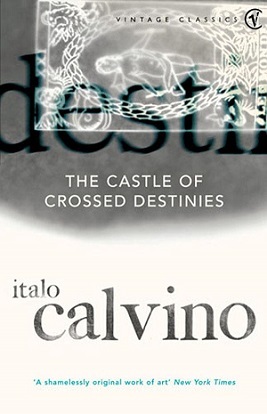
Image courtesy Vintage Classics

Author: Italo Calvino

My GoodReads rating: 2 stars

Average GoodReads rating: 3.54 stars

Language scaling: C1+

Plot summary: Weary travelers at a castle and a tavern are rendered unable to speak, and so use a Tarot deck to share their stories.

Recommended audience: Those interested in modernist literature; those interested in Tarot cards; fans of Italo Calvino.

In-depth thoughts: I picked The Castle of Crossed Destinies up for two reasons. First, the Tarot deck conceit seemed like it would be relevant for a current writing project of mine and I wanted to see how Calvino handled it. The second reason was my troubled relationship with Calvino. I hated Invisible Cities but loved If on a Winter’s Night a Traveler, so I wondered where on the spectrum this third book would fall. The answer is “somewhere in the middle,” so now I don’t know if Calvino is an author I hate, love, or am just apathetic about.

The Castle of Crossed Destinies is a contemporary version of something like The Decameron. There is no overarching plot or action; instead, it is a collection of fables and short stories. Some of them are original; some of them (if I understand Calvino’s epilogue properly) are myths and legends that he “retold” through a given sequence of Tarot cards. This isn’t what I was expecting or hoping for; I went in expecting something like Philip K. Dick’s Man in the High Castle, only with Tarot instead of I Ching and without the alternate history elements.

Putting that disappointment aside, I have to admit I didn’t really enjoy The Castle of Crossed Destinies. I didn’t hate it the way I hated Invisible Cities, but I didn’t like it nearly as much as If on a Winter’s Night a Traveler. I’m not glad that I’m read it, but I’m not annoyed, either.

Reveiw: American English, Italian Chocolate: Small Subjects of Great Importance

I am a sucker for a great essay collection. There is an art to crafting short writing, fiction or otherwise, that I admire in others and wish I could cultivate for myself. Incidentally, despite my struggles with brevity, I am absolutely ruthless when it comes to editing other people’s short writing. I have a friend on a short story kick who can attest to the extent of my cuts (and actually, you’ll blog-meet him soon enough). But the only way to get better at short-form writing is to read a lot of it, right? So when this collection turned up on NetGalley, how I could turn it down?

American English, Italian Chocolate is a memoir in essays beginning in the American Midwest and ending in north central Italy. In sharply rendered vignettes, Rick Bailey reflects on donuts and ducks, horses and car crashes, outhouses and EKGs. He travels all night from Michigan to New Jersey to attend the funeral of a college friend. After a vertiginous climb, he staggers in clogs across the top of the Leaning Tower of Pisa. In a trattoria in the hills above the Adriatic, he ruminates on the history and glories of beans, from Pythagoras to Thoreau, from the Saginaw valley to the Province of Urbino.

Bailey is a bumbling extra in a college production of Richard III. He is a college professor losing touch with a female student whose life is threatened by her husband. He is a father tasting samples of his daughter’s wedding cake. He is a son witnessing his aging parents’ decline. He is the husband of an Italian immigrant who takes him places he never imagined visiting, let alone making his own. At times humorous, at times bittersweet, Bailey’s ultimate subject is growing and knowing, finding the surprise and the sublime in the ordinary detail of daily life.

Author: Rick Bailey

My Goodreads rating: 2 stars

Average Goodreads rating: 4.22 stars

Language scaling: B2+

Recommended audience: Those interested in short-form nonfiction writing, whether for its own sake or for the sake of improving their own.

In-depth thoughts: Essays! Cross-cultural marriages! Everything I should love! But this collection fell a little flat for me. There was no “surprise” or “sublime” for me in these rambles through the details of the everyday; just a sort of mild interest. The only essay that really got close to something for me was “For Donna, Ibsen, Pepys, Levitation,” which touches on one of his “non-traditional” (read as: single mother returning to school after a long absence) literature students who was trying to balance her passion for the class with raising her kids and trying to stay safe from her abusive ex-husband. But even that doesn’t hit the mark entirely. After a seemingly innocent lefthand turn into levitation, Bailey fails to bring it back around to the central moment in the essay: Donna, the mother and abused woman and eager literature student. Here’s the jump Bailey makes, once you take out the long, extended aside on levitation:

“I saw Ghosts on the syllabus, you know what I thought of?”

It’s my turn to laugh. “Patrick Swayze?”

“In school, like in ninth grade, we did this thing called levitation.” She gives me an embarrassed look. “Did you ever levitate?”

Seeing Donna in class, reading and thinking and sharing, was like witnessing a levitation.

There’s probably over twice as much material spent on the history of the parlor trick, dead Englishmen’s thoughts about it, and Bailey’s memories of it than on the living, breathing human in front of him, and it just feels off. While none of the other essays were this off for me, they were all equally detached and disinterested from their subject matter, except when it concerned Bailey’s own reminisces. Maybe he should have just written a straight-up memoir?

I was also a little confused over the title, or rather the title in connection with the description. I went in expecting a lot more about cross-cultural marriages, about immigration, about adapting to new cultures (or being around those who have to adapt to a new culture), and everything else that comes with those huge life milestones. And yet, nothing.

I majored in English in college, specifically creative writing, and sometimes I wondered if I should have taken myself and my writing a little more seriously by pursuing an MFA afterwards. But the writers my professors brought to campus to give readings or to guest lecture, and even what they wrote themselves, had an American University Workshop-y sameness to the writing (even if it was good) that I could maybe pretend to like but never be able to bring myself to write. There were ideas in here that I liked, but they were painted over with that workshop-y sameness to the point where it was hard for me to maintain my interest.

While I might be tempted to point to one of these essays if I ever tackle personal essays or memoirs in a lesson, American English, Italian Chocolate was just not my cup of tea, and I don’t know if I would necessarily recommend it to EFL students.
Review: Play It As It Lays

I’m slowly closing in on my TIME Top 100 Novels of the 20th Century goal. After this, just one book remains!

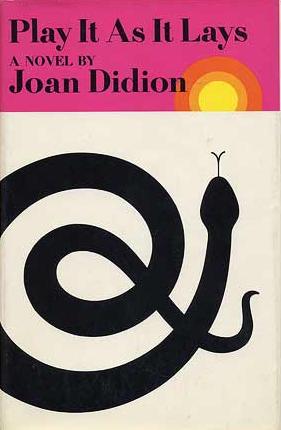
Image courtesy Farrar Straus & Giroux

Author: Joan Didion

My GoodReads rating: 4 stars

Average GoodReads rating: 3.73 stars

Language scaling: B1+

Plot summary: The life and breakdown of the fictional actress Maria Wyeth during the late 1960s.

Content warning: Lots of substance abuse and an overdose; off-screen (off-page?) domestic violence; abortion

Recommended audience: Those interested in modernist literature; those interested in feminist literature; those interested in character studies; those interested in mid-century Americana.

In-depth thoughts: Play It as It Lays is an ideal book for EFL students: serious, compelling concepts are explored in short chapters of light, lucid prose. The net result is that you can pick up and put down around the book other things you might have going on in your life. Also, there’s a movie version starring Tuesday Weld and Anthony Perkins.

Many of the reviews I’ve read for Play It as It Lays call it “depressing,” even “terrifying,” but I largely suspect that response has to do with how squeamish you are about abortion (and how squeamish you are about women feeling, at worst, vague and ambiguous about getting abortions, rather than eternally regretful and emotionally destroyed). I liked Didion’s writing and was happy to hitch a ride with Maria Wyeth for a while to visit her gilded cage of a world, but nothing about it shook me to my core. (Maybe that’s how you know you’re depressed? Hm.)

Review: Karen Memory

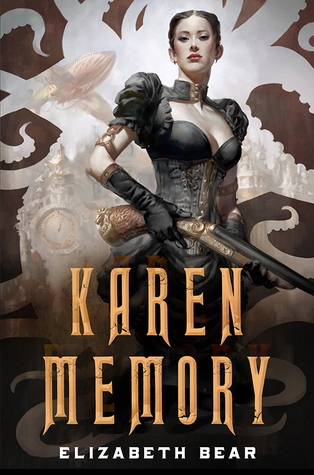
I mentioned having reading to do for Feminist Sci-Fi Book Club during my vacation in Austin, and how I finally tackled The Dispossessed maybe a decade after I first tried to read it. The other book on the docket for book club was Elizabeth Bear’s Karen Memory. I finished it in July, but you’re reading this in August, after feminist science fiction book club, because book club gets first dibs on my thoughts!

Cover of Elizabeth Bear's "Karen Memory."
Image courtesy Tor

Author: Elizabeth Bear

My GoodReads rating: 3 stars

Average GoodReads rating: 3.73 stars

Language scaling: C2

Plot summary: In a nutshell, Karen Memory is a steampunk Wild West version of Jack the Ripper set in the Pacific Northwest, with international espionage and intrigue thrown in for good measure.

Recommended audience: Steampunk fans

In-depth thoughts: The back of the book features the same summary I just shared above, more or less, and I habitually re-read the backs of books as I read, and even still I was waiting for this to turn into a feminist steampunk version of “Johnny Mnemonic.” Should I have expected that? Obviously not. Was I letting myself get tripped up by the title? Yes, probably. Still, I have to admit to being just slightly disappointed in the book not delivering what I had promised myself it would be.

Elizabeth Bear’s writing is fantastic. Karen has a distinct voice that’s just a lot of fun to read, and the book is worth it for that. This is the first book I’ve read by Bear and I’ll have to find more in the future. But there were a few things that tripped me up, which is why I didn’t give it a higher rating. (I suppose it’s nitpicking to expect the correct dates on radium watch dial painting in a novel that is very clearly a fantastical alternate universe, but it’s my job to be a nitpicker, so I’ll let it bother me.)

A more salient point for EFL readers is that while Bear’s writing and Karen’s voice are distinctive and stylistic, they may be too stylistic for many EFL readers. Karen’s voice employs non-standard grammar and slightly antiquated vocabulary that I can see as being confusing or off-putting (hence such a high language grading). But if you’re a very committed steampunk fan, it’s well worth the effort it might take to adjust to the language.

Review: The Thrilling Adventures of Lovelace and Babbage

I borrowed this book from a friend. She thought to recommend it to me on the basis of the footnotes (long story), not knowing that I’m also a huge nerd for Ada Lovelace. I mean, I’m pretty obviously a huge nerd generally and she knew that much when she let me borrow it; I mean a nerd for Lovelace and the Analytical Engine specifically.

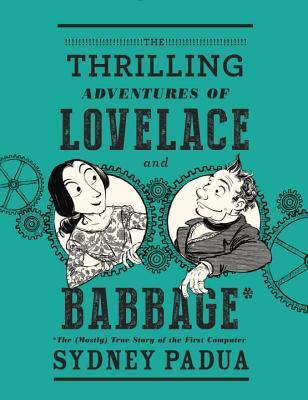
The Thrilling Adventures of Lovelace and Babbage
Image courtesy Sydney Padua and Pantheon

Author: Sydney Padua

My GoodReads rating: 5 stars

Average GoodReads rating: 4.05 stars

Language scaling: B1 / C1

Plot summary: In this lighthearted steampunk alternative history, Ada Lovelace and Charles Babbage build a working model of the Analytical Engine and go on adventures.

Recommended audience: Steampunk fans; graphic novel fans; those interested in the history of modern computing.

In-depth thoughts: There are two language gradings above; it depends on whether you include all of the primary sources and quotes that Padua provides in the footnotes, in the appendices, and (occasionally) in the dialogue in the comic itself. Padua’s contemporary English will probably be more familar and easier for EFL readers to grasp than quotes taken from Victorian-era sources. As a native speaker who is a huge fan of thorough, clearly cited research, I appreciate all of those quotes and sources; EFL writers might find that trying to read through some of those sections is too difficult.

If any of the language gets too complicated, though, you can give yourself a break and enjoy Padua’s adorable art.

Book Review: Kris

It would be hypocritical of me to encourage my students to read novels in English, and then not do the same in Swedish. I actually think it’s a good exercise for EFL teachers, as well: choose a foreign language you can reasonably read and understand and make ongoing attempts to read in that language. It’s important to remember how frustrating a foreign language can be, at times, and help you empathize with your students and be a better teacher.

This is going to be a shorter review than usual, for what I hope are obvious reasons (i.e. novels in Swedish won’t really help anyone learn English). But I like to keep as complete a public record of my reading as possible, so I still want to make note of it here.


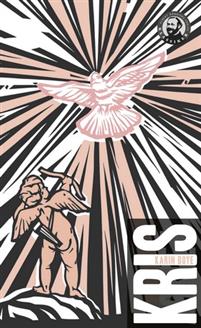
Author: Karin Boye

My GoodReads rating: 4 stars

Average GoodReads rating: 3.66 stars

Language scaling: N/A

Plot summary: Malin Forst is a seminary student in the period after the first World War. Romantic feelings for female classmate, Siv, paired with with the free-floating uncertainty in post-World War I Europe lead Malin to a crisis of faith and subsequent nervous breakdown, after which she has to reevaluate her life and reassess her own moral code.

Recommended audience: Fans of queer literature; fans of modernist literature.

In-depth thoughts: I was already familiar with Boye’s other novel, Kallocain, which I actually read in English when I was an exchange student at Stockholms universitet in 2007. I’m not sure if Kris is available in English, but Kallocain definitely is and I would recommend that for EFL students who enjoy science fiction. But Kris is much different; it’s much more modernist and experimental than the relatively straightforward and plot-driven Kallocain. Boye explores Malin Forst’s breakdown through inner monologues and dialogues, conversations among notable historical figures and personified abstract concepts, as well as straightforward narration. The novel is episodic, which is great when you’re reading in a foreign language and have trouble maintaining focus for long stretches. (I love Par Lagerkvist, but I also think he could use chapter breaks and now and then.)

Boye is primarily known as a poet, and that shows in the way she uses language and imagery throughout Kris. It only took me so long to finish Kris because I was reading three or four book simultaneously, on top of being busy. It’s a great option if you need something to read for SFI, SAS, or AKSVA.

Book Review: The Dispossessed

I must have been 13 or 14 when I first tried reading The Dispossessed, maybe a bit older, and it just couldn’t stick. I had this problem with Le Guin generally—A Wizard of Earthsea was on a semi-required reading list for school a few years before I tried to tackle The Dispossessed, but again I couldn’t seem to get into it. Since then I just wrote Le Guin off as one of the great and admirable giants of science fiction who just wasn’t for me.
Fast forward to 2017, and I’m getting ready to visit one of my best friends; my visit will coincide with the August meeting of his feminist science fiction book club. The book under discussion is Karen Memory, but their last book was The Dispossessed and my host let me know that they’ll probably be discussing that one too, because most people couldn’t make the last meeting and there was still marrow to be sucked from the bones. So to speak.
I picked up Karen Memory at SF Bokhandlen but decided to give The Dispossessed another go. It seems like I’m a better reader now than I was at age 14, because I finished this one in record time!

Author: Ursula K. Le Guin

My GoodReads rating: 4 stars

Average GoodReads rating: 4.18 stars

Language scaling: C1+

Plot summary: Two hundred years ago, a group of idealistic anarchists left the planet Urras to start a colony on the moon. Now, a physicist named Shevek is the first man from Anarres to travel to Urras, now fraught with competing nation states and competing political philosophies, to continue his research into Simultaneity.

Recommended audience: Science fiction fans; political theory junkies

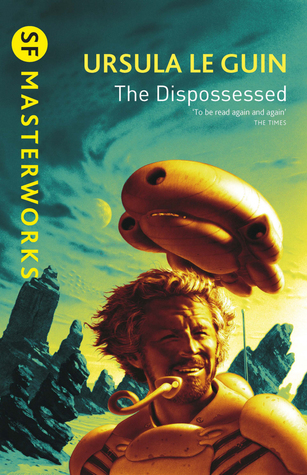
Image courtesy Penguin Classics

In-depth thoughts: First of all, I’m proud of myself for finishing a book I abandoned years ago. My own book club tackled The Invisible Bridge for April? May? and despite picking at it for two months I just couldn’t get into it. I finally returned it to the library well past its due date, unfinished, acknowledging that not being able to finish this book was keeping me from others I might enjoy more.

Struggling with The Invisible Bridge slowed down my reading and I went from being 5 books ahead of my GoodReads goal to being a book behind. Madonna in a Fur Coat was the shot in the arm I needed to get back to reading again, and The Dispossessed was the self-esteem boost I needed after the first “did not finish” I’ve had in a long, long while.

While I can see why teenage me couldn’t get into The Dispossessed, adult me really liked it. I liked the little grammatical nuances of Pravic (like the total absence of possessive pronouns), I liked the world-building, I liked how Urras was a whole planet full of nations at cross-purposes instead of a single monoculture. (Planets in science fiction are almost always analogues for countries, and I hate that. Just look at how diverse and fractious and not-united Earth is!) I liked how neither Urras nor Anarres were all-good or all-bad, but both oppressive and less than ideal in their own way, though maybe that’s pessimism on Le Guin’s part.

Or maybe it’s just realism. #bleak

Book Review: Madonna in a Fur Coat by Sabahattin Ali

As the paucity of book reviews* here would suggest, I’ve been in a reading slump recently. As an avid reader, I always find it troubling when I go for weeks without finishing a proper novel. Madonna in a Fur Coat was exactly what I needed to break my losing streak.

I’m a member of an informal Internet book club that’s going on two years old. It’s done a really good job of balancing light fiction, classics, and nonfiction, so I have to say that our two founders (who started the club and who pick most of the books, though with input from everyone else) have excellent taste! Other books I’ve read (and enjoyed!) for this book club include  The Road to MeccaPassing, and The Price of Salt.

*Picture books notwithstanding.

Author: Sabahattin Ali

Translators: Maureen Freely and Alexander Dawe

My GoodReads rating: 4 stars

Average GoodReads rating: 4.5 stars

Language scaling: B2+

Plot summary: From the dust jacket flap on my edition:

A shy young man leaves his home in rural Turkey to earn a trade and discover life in 1920s Berlin. There, amid the city’s bustling streets, elegant museums, passionate politics and seedy cabarets, a chance meeting transforms his life for ever. Caught between his desire for freedom and his yearning to belong, he struggles to hold on to the new life he has found.

Recommended audience: Anyone interested in Turkish literature; anyone who likes a tragic love story.

Madonna in a Fur Coat, Sabahattin Ali
Image courtesy Penguin Clasics

In-depth thoughts: I am a sucker for character-driven stories that feature moody, introspective protagonists. I guess that even as an adult, I’m an angsty teenager at heart. That’s not to suggest that there’s anything callow or self-indulgent about Madonna in a Furcoat. Even if it leans heavily on romance tropes that might strike some readers as overdone or tedious, what makes Madonna in a Furcoat stand out isn’t the love story but the writing and the characters. It would have been a welcome palate cleanser after The French Lieutenant’s Woman, a novel with a similar plot but altogether different style and attitude towards its characters, particularly its love interest. I’ll leave off with a favorite quote:

Just as warm sunlight can, by passing through a lens, turn to fire, so too can love. It’s wrong to see it as something that swoops in from the outside. It’s because it arises from the feelings we carry inside us that it strikes with such violence, at the moment we least expect.

Book Review: No-No Boy

I have two big shout-outs/thanks in this post. First, for Adam over at Memento Mori. As soon as he mentioned No-No Boy in one of his videos, I realized that I had never read anything about the Japanese internment camps. I think we had a copy of Baseball Saved Us somewhere in the house, but I want to say it was my brother’s (baseball fan that he is) and not mine. I might have never even read it and just remember the cover.

The second shout-out and thanks go to my friend Henny (of Dirt Nap Podcast fame), who was kind enough send me a huge dump of ebooks from my Goodreads “to-read” shelf, including . . . No-No Boy!

Author: John Okada

Aside: the story of John Okada, the author, is kind of tragic. No-No Boy is his only novel. It was published in 1957 to a lukewarm reception at best, and so he more or less left the writing world for the rest of his short life. He died in the early 70s of a heart attack, and while he was working on another novel at the time, the documents are lost to us so it’s hard to tell if he just had notes, or if he had a completed draft, or if he had something almost completely finished. Only a couple of years after his untimely death, No-No Boy was sort of rediscovered and quickly attained the recognition and praise it rightly deserved.

My GoodReads rating: 5 stars

Average GoodReads rating: 3.73 stars

Language scaling: B2+

Plot summary: No-No Boy is the story of Ichiro Yamada, a no-no boy who comes back to his life in Seattle after his prison sentence. His mother is proud of him for being a no-no boy; she thinks Japan actually won the war, and that soon she and other loyal Japanese will get to go back. Others are, unsurprisingly, furious with Ichiro, white and Nisei alike. Eventually Ichiro runs into Kenji, a fellow Nisei and a veteran who lost his leg in the European theater and who is only getting more and more ill. Kenji seems to understand Ichiro, at least better than anyone else does, and the two spend a lot of time together as Ichiro tries to figure out his new place in the world.

Content warning: Okada writes about the racial tensions going in post-WWII America, so dialogue can include terms that have since fallen out of favor (or flat-out racial slurs).

Recommended audience: Those interested in post-WWII American history or teaching/studying it in school; those interested in Asian-American authors; those who enjoyed George Takei’s stage show Allegiance.

Cover of the new edition of John Okada's No-No Boy.
Image courtesy University of Washington Press

In-depth thoughts: The title No-No Boy refers to the loyalty questionnaire Nisei Americans (American-born Japanese) were required to answer, as a de facto test of patriotism/”Americanness.” The last two were real humdingers:

Question 27: Are you willing to serve in the armed forces of the United States on combat duty, wherever ordered?

Question 28: Will you swear unqualified allegiances to the United States of America and faithfully defend the United States from any and all attack by foreign or domestic forces, and forswear any form of allegiance or obedience to the Japanese emperor, or other foreign government, power or organization?

Thousands of people answered “no” to both questions for a variety of reasons: misunderstanding the terminology, resentment at being asked to swear loyalty and serve in the armed forces of a nation that had ripped them out of their homes and sent them to detention centers, fears that they would be deported to Japan regardless and that a “yes” would come back to haunt them, etc. They became known as “no-nos” or “no-no boys” and served time in prison for their answers. Okada was not one of them, but the protagonist of his novel is.
There are a handful of books I review here that I really hope people will go out and read (if they haven’t already). Usually it’s because they’re really good, but this is one I think we should read because it’s important. Well, and it’s also really good and worth reading regardless—Okada takes the stream of consciousness style that really came to a head with the Beats and makes it his own. Here’s a quote from early on the in the novel, when Ichiro decides to pay a visit to the university where he was studying before the internment camps and then prison:

Not until the bus had traversed the business district and pointed itself toward the northeast did he realize that he was on the same bus which he used to take every morning as a university student. There had been such a time and he vividly brought to mind, with a hunger that he would never lose, the weighty volumes which he had carried against his side that the cloth of his pants became thin and frayed, and the sandwiches in a brown grocery bag and the slide rule with the leather case which hung from his belt like the sword of learning which it was, for he was going to become an engineer and it had not mattered that Japan would soon be at war with America. To be a student in America was a wonderful thing. To be a student in America studying engineering was a beautiful life. That, in itself, was worth defending from anyone and anything which dared to threaten it with change or extinction. Where was the slide rule, he asked himself, where was the shaft of exacting and thrilling discovery when I need it most? If only I had pictured it and felt it in my hands, I might well have made the right decision, for the seeing and feeling of it would have pushed out the bitterness with the greenness of the grass on the campus and the hardness of the chairs in the airy classrooms with the blackboards stretched wall-to-wall behind the professor, and the books and the sandwiches and the bus rides coming and going. I would have gone into the army for that and I would have shot and killed, and shot and killed some more, because I was happy when I was a student with the finely calculated white sword at my side. But I did not remember or I could not remember because, when one is born in America and learning to love it more and more every day without thinking it, it is not an easy thing to discover suddenly that being American is a terribly incomplete thing if one’s face is not white and one’s parents are Japanese of the country Japan which attacked America. It is like being pulled asunder by a whirling tornado and one does not think of a slide rule though that may be the thing which will save one.

Where (for me) novels like On the Road became self-indulgent and navel-gazeyNo-No Boy balances these deep dives with action and spreads them among multiple characters. We get to know Ichiro quite well, but we also spend time in the heads of the people around him, who have different perspectives, experiences, and opinions.

I hope that whet your appetite! If you’ve read No-No Boy, I’m curious about what you think. If not (or even if you have, I guess), what are some other under-read and underappreciated classics that you think should be more famous? Why?

Book Review: Otto and the Flying Twins

I picked up Otto and the Flying Twins at a library sale some months ago, and in an odd coincidence (given the book’s subject matter) I had it in my bag while I was stranded in town on Friday.

Author: Charlotte Haptie

My GoodReads rating: 4 stars

Average GoodReads rating: 3.62 stars

Language scaling: B2+

Recommended audience: Fantasy aficionados

In-depth thoughts: Teachers wishing to address prejudice and The Holocaust could do worse than to include Otto and the Flying Twins in the curriculum.

On the surface, it’s a whimsical fantasy story about an evil queen (though in an updated form of an evil councilwoman) trying to eradicate magic from the city, and the young boy and his magical friends who stop her. But dig a little deeper and it’s hard to deny the parallels with pre-World War II Germany: the “magicos” are declared inferior and a threat to the city’s well-being, relegated to ghettos or sent to work in moonstone mines.

It’s hard to strike a balance between light whimsy and serious hardship, and my only complaint with the book is that Haptie never finds a good balance; despite some serious moments, the mood tilts very heavily towards “fun fantasy.” Rather than address the very real problem that hatred and prejudice is built up over lifetimes and generations, Haptie compresses what was probably two or three centuries of anti-Semitic sentiment that contributed to the Holocaust into just a couple of years and the flimsiest of pretenses—essentially, one individual’s personal grudge. (And greed, but arguably it’s something like greed that drives people to blame The Other for economic woes, so that’s not so unrealistic after all.)

But it’s a fantasy book for middle grade readers, not Holocaust scholarship. I realize this is a very high-level nitpick, and I’m willing to overlook it because everything else about the book was delightful.

Anyone familiar with YA and middle grade tropes will see some of them refreshingly subverted or avoided. The titular Otto isn’t The Chosen One; that’s actually his dad, Albert who does much of the heroics (if off-screen). Otto is, of course, gifted with what everyone considers The Best Power Ever, but it’s well-balanced: neither over-powerful enough to render his friends useless, nor so under-powered that we wonder why anyone values such a power in the first place.

When his mom finds out that Albert hid his Karmidee heritage from her, she lashes out at him and spends most of the rest of the book angry at him, for ugly reasons (internalized prejudice) as well as respectable ones (building a life with someone only to find out they’ve lied about a very important part of themselves is bound to be a shocker). It’s a response that feels very human, especially because she balances it with protecting her family. There’s nothing worse than conflict driven by one or more parties being willfully stupid. Instead, Dolores does what she can to protect her undeniably magical family and keeps her frustration with Albert separate.

Otto’s obligatory female sidekick, Mab, isn’t presented as a love interest, which is refreshing—but this might be due to the target audience (the story feels and reads much more middle grade than YA). She’s not entirely useful, it feels like, except to explain things to Otto (and by extension, the reader).

The language in this book is something to behold. There is an air of genuine whimsy in this that I found lacking in Harry Potter. (Well, either lacking or totally oppressive.) Normal Police, widges, dammerung, an Impossible List . . . Haptie takes well-worn fantasy tropes and adds her own unique spin to them.

Otto and the Flying Twins is the first in a trilogy of books. I get the impression that they were meant to be a longer series, but seeing as the last one was published in 2006, I think it’s safe to say that the series stops at three books. If you can find it, get it. Otto and the Flying Twins is a great example of middle grade fantasy at its finest. More than that, it’s a great jumping-off point to discuss prejudice and resistance—topics that are going to be quite relevant for the next few years.