Handels: Maktelitens skola

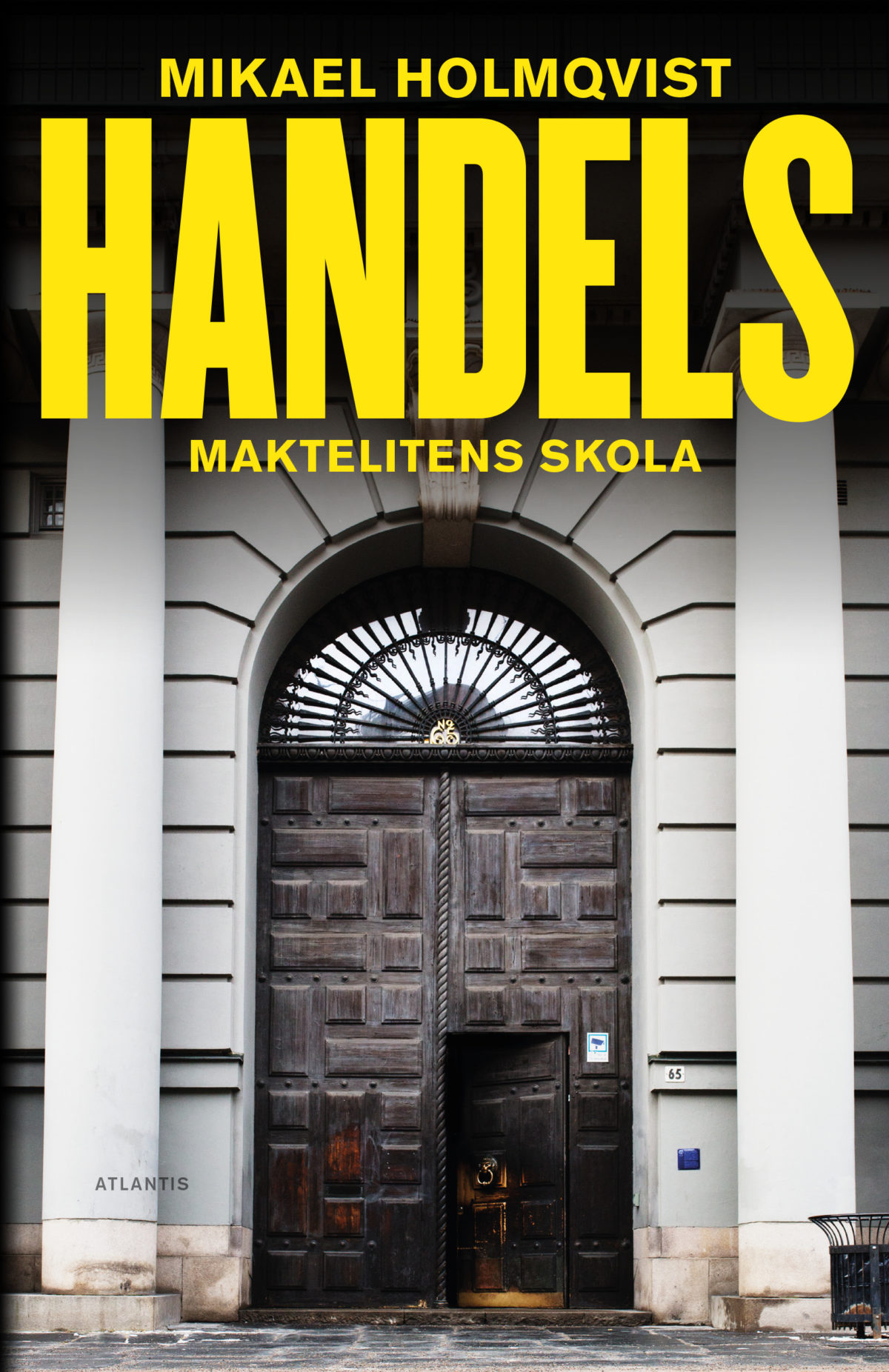
I have no end of studying to do for Kammarkollegiets Auktorisation exam, which means now was the perfect time to dig into a completely unrelated 500-page sociological tome on the Stockholm School of Economics (hereafter just “Handels”). Trust me, that’s actually 5D space chess levels of expert studying strategy. It has nothing to do with the fact that the cover caught my eye when I was in the library to pick up Kammarkollegiet study material.

The best kind of nonfiction books answer a question you would have normally never asked, and answer it so thoroughly that you’re left wondering why you would have never asked it to begin with. With Handels that question is, “Why do business schools exist?”

If you’d asked me that question a month ago I would have said something like, well I guess they’re just kind of a natural outgrowth of an already-established scholastic tradition. We add new fields of study all the time in other disciplines, after all. And then they spin off and form their own highly specialized institutions for any number of reasons, and that’s how we have Handels.

Mikael Holmqvist goes on a deep dive into the history of Handels, from the original motivations behind its establishment through the administrative decisions made throughout the century up to how it operates today. The short version of the argument that Holmqvist makes is that Handels, like other business schools at the time, was founded to lend an air of academic authority and social prestige to the growing business class in society and to the field of economics generally. This particular task now a fait accompli, Handels occupies a normative role in our neoliberal society: creating an “employable” pool of people for a specific industry by imbuing them with specific ideologies and personality traits that are compatible with neoliberal market values. News to me, but not to anyone who makes a career out of studying this sort of thing, I suppose. Similar arguments have been published by anglophone academics, including several books cited by Holmqvist (most notably Debra J. Schleef’s Managing Elites: Socialization in Law and Business Schools). I don’t know that there’s an English translation in the works for Handels; I don’t really know what the point would be? But on the other hand it appears that there’s an English version of Holmqvist’s previous work on the neighborhood of Djursholm so maybe there is some kind of niche demand for this kind of thing in English.

My tone sounds a bit “damned by faint praise,” though, and that’s not my intention. This was one of those books where I had to stop three or four times per chapter to send a quote to a friend, along with my own comments, in order to pick their own brain on the topic. (Deep appreciation to those friends for indulging me and my not-always-well-lit photos of walls of text.) Likewise, I found myself wishing there already was an English version that I could share with my policy nerd friends who can’t speak Swedish. (“Aren’t you a translator? Surely it wouldn’t be hard to toss off your own translation of a couple paragraphs?” The cobbler’s children has no shoes, my friend.)

If you can read Swedish, Handels is absolutely worth your time. If it comes out in English I’ll certainly be recommending it to a very particular subset of nerdy policy people that I hang out with. Until then there’s a very thorough works cited I can dig through to find the best and most interesting English equivalent.

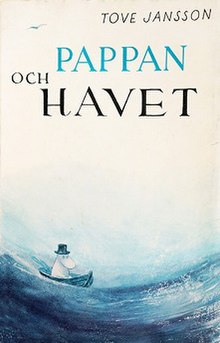
Pappan och havet

My TBR keeps growing at an astonishing rate, and yet I keep getting distracted and reading just about anything else. Oops.

Pappan och havet came up in a conversation I was having last week about, among other things, re-reading books. I’m not much of a re-reader, but the person I was talking to mentioned that he liked to re-read Pappan och havet in the fall because it has a very autumnal vibe. “Dyster tillfredställande,” to be exact in the quote he cited from the book itself. Gloomy satisfaction. Such a strong reaction to a book will always pique my curiosity, and I hadn’t ever read a Moomin book before, anyway, so why not? Not like my TBR is going anywhere.

Once again, another review of a classic that needs no more reviews. It’s interesting, though, to see how children’s literature has evolved over time. Considering my past life as a teacher and private tutor to young people, I’ve stayed slightly more up to date on children’s and middle grade books than I might have otherwise; I think I have at least some authority on which I can make comparisons.

Putting aside the simplest picture books and early readers, the childhood reads that have stayed burned into my memory and part of my library have a certain ponderous quality to them. Of course it makes sense that I would keep, say, The Secret Garden and The Phantom Tollbooth in my library as I got older but eventually give away however many of the Animorphs and Babysitters Club books I’d accumulated. For one, there are practical considerations and limitations when it comes to housing never-ending series as opposed to single stand-alone volumes.

But there are also simply differences in their content, and I like to think I could sense those differences even at first reading (I was reading all of those books at about the same time, from ages 8 to 10). Don’t get me wrong: I definitely enjoyed every single Animorphs and Babysitters Club book I ever read. I was hardly a snob. But if a book had a ponderous or somewhat grown-up aura to it, I think it stuck with me extra much; I cared about it more. (Putting aside the ones that were like running up against a brick wall because they were perhaps a bit too grown-up for my brain, which also happened. I’ve already talked about how long it took me to really appreciate Ursula K. LeGuin here.)

Skimming through books to decide which ones would be appropriate birthday gifts to students, or to see what my students were excited about, I don’t think I ever found something with that same aura. The sense I got was less ponderous and more about distraction. Entertainment. Action. And this is probably a change that was happening even before I was born, considering that the aforementioned Animorphs and Babysitters Club novels of my youth also have the same distracting entertainment quality to them.

Of course, I’ve heard from more than one librarian that the children’s books that win the Big Serious Awards as decided by Adults are never the ones that are actually popular with children. Maybe a hypothetical lack of ponderous depth in children’s literature doesn’t actually matter and I’m just being grumpy.

All of this is to say that Pappan och havet has the same ponderous quality I would have enjoyed as young reader. I’m sad I missed out on it when I was the “right” age, but I’m glad I got to read it now.

Outline

Sometimes I read English books in Swedish translation out of personal (and I guess professional) curiosity. Is the experience any different? Will I pick up some new vocabulary, learn how to express a particular English sentiment that I still struggle with?

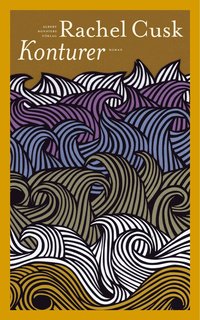
Other times I’m desperate to find any copy of a particular book and only Swedish is available, at which point the exercise is more pragmatic and akin to mental ambidexterity. (See The Jakarta Method.) Such was the case with Rachel Cusk’s Outline, or Konturer in Swedish. This was a selection for the local book club; by the time this post goes up, we’ll have already met for dinner and discussion. I needed a copy by a particular deadline and the Swedish was what was immediately available, so that’s what I went with.

The whole book plays out over just a few days. The narrator is a writer, Faye, an Englishwoman teaching a creative writing workshop in Athens. Most of the book consists of the stories other people tell her, presented in reported speech from Faye’s first-person perspective.

I also might have lied a little bit when I said I only read the Swedish because of availability. That is true, but I was also relieved to find out that the Swedish was more readily available because nothing about this book sounded appealing and because a friend whose taste I trust implicitly hated it. Yes, yes, let’s not judge a book by a cover, either literally or metaphorically, but silly to pretend I’m not influenced by other people’s opinions. Hence I was hoping that reading the Swedish would bypass everything my friend found tedious about the book and let me enjoy it regardless.

James Lasdun notes in his review in the Guardian that

…in funnelling all the characters’ stories through Faye’s very refined sensibility (there’s little direct speech), Cusk gives them all a certain high-polished sameness, at least at the purely verbal level. I can’t say that bothered me, but no doubt it will keep some readers from responding to the book as enthusiastically as I did.

And that is exactly what happened. All of these people had backgrounds not particularly different from each other (disappointed middle-aged parents, often divorcés), meaning that Cusk’s “high-polished sameness” made for extremely monotonous reading.

Outline also requires a huge suspension of disbelief that I’m frankly not willing to give a book if I’m not having a great time. People tell their entire life stories to strangers in the most unlikely environments: during flights, writing workshops, over dinner. These accounts are always eloquently and coherently presented in language that sounds like no conversation I’ve ever actually had with another human. Much is often given in reported speech or summarized by Faye, and when direct speech appears it doesn’t sound all that different from Faye’s own voice. The latter is maybe a fault with me—I no doubt still lack some nuance and sophistication in my ear for Swedish, so I might have missed the elegance of Rebecca Alsberg‘s translation in places—but it doesn’t make the actual structure of the book any less repetitive.

The only mildly interesting moment in the book comes in the last chapter, and I’m not sure if Cusk actually intended this to be self-reflexive commentary on the rest of the book or if she was just taken with the idea without realizing how it applied to what she was writing. On her last day in Athens, Faye runs into her replacement (they are staying in the same apartment provided by the hosting school), who tells Faye that she’s had the worst time trying to write since she was mugged. Instead of being able to properly write or read a story, she can only fixate on a one-word summary that essentially drains the narrative of all life. Her once-beloved Beckett, for example, she can now only think of as “meaninglessness.” This summarization fixation has also bled beyond literature and into real life, where she’s now facing a crisis of sorts after she realizes that her entire existence could be summarized merely as “Anne’s life.”

That’s all Outline is: a bunch of lives, summarized in more or less the same voice, with nothing interesting arising out of their interaction or juxtaposition. The comparison that comes to mind is Ten Women from Marcela Serrano (English translation by Beth Fowler). Both are a fairly disjointed collection of life stories anchored in the one person all of these people have in common, but at least in Ten Women the characters are from all walks of life (from a TV celebrity to an elderly sales clerk to a young computer science student) and each chapter is told from a different character’s perspective and in a different character’s voice. Moreover, their presentation together as a collection gives rise to a more coherent organizing principle than anything in Outline: we can see at once the huge gulfs in experience for all of these women, as well as the struggles they share, and the book functions as a fairly straightforward feminist critique of socio-economic conditions in Chile.

If there is any kind of organizing principle in Outline, it’s a much more banal and self-indulgent one: Faye is sad about her divorce. And since the book gives me no real reason to care that Faye is sad about her divorce, or to understand why it’s such a spectacular tragedy in the world of divorces, everything else collapses into a bunch of tedium.

The Seep

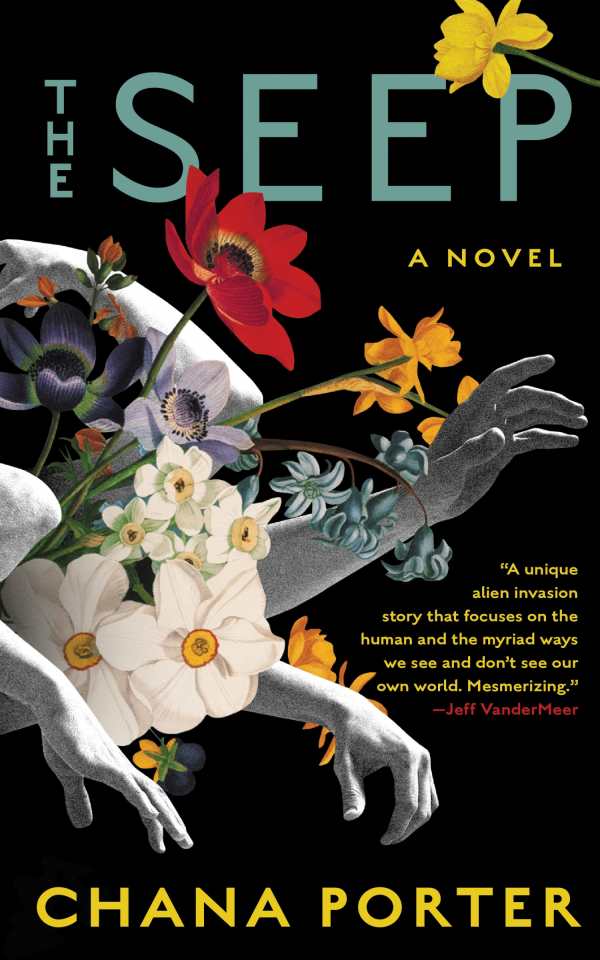
Now we’re out of my non-English vacation reading and back into English territory with The Seep, the Austin Feminist Sci Fi Book Club’s selection for October.

Straight off, I really liked The Seep. The only reason I didn’t finish it in one marathon session was because I started reading it in the middle of the night and exhaustion eventually overtook me. To get into slightly more detail, The Seep uses the framework of first-contact and utopia genres to examine grief, how it feels to be left behind by seismic shifts in society, and which struggles are worth having. It’s also very queer, very trippy, and very short: the perfect book for getting out of a reading slump.

Perfect, no notes.

La Gloire de mon père & Le château de ma mère

Marcel Pagnol’s Souvenirs d’enfance were burned into my memory at some point during my French studies—I watched Le Gloire de mon père for class, and I had an abridged or otherwise simplified edition of the book for course literature (that I don’t think I ever actually read, and that I definitely didn’t hold on to). Trying to track them down at the library or at the handful of international bookstores I knew of in Stockholm never got me anywhere. Nor did I think to check at Språkbokhandeln, the absolute treasure trove nestled in Lund, when I was there in 2020. It all worked out, though, because I can’t think of a better souvenir (hah) from Paris: one book from each bookstore we visited!

I packed both books for vacation and assumed that would keep me well occupied, but to my surprise I absolutely tore through each book in little over a day. Usually my reading experiences in French require frequent dictionary breaks just to follow what’s going on (George Sand, Simone de Beauvoir), but Pagnol did me favor and kept it relatively simple—even with all of the terminology for wildlife and hunting, I could keep up with the story. Dictionary breaks could wait until a re-read.

La Gloire de mon père was also a welcome counterbalance to the despair in Världen av i går. Pagnol was Zweig’s junior by fourteen years or so; reading the two alongside each other meant I was getting a bit of a Cubist portrait of turn-of-the-century Europe, two different perspectives presented simultaneously.  The years in Berlin and Paris that Zweig writes about with the nerves of a young man were merely the warm and happy days of Pagnol’s childhood in Marseilles.

I got too cocky, though, and rushed ahead through Le Château de ma mère, which is just as drenched in sunshine and nostalgia as its predecessor…until the very last chapter, which is when it collides with the grim realities Zweig depicts in Världen av i går. A lot of crying, this vacation! Turns out I didn’t really pack as much light reading as I thought I had.

According to English Wikipedia, Pagnol is considered a bit old-fashioned and passé these days, but since I’m not French that context was completely lost on me. To an extent it’s also pretty on brand for me, anyway, considering I’ve been well behind the times for basically my entire life.

The two are collected in a single volume, both translations from Rita Barisse that were more or less contemporary with the original publication in French. Have there been more recent ones? Is it any good? Who knows!

Världen av i går & Amok

It seems I followed much of the rest of the world, or if not the world then just one friend of mine in particular, in reaching for Die Welt von Gestern in the aftermath of the 2016 presidential election. But since my arbitrary rule of translations is to read German originals in Swedish rather than in English, I had to wait until I came across a Swedish translation (and it never seemed to be available at the library when I remembered to check). Six years later, it appeared in front of me at Söderbokhandeln Hansson & Bruce. I took it with me for vacation reading, and while I was browsing Hubenettes in Östersund I happened to notice Zweig’s novella collection Amok on the shelves. Since they’re the same author and I read them in such close succession, collapsing them into a single blog-thought makes sense.

Amok is not any deliberate assemblage of Zweig’s or time-honored collection that’s seen international release in several languages.  Instead, it’s a collection from Ersatz Förlag, only available in Swedish, featuring “The Royal Game,” “Twenty-Four Hours in the Life of a Woman,” “Confusion,” “A Girl and the Weather,” and “Amok.”

The World of Yesterday, on the other hand, is available in several English translations: one from titan among translators Anthea Bell, which seems to be the translation put out by Pushkin Press; one from Plunkett Lake Press attributed to B. W. Huebsch and Helmut Ripperger; and finally a translation from Robert Boettcher independently published through Amazon.

Let’s get the obvious out of the way: Zweig doesn’t really discuss his own writing much in Världen av i går, at least from a personal perspective on the process. The only time he addresses the craft of writing more or less head on, he toots his own horn and talks up how one of his strengths as a writer is his ability to murder his darlings and stick to only the most essential elements of a story. After the five stories included in Amok, I have to disagree, but maybe that’s a factor of changing times and literary conventions.

Women are essentially invisible in Zweig’s depiction of Europe in general and of his life in particular. Not surprising for the content or the times, so I’m not exactly mad about it. Nonetheless, it’s worth pointing out that Zweig’s first wife (who only gets two incidental mentions in Världen av i går, one of which is when Zweig is trying to divorce her) undertook a significant chunk of research and administration for him; his second wife (whose only mention is in the same breath as the aforementioned divorce) had originally been his secretary. Amazing how being able to outsource drudgery and life maintenance frees you up to be a highly productive writer!

The same lack of women more or less applies to the stories in Amok, which are all deeply anchored in a first-person perspective from a male narrator. Even “Twenty-Four Hours in the Life of a Woman” uses a male narrator to frame the story of the woman in question—a frame that I don’t see much narrative use for. Of course, Amok only contains five novellas out of a substantial body of work; such a limited selection is hardly indicative of an entire body of writing. I just wish there had been more thought on the publisher’s part about which stories to select.

Overall, I was touched by Zweig’s humanity and empathy, which was just as much on show in the above stories as it was in his memoirs. They are all deeply psychological, character-driven narratives rooted in human struggles, suffering, and resilience. But in all honesty, his knack for characterization is actually on better display in Världen av i går than in most of the stories in Amok. Zweig’s sketches of his contemporaries are precise and cutting, unambiguously sympathetic to the person involved but clear-eyed about their flaws or failures. The characters in the stories collected in Amok, on the other hand, are muddier and harder to pin down. I cried at some point in every chapter of Världen av i går, but I shed no tears over any story in Amok.

The reason I was so unmoved by, and ultimately a bit disappointed in, Zweig’s fiction might be the same reason I could lose myself so easily in his memoirs: they are a product of a specific time. Sympathy for an amorous widow scorned by a younger lover, or for a closeted gay English literature professor, might well have been scandalous or at least unusual upon publication in the 1920s, but close to a century later those stories are fairly tame and predictable. So the wheel turns; with any luck, in another hundred years, stories like “I Sexually Identify As an Attack Helicopter” will seem confusing or just banal because we’ll live in a better world where fluid gender identities are a matter of course. While Världen av i går might as well be subtitled “Plus ça change,” stories like “Confusion” with their now-dated and unremarkable plot twists make you realize that things can get better.

Dvärgen

When I did my semester abroad at Stockholm University, I took a course in modern Swedish literature (offered in English, since our Swedish wasn’t much more advanced than “En stor stark, tack!”). It was by far the best literature course of my undergrad career, in large part because of the excellent reading list. The course literature included Barabbas by Pär Lagerkvist, which made such a strong impression on me that I started building a small library of his books as soon as I moved to Sweden.

As I write this, I realize that I have to start almost every review here with some kind of explanation as to either how I came to hear of a book, or why I chose to read it, or both. I guess context is important to me. Here, for example, you can (rightly) infer that I went into this book biased and well-disposed towards Lagerkvist, and now you can (rightly) expect that I liked it. Now I can dispense with the pointless formality and hubris of passing judgment on a well-established classic and just ramble a bit. My point here isn’t to encourage—or discourage—anyone from picking up something relatively new and/or obscure. I just want to remember what I read and, in this case, present worthy Swedish books to my English-speaking friends. Lagerkvist was a huge international hit in his lifetime but he seems to have returned to mere domestic fame; these days Sweden’s entries in world literature appear to be limited to Strindberg and Nordic noir, which I feel is deeply unfair. Fortunately, it’s my understanding that there is an English translation of Dvärgen available and that it is of excellent quality, so you don’t have to miss out on this one.

Anyway! Dvärgen is simply the diary of a court dwarf in Renaissance Italy, spanning maybe six months to a year for the bulk of the action. It includes war, assassinations, intrigue, plague, famine and all the rest through the eyes of said unnamed dwarf, a character that literary criticism has near unanimously described as “evil incarnate.” That’s the interpretation I was thinking about after I finished the book. Is the narrator really meant to be as much?

I don’t ask the question to “woobify” him, as the expression goes—to turn a clearly morally corrupt character into a sympathetic and victimized hero. While his role as as servant means he’s often acting on behalf of others, the dwarf also carries out several actions on his own initiative, motivated by rage and sadism. Nor is there any attempt to make him appealing or “likeable,” like a secret fondness for animals or sensitivity to music. He finds all of the nobler human emotions and pursuits abhorrent or ridiculous; the only things he confesses to enjoying are war, violence, and bloodshed. The extent of the sympathy evoked for him is the absolutely dehumanizing treatment he receives from just about everyone around him. Stepping back, we can also of course point out that we are reading his own diary and account of himself, which is naturally how he wants to be experienced and how he is choosing to present himself, but that is an ambiguous point we can, at best, only infer. I’m sure there’s been more than one thesis already about the role of toxic masculinity and ableism in forming his character.

Rather, I ask the question because just as much of the evil in the book—if not most of it—is someone else’s doing. The prince decides to go to war entirely of his own volition, without consulting the dwarf at all. Likewise, when war proves fruitless, he decides to lure the enemy into an assassination with promises of peace and free trade. The dwarf might be the one to serve the enemy poisoned wine at the celebratory dinner, but he does so only at the order of the prince. And while the dwarf decides of his own accord to inform the prince of the tryst between the enemy prince’s son and the prince’s own daughter, the prince is the one who, in a fit of impetuous rage, murders the young man in his sleep.

Moreover, if we are to take the dwarf at his word, the fear and distaste that people express when they encounter him is nothing more than fear and distaste for what lurks inside themselves. Is this an observation that the reader is meant to take seriously? Or are we to understand that this is projection or warped thinking on behalf of the narrator, and that his claims of true insight and understanding are just so much bloviating?

Life is ambiguous, art is ambiguous, there are no easy answers. Even the ending is ambivalent: yes, the dwarf is in prison and peace seems to reign in the kingdom, but the connection between those two situations is unclear. Does the dwarf have such a supernaturally evil presence that peace cannot be achieved until he is disposed of? Or is the prince genuinely a changed man after facing political and personal consequences for his ambition, and the dwarf’s imprisonment merely an incidental fact following the death of the prince’s wife? The text supports both; the text chooses neither. The unanswered question.

Bellwether

I picked up Bellwether entirely on a whim. I was at The English Bookshop in Stockholm with time to kill and I recognized Connie Willis’s name from The Doomsday Book, which I had enjoyed immensely in high school. Chaos theory? Sheep? Sure, why not!

Bellwether by Connie Willis
Image courtesy Bantam Books

I don’t quite regret reading this, since Willis is a wordsmith par exellence and the story itself is breezy and cute. Our narrator is a scientist at your generic corporate research lab, researching fads and their causes. A series of events lead her to meet and collaborate with another scientist focusing on chaos theory. There’s a lot of snark, a lot of mishaps, but eventually our heroine winds up with her hero, wins the grant, and comes to a breakthrough in her fad research, all in one fell swoop. It’s a science fiction screwball comedy.

But Bellwether is also a very dated book. A brash young person once asked Connie Willis to put out her cigarette in the 90s and she decided to write a whole book about it. Okay, I can’t know that happened, but it sure seems like it. Willis’s bile for The Youths and the anti-smoking movement, at first incidental in the story, become pervasive and inescapable through lines that make a lighthearted romantic comedy much less palatable. (I complained about this to my boyfriend, who was willing to cut Willis some slack…but then he picked up the book and opened to a random page and immediately lighted upon a rant about smoke-free environments. “Oh, I see what you mean.”) The Youths see some redemption in the end, from a narrative perspective, but the rage and incidental conflicts stemming from smoke-free workplaces are entirely irrelevant to the plot. And the rage is palpable.

Nor has time been kind to that particular element of the book. The narrator (and, presumably, Willis) write off the anti-smoking movement as a fad on par with Kewpie dolls or prohibition, which is a weird thing to read 25 years later, now that fewer people smoke and that the anti-smoking public health campaign seems to have made a permanent cultural difference. It’s enough to make me wish that someone would put out a revised edition of Bellwether with all the screeds about not being allowed to smoke edited out. More than Power Rangers, fax machines, or Barney, that’s what dates the book the most, and is the one thing that keeps me from recommending the book wholeheartedly. It’s not hurtful or offensive, it’s just embarrassing. Go read Doomsday Book instead, it makes a much better first impression.

The Left Hand of Darkness

Once in a while I like to revisit things I hated when I was younger, usually in the form of either books or food. Sometimes I leave with my aversion even more fully cemented (still hate ham, still hate Nightwood) and sometimes I discover that my palate has sophisticated in the intervening years.

Ursula K. Le Guin was one of those authors, to my shame as a science fiction fan. My first encounter with her was when I was too young and too impatient to really appreciate the complexity of what she was doing: I had to read The Tombs of Atuan for an extracurricular reading event in middle school. I didn’t enjoy the experience, to the point where I gave up midway through the book—unusual for me, especially at that age. A few years later I gave The Dispossessed a try. It was a fancy edition from the Science Fiction Classics series put out by Easton Press, with leather binding and shiny gold trim. Despite the luxurious trappings, once again my brain wasn’t having it.

But this tale has a happy ending! Well into adulthood, the Austin Feminist Sci-Fi Book Club picked The Dispossessed and I liked it just fine. Maybe my prefrontal cortex just needed to finish developing. Who knows.

And here’s the happy postscript to the above happy ending. The two founding members of the Austin Feminist Sci-Fi Book Club were married in 2021 and, as a sort of long-distance wedding favor, sent all of their originally intended guests random science fiction paperbacks that one or both of them had really liked. This is how I came into possession of The Left Hand of Darkness.

There is a lot of intrigue in The Left Hand of Darkness, and from what I recall in The Dispossessed as well, and maybe that’s what kept my brain from taking to Le Guin to begin with. I’m a simple creature, naive and without guile. All of the political maneuvering in both books is lost on me, but I can still enjoy the complexity of the societies Le Guin creates, whether it’s anarchist collectives of Anarres or the ambisexual population of Winter. And considering our shifting and broadening cultural understanding of gender, The Left Hand of Darkness is a particularly apt example to revisit right now.

Wise Child

Someone in one of the more obscure online corners I haunt was waxing nostalgic about Monica Furlong’s Wise Child a few months ago. My interest was piqued, since it sounded like something I would have loved as a middle schooler, and luckily I was able to find a copy without much trouble at all.

Cover of Wise Child by Monica Furlong
Image courtesy Alfred A. Knopf

After the death of her grandmother and without other family who can support her, the eponymous nine-year-old protagonist in Wise Child is taken in by Juniper, the village cailleach. Over the course of the book, Juniper helps Wise Child transform from a bit of a brat into someone more considerate, thoughtful and self-sufficient. She also teaches Wise Child the healing arts and some of the basics of magic to prepare her for becoming a witch, what Juniper calls a doran.

The comparison that immediately springs to mind is to Susan Cooper’s The Dark is Rising. There is certainly a fantastical element but, like Cooper, Furlong keeps the magic grounded in Scottish folklore (or at least appears to, I’m no expert). The prose is a delight to read, even as an adult. Furlong also has an informed understanding of everyday life in medieval Scotland, always specific in her description of foods, textiles, and buildings. This isn’t hand-wavey Ren Faire style Ye Olde Europe.

Unlike The Dark is Rising, and most other fantasy novels, the story in Wise Child is fairly low stakes. The conflict is entirely interpersonal—rivalry between Juniper and Wise Child’s mother, Maeve; the village priest’s animosity towards Juniper. That’s all pretty small potatoes compared to the thousand years of darkness, hurricanes a-blowin’ and rivers overflowin’, cats and dogs living together mass hysteria you usually expect in the genre. This probably accounts for the difference between the distinct characterization of Wise Child versus the sort of bland everyman (everyboy?) of Will Stanton in The Dark is Rising. When you’re coming up against the end of the world, the drama overshadows the characters and flattens them. But for interpersonal conflicts and personal development, you need nuanced, layered characters.

I don’t know how I missed this gem as a child. I would have seen a lot of myself in the awkward and precocious Wise Child, I’m sure. As an adult, it was refreshing to dip my toe back in the kind of middle grade reading that wasn’t trying to stealth market to adults (what’s up Young Adult) but that also didn’t condescend to its younger demographic. Wise Child was exactly the light summer reading I needed in a world that’s going up in flames.