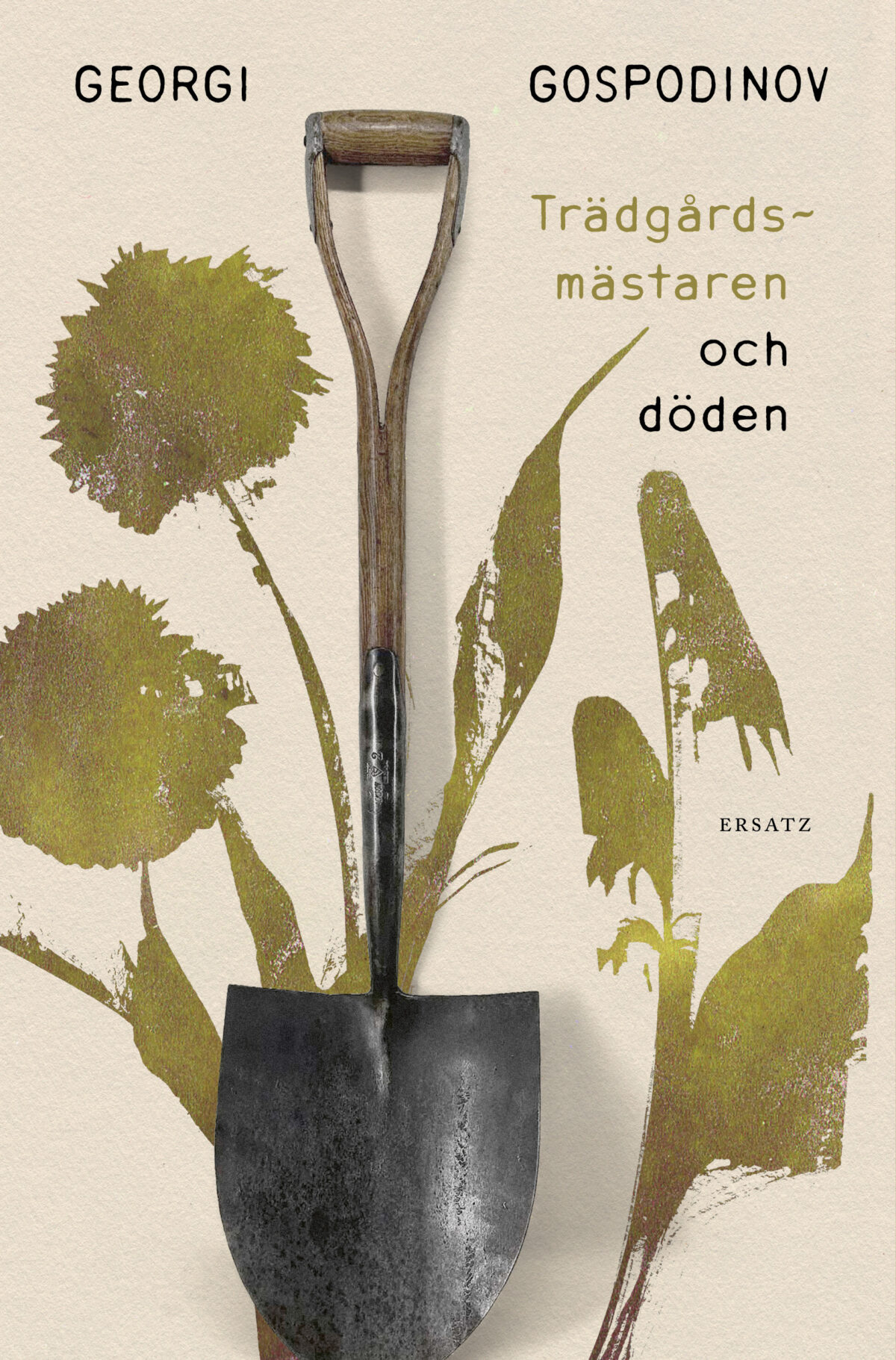
Georgi Gospodinov’s Death and the Gardener was my international WhatsApp book club’s pick for…September? October? I’m perpetually behind anymore…and at first I was too caught up in everything else going on in life to get a copy. Then I stopped by Ersatz’s booth at the Gothenburg Book Fair and saw that they had a Swedish translation on offer and figured, since I hadn’t purchased anything yet, why not?
I hadn’t quite finished A Little Life by this point, but I knew that I’d be done with it soon (and leaving it behind), so I allowed myself the indulgence.
Death and the Gardener goes pretty quickly; for a book about death, it’s quite light reading. That’s not a knock on Gospodinov, because by all accounts it was a difficult and cathartic book for him to write. But if A Little Life lingers sadistically on human suffering, Death and the Gardener celebrates the small joys and victories that make life worth living, giving the worst with death and cancer and suffering the widest berth possible.
In the introduction to the edition I read (many, many years ago now) of Connie Willis’s Doomsday Book, she talked about writing and Fred Astaire, how he worked so hard to making his dancing look effortless and how she approached writing her time travel novel the same way. I think about that analogy a lot, and I think it’s especially relevant here. Instead of research into Medieval Europe, however, the hard work for Gospodinov was to take one of the most difficult things he’s ever experienced—the death of his father—and transform it into something that captures the grief of watching a parent waste away without becoming maudlin or melodramatic. As far as I’m concerned, he succeeded. The horror of terminal cancer comes through, but also the lighter and more beautiful parts of life that happen around and in between the cancer. The word “Zen” never comes up, but many of the episodes have that quality for me: that mindful attention to and appreciation of the small, inconsequential details of everyday life that helps ground us in the now. The Swedish translation from Hanna Sandborgh was light work that was easy to get through, no doubt because of that same Fred Astaire-like commitment.
Gospodinov also employs a structure that seems increasingly common in memoirs, with short episodes placed self-consciously out of chronological order. Off the top of my head I can remember (in order of reading): The Crying Book by Heather Christie, On Earth We Are Briefly Gorgeous by Ocean Vuoung, and Jag vägrar dö nyfiken by Babben Larsson. It works for the genre, since that kind of structure resembles our own reminiscing, but it also feels a bit like the brief posts you’d read on social media, mixed out of their right chronology by The Algorithms. I wouldn’t consider it criticism as such (Gospodinov makes too many references to ancient Greek thinkers for anything in the book to ever feel like actual social media content), but it makes me wonder more where the genre is headed and how it will develop.
